Pennsylvania joins lawsuit against Trump administration’s decision to revoke emergency preparedness funding
A spokesperson for the Department of Homeland Security told The Inquirer Tuesday that “cities and states who break the law and prevent us from arresting criminal illegal aliens should not receive federal funding.”

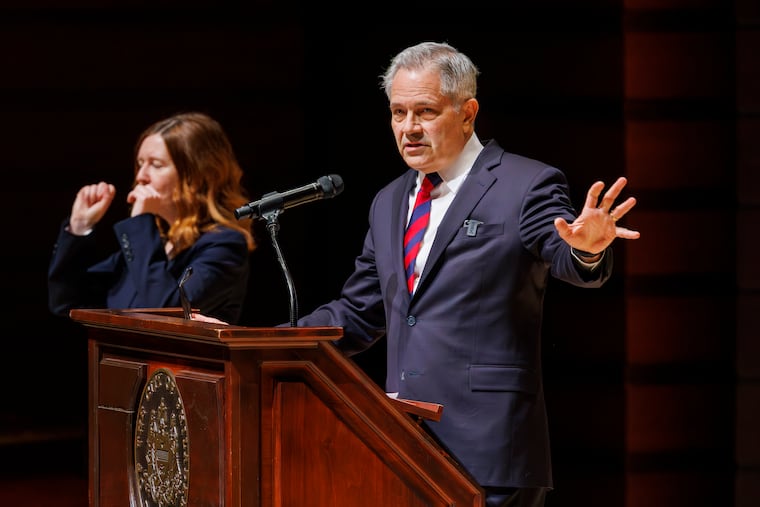
Pennsylvania Gov. Josh Shapiro has joined a lawsuit challenging the Department of Homeland Security’s slashing of emergency preparedness funding as the Trump administration seemingly makes good on its vow to target the funding of jurisdictions that won’t comply with the president’s federal immigration enforcement policies.
The Philadelphia region could stand to lose $18 million from a grant that helps prominent and high-density urban areas prevent and protect against acts of terrorism, the Shapiro administration said Tuesday. Cutting such funding ahead of major 250th anniversary celebrations of America’s founding next year in Philadelphia and across Pennsylvania is “irresponsible,” Shapiro said.
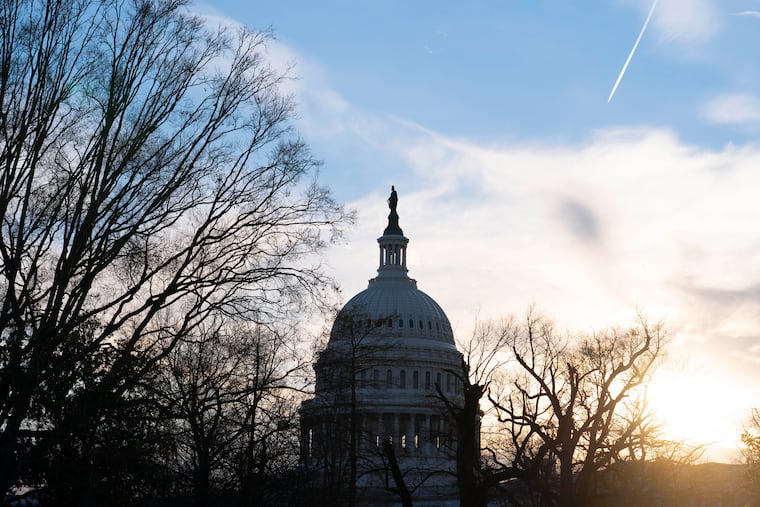
Pennsylvania joined 11 other states, including New Jersey, and Washington, D.C., in suing the Department of Homeland Security, the Federal Emergency Management Agency, and their directors, Secretary Kristi Noem and Administrator David Richardson, respectively, over cuts to the Homeland Security Grant Program and restrictions on the Emergency Management Performance Grant.
The lawsuit says that the states’ funding is being targeted because of the Trump administration’s repeated vow to cut funding from so-called sanctuary jurisdictions, which have policies that prevent these areas from cooperating with U.S. Immigration and Customs Enforcement.
The Trump administration has deemed Philadelphia, not Pennsylvania as a whole, as a sanctuary jurisdiction.
“Although DHS has for decades administered federal grant programs in a fair and evenhanded manner, the current Administration is taking money from jurisdictions it believes are its enemies,” the plaintiffs wrote in the lawsuit, filed Friday in U.S. District Court for the District of Rhode Island.
Tricia McLaughlin, assistant DHS secretary for public affairs, said Tuesday in a statement to The Inquirer that “cities and states who break the law and prevent us from arresting criminal illegal aliens should not receive federal funding.”
“The President has been clear on that. Under Secretary Noem’s leadership, DHS is working to end violations of federal immigration law and remove criminal illegal aliens from American communities,” McLaughlin said, adding that “Radical sanctuary politicians need to put the safety of the American people first” and that ”No lawsuit, not this one or any other, is going to stop us from doing that.”
Mayor Cherelle L. Parker’s administration did not join the suit as a plaintiff because “This is a Pennsylvania — statewide — issue," said Joe Grace, a spokesperson for Parker.
The mayor, in a news release from the Shapiro administration Tuesday, highlighted the city’s $960 million investment in public safety in last year’s budget.
Leaders from Philadelphia’s collar counties also reaffirmed the importance of the at-risk federal grant dollars.
The states said in the lawsuit that the funding has, for decades, been distributed “evenhandedly” until now. In late September, states received their awards, but they were hundreds of millions of dollars less than expected from the State Homeland Security Program and Urban Area Security Initiative, two components of the Homeland Security Grant Program.
Pennsylvania could also lose $4.2 million in salary reimbursement for emergency personnel, via the Emergency Management Performance Grant, if new restrictions set by DHS are not relaxed, the Shapiro administration said in its news release.
DHS is freezing funds from the grant unless states provide a “population estimate” that excludes individuals removed by federal immigration law. The states say they do not have access to that data. Additionally, the Trump administration is reducing the time period, from three years to one, when states can spend federal funds.
Philadelphia’s sanctuary policies, created by a 2016 executive order from former Mayor Jim Kenney, were first highlighted by President Donald Trump in May when the administration released a list of jurisdictions it vowed to punish for such policies. Philadelphia remained on a republished version of the list in August. Hundreds of other cities, states, and counties were removed.
Philadelphia City Solicitor Renee Garcia told City Council in May, ahead of the first sanctuary jurisdiction list, that the Parker administration is ready “to litigate” should the Trump administration decide to revoke the city’s federal funding.
Since Trump took office in January, Parker has avoided confrontation with Trump.
In her statement Tuesday, Parker said that “there is no more important issue facing Philadelphia than ensuring our residents feel safe in their homes, their neighborhoods, and at work.”
“My promise to Philadelphia is a safer, cleaner and greener city, with access to economic opportunity for all,” Parker said. “Public safety investments like these help us deliver on that vision, for every resident of Philadelphia, and for every visitor planning to come to our city for the Semiquincentennial in 2026.”