Montco Board of Commissioners votes to establish local anti-discrimination board
The Montgomery County Board of Commissioners voted Tuesday, on a 2-1 party-line vote, to create a human relations commission that will handle claims of unlawful discrimination.

Montgomery County residents who believe they’ve been discriminated against will soon have a local board where they can bring their concerns.
The Montgomery County Board of Commissioners voted Tuesday, on a 2-1 party-line vote, to create a human relations commission that will investigate and mediate claims of unlawful discrimination in employment, real estate, housing and public accommodations across the county.
The move comes as Democratic officials in Montgomery County and across Pennsylvania face pressure to enact local protections for their residents — especially members of the LGBTQ community and people of color who may feel targeted by President Donald Trump’s policies.
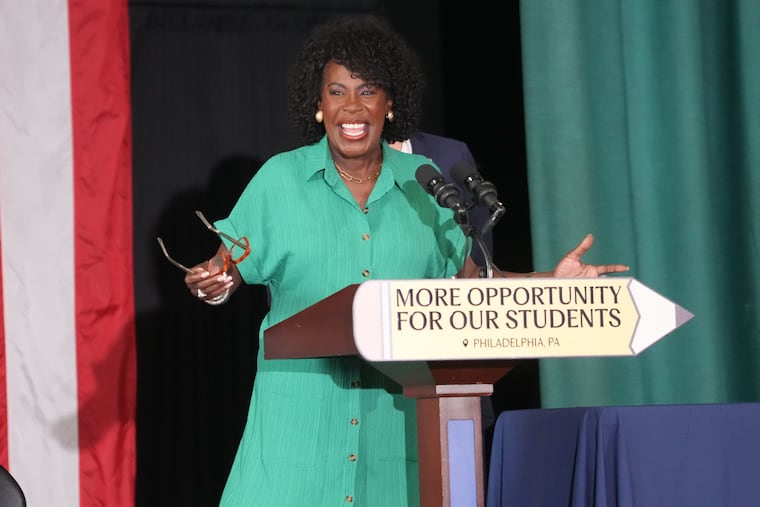
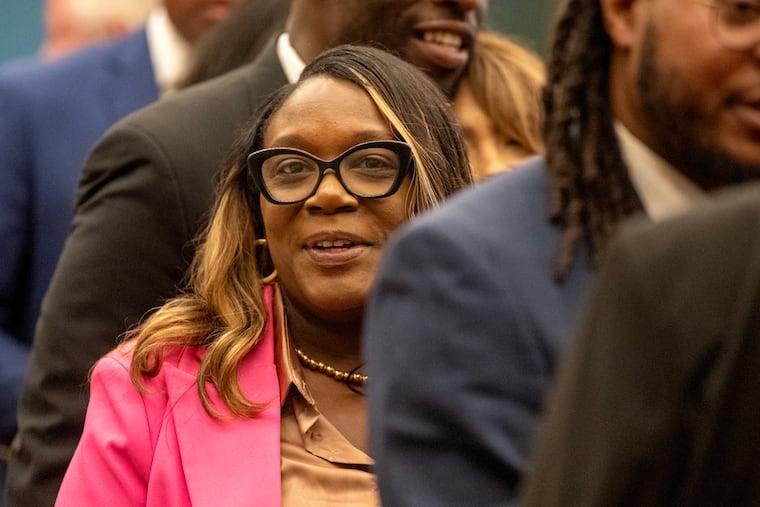
“This commission sends a clear message to our residents that discrimination has no place here and if you face it you have a county that will stand with you,” said Democratic Commissioner Jamila Winder.
The protections will follow those already provided by state law in the Pennsylvania Human Relations Act, which bars discrimination based on a variety of factors including race, sex, religion, and disability.
The commission would create a local remedy for discrimination within the county, creating an alternative to the state commission.
“The implications for our residents would be real and immediate and for the first time they’d have someone here locally,” said Neil Makhija, a Democrat who chairs the board.
Republican Commissioner Tom DiBello voted no, questioning whether the policy was redundant with existing laws federally and in Pennsylvania barring discrimination.
Protections for LGBTQ residents
Several townships in the Philadelphia suburbs have established nondiscrimination ordinances that expand upon the protections already in state law to explicitly protect LGBTQ residents.
Advocates have argued these protections are increasingly important as Trump’s administration seeks to restrict gender-affirming care among other policies aimed at the transgender community.
Makhija and Winder each said Montgomery County’s commission would protect against discrimination over sexual orientation even as neither state law, nor the county resolution, explicitly carve out protections for LGBTQ residents.
Those protections are applied in state law through regulations approved in 2023 governing the state’s nondiscrimination policy. The regulation defines protections from “sex” discrimination as including sexual orientation, gender identity, and sex assigned at birth.
Jason Goodman, chair of the Pennsylvania Youth Congress, which advocates for LGBTQ rights, said it is critical that when the commission establishes its bylaws those rules specify that gender identity and sexual orientation fall under the definition of “sex.”
“We are looking forward to the county commission taking shape to further clarify that they are protecting LGBTQ residents, employees and visitors to the county,” he said.
Nearly 20 years ago Goodman advocated for Montgomery County’s first LGBTQ inclusive nondiscrimination ordinance in Lower Merion. The county’s action Thursday, he said, was a continuation of that work that he had sought for more than a decade.
“For Montgomery County to have taken this step today to create the human relations commission is critical to not just saying that all people are protected but doing something about it,” Goodman said in an interview.
As early as this month the Delaware County Council could vote on a similar policy, modeled off the LGBTQ-inclusive nondiscrimination ordinance in Lehigh County, barring discrimination based on gender identity and sexual orientation.
As home rule counties, Delaware and Lehigh Counties have broader authority to set local policies than most counties in the commonwealth.
Correction: An earlier version of this story gave the wrong name for the Pennsylvania Youth Congress.
This suburban content is produced with support from the Leslie Miller and Richard Worley Foundation and The Lenfest Institute for Journalism. Editorial content is created independently of the project donors. Gifts to support The Inquirer’s high-impact journalism can be made at inquirer.com/donate. A list of Lenfest Institute donors can be found at lenfestinstitute.org/supporters.