City Council delays key vote on Mayor Cherelle L. Parker’s H.O.M.E. initiative, setting up tight deadline before city bond sales
The delay means the administration faces a tight legislative deadline next week to achieve its goal of selling $400 million in city bonds this year.
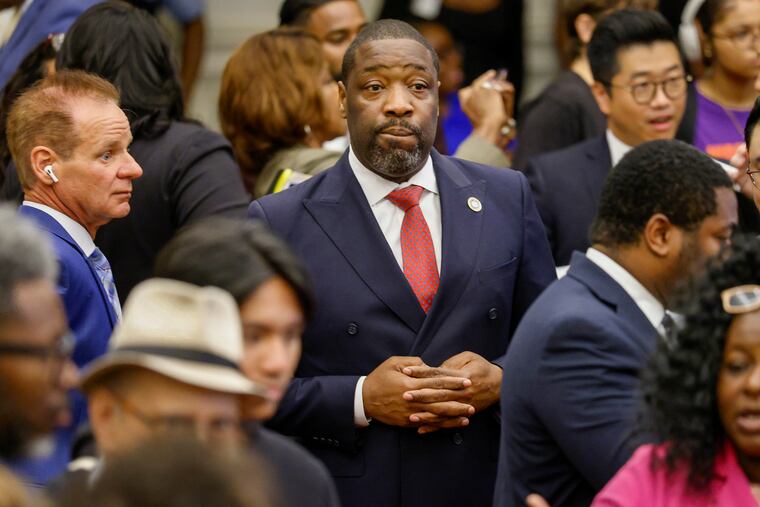
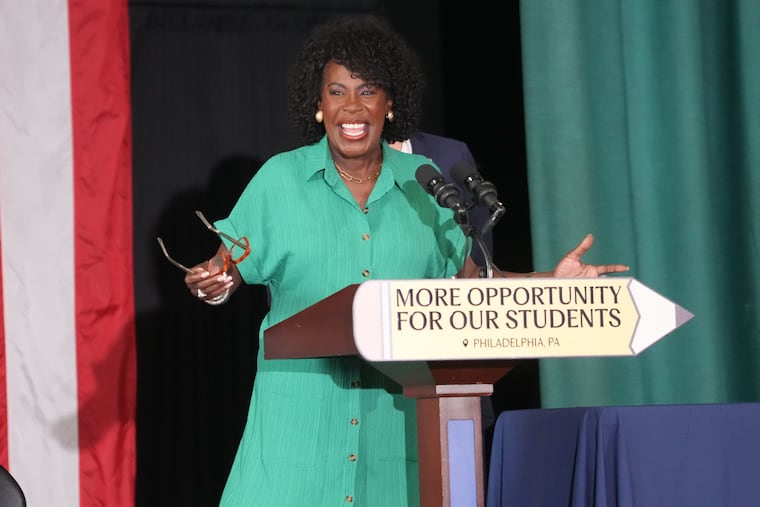
After a tense day of debate, City Council has postponed a key vote on the budget for Mayor Cherelle L. Parker’s flagship housing initiative as lawmakers press to ensure more funding is available for the lowest-income Philadelphians.
The delay means the administration faces a tight legislative deadline next week to achieve its goal of selling $400 million in city bonds this year to fund Parker’s Housing Opportunities Made Easy, or H.O.M.E., plan.
Parker initially hoped to sell the bonds this fall, unlocking money to launch or expand a variety of housing programs. But the H.O.M.E. budget must be passed before the bonds are issued, and Council has now pushed back a committee vote until Monday, said Parker’s chief of staff, Tiffany W. Thurman.
The budget, which currently sets first-year spending for H.O.M.E. at $195 million, must be approved in committee Monday and again at Council’s weekly meeting next Thursday for the bonds to go out this year. Any further delays would mean the bonds will not be sold until 2026.
“We trust the process. We’re working very closely with the Council president,” Thurman said in an interview. “We appreciate all of the questions that were asked today. We were as transparent as we can be.”
At Wednesday’s hearing, lawmakers on both sides of the issue debated the merits of changing Parker’s formulas for income eligibility thresholds and funding levels for the various programs that will receive bond money.
It was a stark moment of open disagreement for a Council that for years hashed out deals behind closed doors before holding choreographed votes in public. The hearing was a reflection of how second-year Council President Kenyatta Johnson has changed the body after succeeding former Council President Darrell L. Clarke, who preferred to keep divisions out of the public eye.
Have-nots vs. have-a-littles
Parker has long said that she wants her initiative, ultimately backed by $800 million in city bonds, to provide housing resources to working- and middle-class Philadelphians and not just the city’s lowest-income residents.
But with hundreds of thousands of city residents living in poverty, critics like Councilmember Jamie Gauthier say that city resources should be targeted toward those most at risk of becoming homeless.
It’s not “fiscally responsible to open up programs to the middle class without any prioritization of people who, but for the city’s dollars, are going to be on the streets,” Gauthier said.
Gauthier and her allies proposed an amendment that would boost first-year spending to $231 million, with much of the extra funding going to further increase affordable housing production, preservation, and the Basic Systems Repair Program, which dispenses grants for home repair.
The amendment, which was backed by eight Council members, would also more narrowly target those policies to lower-income residents.
Parker’s representatives stuck to the mayor’s argument that too many struggling Philadelphians are left out of existing city policies.
“There’s a wider need,” said Angela Brooks, the city’s chief housing officer. “Because when you drive through areas of Philadelphia and you see blight, you see the preservation needs. A lot of them are people who just don’t qualify for our programs.”
Administration representatives insisted they are not leaving poor Philadelphians out of their plans. They noted that 40% of H.O.M.E. funding is targeted toward those making 30% of area median income (AMI), or almost $31,000 for a three-person household.
Some lawmakers, however, wanted to see that targeting codified in law and not just stated as a priority.
“The administration claims that 40% of this plan will go to those families, but frankly the numbers we’ve seen don’t really show that,” said Councilmember Nicholas O’Rourke, of the progressive Working Families Party. “Projections are not active protections. That’s what the letter of the law is for. So are you opposed to codifying in law that 40% of the funds serve 30% of AMI?”
The administration declined to make that assurance.
“At the end of the day, we want to have some level of flexibility if the need shifts and changes,” Brooks said.
Brooks also noted that the city will first allocate funding to people on the wait list for programs like Basic Systems Repair before opening it to eligible households under Parker’s new heightened income guidelines.
Who’s responsible for Turn the Key geographic inequity?
The Turn the Key affordable homeownership program would see a $43.5 million boost in funding from separate amendments submitted by the Parker administration. The program creates incentives for developers to build homes that will be affordable to purchase for working-class households, and the mayor has long promoted it as a means to keep municipal workers in Philadelphia.
Councilmember Cindy Bass repeatedly criticized the administration for not spending Turn the Key dollars evenly across districts, fearing that those resources would end up clustered in neighborhoods like Northern Liberties or South Philadelphia that are relatively well off.
But a key aspect of Turn the Key is its reliance on distributing city-owned land to developers to build the affordable homes for purchase. Under a tradition called councilmanic prerogative, district members must release land by introducing legislation.
The inequality of Turn the Key outcomes stems from some lawmakers, like Councilmember Mark Squilla or President Johnson, allowing land to be moved, while others, including Bass, have been more tightfisted.
That is partly because some members, especially Gauthier and Councilmember Quetcy Lozada, want to reserve some city-owned land in their districts for more deeply affordable rental housing projects built by agencies that cater specifically to impoverished tenants.
“If we know that private developers can’t build what we need, and we have very responsible, reliable, capable, community-based development organizations in districts like mine, why are we not identifying additional funds to be able to partner with them so that they give us what we need?” said Lozada, who represents Kensington.
There is also inequality in Turn the Key’s usage because there is a lack of city-owned land in some parts of the city, like the districts represented by Councilmember Anthony Phillips, in Parker’s old district, and Councilmember Brian O’Neill in the Northeast.