Philly’s small businesses can get free tax prep services through a new program by Mayor Cherelle Parker’s administration
The new service is aimed at helping the estimated 50,000 firms that this year will need to start paying Philadelphia’s business income and receipts tax.

Philadelphia small businesses making less than $250,000 can access free tax preparation services through a new city program.
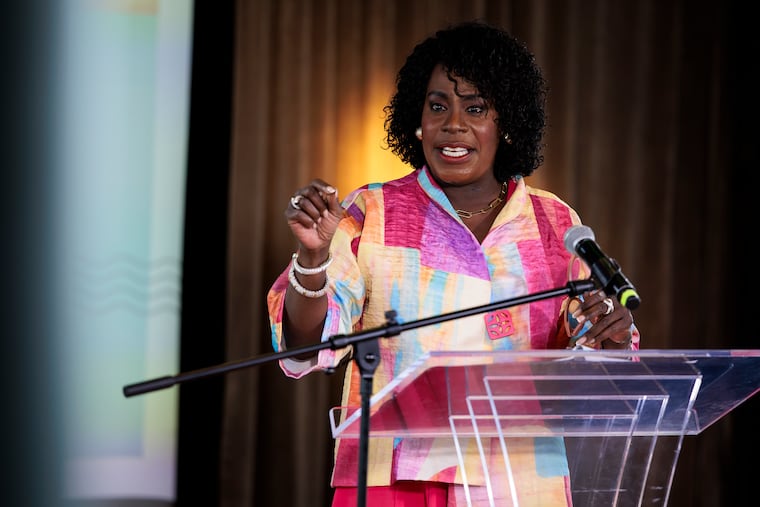
Mayor Cherelle L. Parker on Thursday announced the launch of the Philadelphia Free Business Tax Preparation program, which will cost the city $7.5 million per year and is expected to last at least five years.
Business owners can learn more at phila.gov/businesstaxprep/.
The new service is aimed at helping the estimated 50,000 firms this year that will need to start paying Philadelphia’s business income and receipts tax, or BIRT, following the elimination of a popular exemption that primarily benefited small companies.
» READ MORE: Why a popular tax break that helped Philadelphia’s small businesses may be going away
BIRT returns are due April 15.
How does the Philadelphia Free Business Tax Preparation program work?
Under the new program, the city will connect eligible business owners with private tax professionals who will be reimbursed by the city for each client they assist.
There will be no cost to the businesses. Only firms based in Philadelphia that made less than $250,000 in 2024 are eligible.
The tax professionals will help firms file city, state, and federal tax returns — not just BIRT.
“We want you to be ready,” acting Commerce Director Karen Fegley said Thursday. “Let’s be ready for growth.”
The city so far has contracted with 19 tax preparation companies to participate in the program, and more may join, Fegley said. Together, they offer services in 13 languages, including English, Spanish, Mandarin, Cantonese, Arabic, Italian, Russian, Japanese, and French.
Why did the BIRT exemption end?
For about a decade, firms with less than $100,000 in revenue from transactions in Philadelphia were exempt from paying the BIRT.
That policy, championed by former City Councilmembers Maria Quiñones Sánchez and William J. Green IV, effectively allowed the tens of thousands of companies making less than that amount to forgo paying the tax at all. During the COVID-19 pandemic, former Mayor Jim Kenney’s administration waived the requirement for those firms to file local business tax returns, providing administrative relief for business owners.
But Parker last year convinced Council to eliminate the tax break after a Massachusetts-based medical device manufacturer that does business in Philly sued the city, saying the policy violated the Pennsylvania Constitution’s uniformity clause.
» READ MORE: https://www.inquirer.com/politics/philadelphia/business-income-receipts-tax-birt-parker-administration-20250424.html
The policy change will place a significant burden on Philadelphia’s smallest businesses, both financially and administratively, given the complexity of BIRT. The tax includes two levies: Firms must pay 5.71% of their net income, or profits, made in Philadelphia, as well as 0.141% of their gross receipts, or total income, in the city.
Council last year approved a Parker plan to gradually lower the tax rates over 13 years and eventually eliminate the gross receipts levy, but the most significant cuts are years away.
» READ MORE: Why Mayor Cherelle Parker is asking Council to approve a tax cut that will take effect in 2038
Parker reiterated Thursday that she supported the $100,000 exemption. But she said her administration settled the lawsuit after determining the city would likely lose in court, potentially risking a ruling that City Solicitor Renee Garcia has said could require the city to repay past tax revenue.
Critics of the mayor’s decision to settle the case last year questioned why she didn’t fight harder to preserve the tax break. Parker said Thursday that would have been irresponsible.
“I said, ‘That’s why I’m the mayor and you’re not,’ because we can’t just do that and put the fiscal stability of the city at risk,” Parker said Thursday at a City Hall news conference.
To help ease the transition, Parker last year proposed using the money the city expected to gain as a result of more firms paying the BIRT — about $30 million — to fund business assistance programs. Council increased that total to about $47 million before approving the city budget in June.
Most of the money will go to existing programs that provide direct grants for businesses, such as the Philadelphia Catalyst Fund, Fegley said. But Parker is also using the funds to launch the tax preparation service.
“Small businesses are the backbone of Philadelphia, I don’t care what neighborhood you live in,” Parker said.
What else is being done to help small businesses?
In response to the elimination of the $100,000 BIRT exemption, Councilmember Mike Driscoll last year introduced a bill to exclude certain types of businesses — entrepreneurs, sole proprietorships, and businesses with one employee — from the tax.
Many of Philadelphia’s smallest companies are one-person operations, and Driscoll said he aimed to relieve them of the cost and burden of filing a BIRT return.
Parker on Thursday said her administration is still evaluating the proposal, noting that it would cost the city revenue and could potentially run up against the same legal hurdle as the $100,000 BIRT exemption: the uniformity clause, which requires Pennsylvania businesses, property owners, and individuals of the same “class” to be taxed at the same rate.
“We will work through that with his team, and do the cost analysis,” Parker said, adding that, “more importantly,” the city’s law department will work “to make sure we are not in violation of the Commonwealth of Pennsylvania’s uniformity clause.”
Council is expected to consider the measure in a committee hearing in the first half of the year.