RFK Jr. faces Hatch Act complaint after intervening in congressional races
A top Senate Democrat has requested an investigation into whether the health secretary broke a federal law.
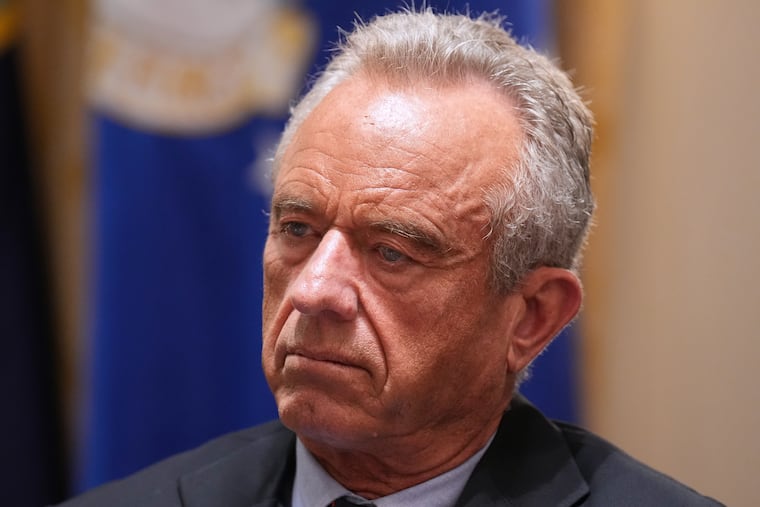
A top Senate Democrat has requested an investigation into whether Health Secretary Robert F. Kennedy Jr. broke a federal law intended to prevent political appointees from interfering in elections, citing Washington Post reporting.
Sen. Ron Wyden (D., Ore.), the top Democrat on the Senate Finance Committee, filed a complaint Monday with the Office of Special Counsel, a quasi-judicial independent agency that administers the Hatch Act and other civil service rules.
The Hatch Act bars federal employees from engaging in political activity in the course of their work. Several Trump appointees in the first administration were found to have broken the law.
President Donald Trump has previously derided the Hatch Act and declined to enforce the special counsel’s recommendations.
In his complaint and accompanying letter to Jamieson Greer, the acting head of the special counsel’s office, Wyden cited examples of Kennedy encouraging a pair of third-party candidates in Iowa to drop out of contested House races so Republicans could keep control of Congress.
The Post obtained audio of Kennedy’s call with one of the candidates, Rick Stewart, in which the health secretary suggested he would serve as a liaison with the White House and could help Stewart if he left the race. A second candidate has said he received a similar call from Kennedy.
Wyden, whose committee helps oversee some of the agencies led by Kennedy, said that the cabinet secretary’s offers to the candidates were “brazenly corrupt” and violated the Hatch Act and other laws.
“The quid pro quo offer of federal employment or other personal gain that Kennedy extended to Stewart on the June 11 phone call is conduct expressly prohibited by the Hatch Act,” Wyden wrote in his letter to Greer, which was shared with the Post.
The White House and the Department of Health and Human Services, which Kennedy leads, did not respond Monday to questions about Kennedy’s conversations with the candidates and whether he faced any internal repercussions once the calls came to light.
Trump mocked the Hatch Act in his first term, including after the Office of Special Counsel in 2019 recommended that Kellyanne Conway, a top Trump adviser, be removed from her post for violating the law. Conway had criticized Democratic presidential candidates while she was being interviewed by media outlets in her official capacity and tweeted about the candidates from her official account, the office concluded.
Trump ignored the office’s recommendation and kept Conway in her post.
The Hatch Act, which has been law since 1939, does not apply to the president — a fact that Trump has acknowledged in the past, including when he decided to accept the Republican nomination for president in 2020 by giving a speech at the White House.
“There is no Hatch Act because it doesn’t pertain to the president,” Trump said in August 2020.