Meet the Philly native and St. Joe’s Prep grad running Philly’s largest outdoor shopping center operator
Brian Finnegan, who grew up in Roxborough, was named CEO of Brixmor Property Group last month. He is bullish on the future of his centers, including Roosevelt Mall and Pilgrim Gardens.
Brian Finnegan, Brixmor Property Group’s new CEO, is a true Philadelphian.
He was born in Southwest Philly, spent his formative years in Roxborough, and graduated from St. Joe’s Prep. He met his wife, Katie, at a Halloween party in his mother’s Packer Park backyard in 2009, while just down the road the Phillies played the Yankees in the World Series and Pearl Jam closed the Spectrum.
Finnegan, now 45, can’t give up his Eagles season tickets, despite living outside New York and traveling the world as a real estate executive, When he can’t make games, he can usually count on his 73-year-old mother, Geraldine, to take the seats.
Finnegan said he got his work ethic from his mom, who’s worked for the legal services company MCS Group for nearly 50 years, and his late father, Thomas, a 30-year employee and manager of city parks. He also points to his early jobs, which included a summer gig as “head grill guy” at Circle Pizza in Avalon.
These experiences paid off: Last month, Finnegan was named Brixmor’s CEO, a role he’d previously held on an interim basis.
Finnegan lives in Rye, N.Y., with Katie and their three young daughters, Magnolia, Daisy, and Poppy.
In a recent interview, Finnegan talked about Brixmor’s dedication to its more than 20 Philly-area shopping centers, including Roosevelt Mall, Pilgrim Gardens, and the Village at Newtown.
The company has invested about $180 million in its Philly portfolio over the past nine years, Finnegan said, and calls itself the largest operator of open-air shopping centers in the region.
The following interview has been edited and condensed for clarity.
How would you say Brixmor is doing overall?
The company is in the best position it’s ever been. We’re signing rents at the highest level that we ever have. We have occupancy levels that are close to the highest we’ve had.
Consumers today are demanding much more of the suburbs in terms of the types of services that they’re looking for, the types of restaurant options that they’re looking for. And that’s allowed us to really improve the merchandising mix at our shopping centers with better food and beverage options and better service options in terms of health and wellness.
Why do you think Brixmor shopping centers are thriving while many brick-and-mortar stores falter?
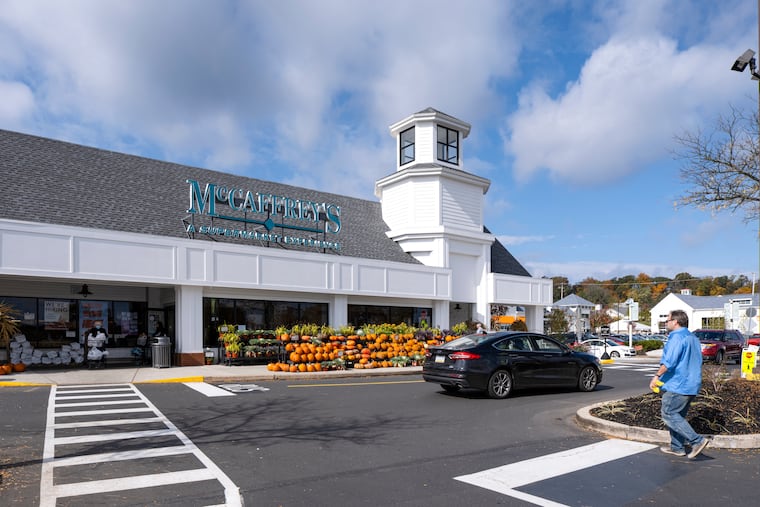
Grocers, especially [tenants like Sprouts, Whole Foods, and McCaffrey’s], have really invested in their stores, and they’re drawing a lot of traffic.
As it relates to fitness and wellness, and higher quality food and beverage options, I think consumers today care more about what they’re putting in their bodies and how they look than they ever have.
Across the income spectrum, consumers are looking for value. And as department stores have closed, off-price operators [such as Burlington and Five Below] have taken a significant amount of share.
You have to create an environment at specific shopping centers where if one tenant draws traffic, another tenant can complement them.
It really matters who your neighbor is, so if you’re able to put a strong merchandising mix together, which we’ve been able to do at our centers in Philadelphia, you’re really going to see traffic.
What would you like to accomplish as CEO?
We’d love to find some new opportunities to grow our footprint in Philadelphia.
The deals that we’ve done in Philadelphia, many of them are [with retailers new to Brixmor’s national portfolio], like with Lululemon, like with Free People, like with Warby Parker, like with Pottery Barn and Williams-Sonoma.
» READ MORE: Closed Iron Hill Brewery in Newtown is officially becoming a P.J. Whelihan’s franchise
We think about how our centers connect with the communities that we’re in. We’re part of those communities. We’re actually landlords to Philadelphia institutions like Chickie’s & Pete’s and P.J. Whelihan’s.
The more that we can tie our assets with retailers that are relevant to those communities, the better.
What makes you optimistic about shopping centers amid all the e-commerce competition?
What [the pandemic] showed was that people like connectivity. They don’t like to just have things delivered to their door. They want to go out and experience things. They want to touch and feel things.
Our traffic since the pandemic across the entire portfolio is up 7%.
If you talk to a lot of these major retailers, what they’ll say is the store is the center of everything that they do. They’re utilizing that store to be able to connect with the consumer in store, at delivery, as part of pickup.
I’m pretty bullish. There are a lot of retailers that continue to thrive despite the fact that consumers have options to be able to get something online if they wanted to.