A Wilmington real estate developer is buying up properties in Center City Philadelphia
Delaware developer Capano Residential has purchased The Arch, an 111-apartment building near the original Comcast skyscraper.
One of Delaware’s largest real estate developers, Wilmington-based Capano Residential, is buying buildings in Center City Philadelphia for the first time.
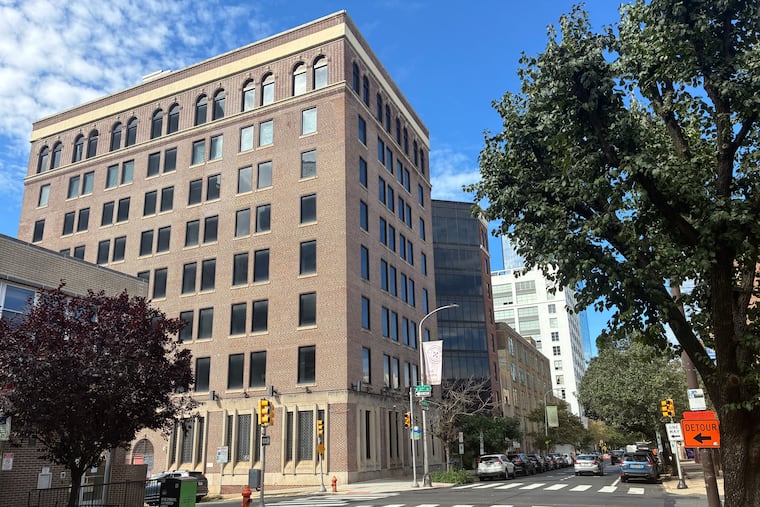
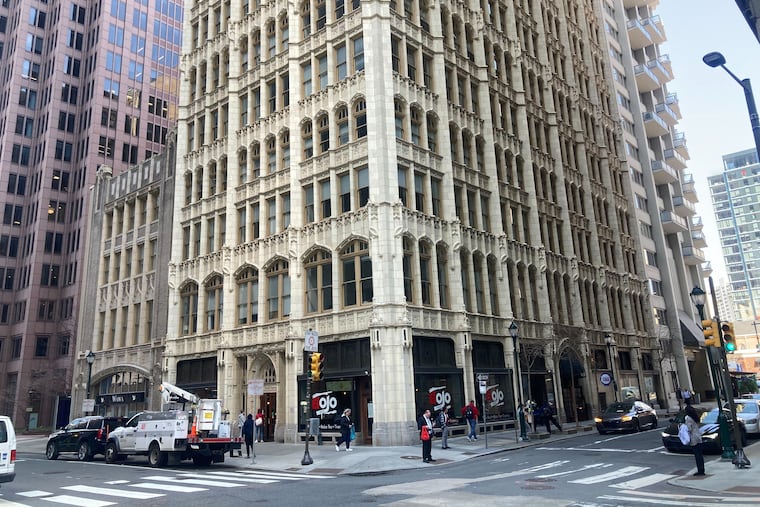
The company’s latest acquisition is the 111-unit apartment building at 1701 Arch St., just north of Comcast’s first skyscraper.
Capano purchased the beautifully designed 16-story building, known as The Arch, from Alterra Property Group for $25 million. No large-scale renovations are planned at this time.
The Arch contains over 11,000 square feet of retail space, the majority taken by a Wawa. Another retail bay is occupied by Gojo Poke Bowl & Boba Tea, and a third of just under 2,800 square feet is vacant.
The purchase comes four months after Capano’s first acquisition in Philadelphia, the 80-unit Rittenhouse Row apartment building at 1601 Sansom St., which was bought for $23.7 million with $2 million in renovations planned.
“With the addition of The Arch, we are strengthening our commitment to a meaningful, long-term presence in Philadelphia,” Louis Capano III, CEO of Capano Residential, said in a statement. “This acquisition represents another important step in expanding our footprint in the city.”
Capano Residential’s senior developer of commercial properties, Michael Turick, highlighted 1701 Arch St.’s presence in the core of Philadelphia’s office market — notably the Comcast towers next door — as well as its proximity to City Hall and Rittenhouse Square.
“It’s got great walkability, great presence in downtown. It’s an established property,” Turick said.
The Capano family’s real estate history extends back to the 1940s, when they started out as suburban homebuilders in Delaware in the decades when the northern part of the state shifted away from its agricultural history and became more densely populated.
The company is in its third generation of family ownership and controls more than 8,000 apartments across 40 properties. It also owns 17 shopping centers and six office buildings.
In recent decades, Capano has expanded beyond its home state into Maryland, Florida, and elsewhere in Pennsylvania.
Regionally, it has invested heavily in Phoenixville, where the company is developing around 350 new apartments. Capano III lives in Haverford, according to the company’s website.
The overwhelming majority of Capano Residential’s portfolio is suburban, but the company does own properties in Wilmington city and has a 100-unit development underway in Baltimore’s Fells Point neighborhood.
Turick says the company thinks 2026 is a great year to invest in Philadelphia because apartment development has slowed and vacancy rates are down. That’s good for multifamily landlords, who will be able to command higher rents, he said.
“That’s going to help with reduced concessions and keeping market rents more true to historical norms,” Turick said. “That’s the macro theme for our interest in getting into the market in Philly.”
According to an analysis from Center City District, sales in downtown Philadelphia were unusually high in 2025.
So far, both of Capano’s purchases in Philadelphia are over 100-year-old buildings. 1701 Arch was added to the local Register of Historic Places in 1982 and is covered by local preservation regulations.
The building dates to 1914, when it was constructed as a six-story building by the Methodist Church to serve as offices for its missionary work.
In 1921, eight more stories were added, and in 1922, it became a hotel dubbed the Robert Morris Building (named after one of the principal American financiers of the Revolutionary War and a prominent Philadelphian).
The building was converted back to offices in the 1980s, and then Alterra Property Group purchased it in 2007 for over $17 million with the intention of converting it back into a hotel.
Those plans were scrapped during the Great Recession, and instead Alterra eventually turned it into an apartment building.
“It’s been a long road with that building for my firm, and while my partners and I lost considerable money on this investment, I am glad to see it sold into capable hands,” said Leo Addimando, cofounder of Alterra.
“Capano is an established and well capitalized owner and developer of multifamily in both this region and in Florida,” Addimando said. “I believe that their entrance into the Center City Philadelphia apartment market is well timed from a value perspective.”
Turick says that Capano Residential is on the lookout for other opportunities in Philadelphia. They have another site under contract in Center City, which could be a future residential site.
Turick says that any new development in Philadelphia at this point would be done with a partner because Capano does not have experience navigating the city’s bureaucratic and political landscape.
“There’s a lot of the entitlement nuances in the City of Philadelphia,” Turick said. “I’m not saying we couldn’t do it, but it’s not a market you want to jump in and be like, ‘Hey, let’s just go try and build this thing.’”