Remote work still stings, but Center City remains a jobs hub and popular neighborhood, report finds
The Center City District highlights issues with homelessness, transit funding, and Philadelphia's tax structure as challenges.
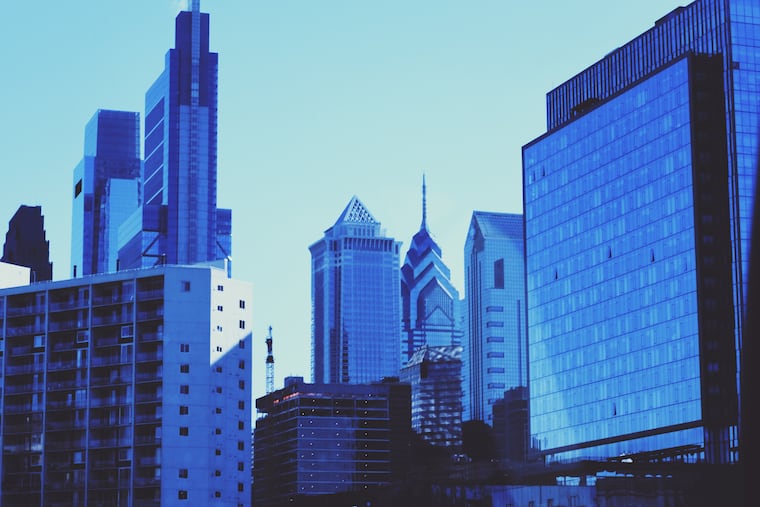
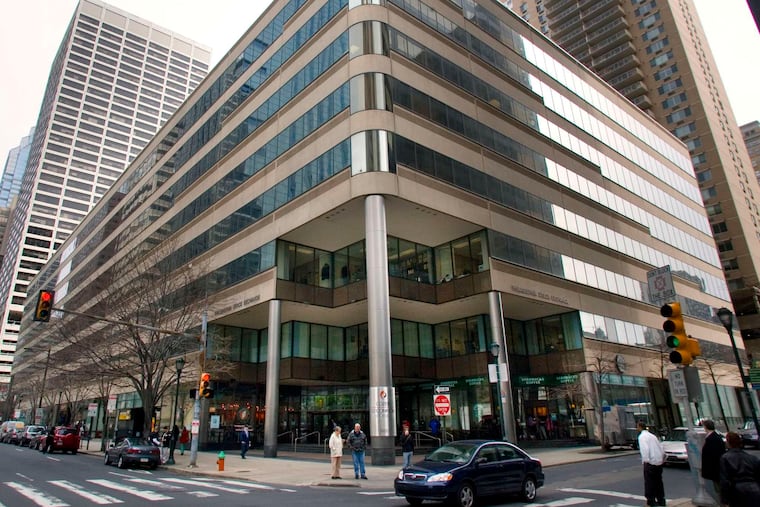
Center City Philadelphia is still feeling the bite of the COVID-19 pandemic, but its booming residential population is boosting its fortunes above many other American downtowns.
Foot traffic in Center City remains at 80% of 2019 levels, though the office worker population in the core of the city’s West Market skyscraper district is between 50% and 60% of what it had been.
But those are among the only gloomy numbers in the annual State of Center City report released this week by the Center City District, a pro-downtown business advocacy and services group.
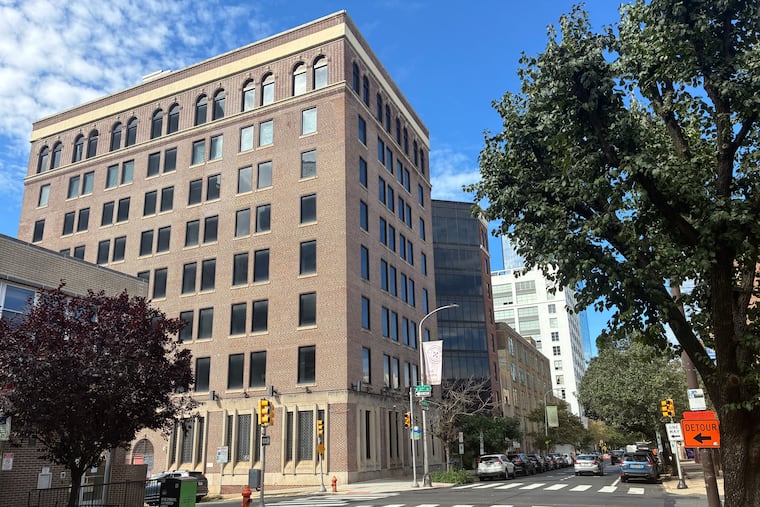
Center City’s 20% office vacancy is lower than many peer cities and most of Philadelphia’s suburbs, with only Conshohocken, Radnor, and Bala Cynwyd outperforming West Market Street.
The population is growing, and development — especially of apartments — is still healthy as a result. Walk around Rittenhouse Square or on Walnut Street and you might be thankful that overall pedestrian counts are down since 2019.
“What really gives us sort of hope about the promise of our downtown is that we’re in an age where so much of daily life has migrated online. We work from home, we shop online, we stream instead of attend,” said Prema Katari Gupta, president and CEO of the Center City District.
“Center City really has a special place as one of the last places in the region where diverse groups of people from different places with different backgrounds still encounter each other in real life,” she said.
The downtown job scene
Center City is still a regional employment hub, with about a tenth of all jobs in the larger metropolitan region and half of the workforce commuting in from outside Philly. Suburban workers still represent a third of wage tax revenues.
Center City District has long argued that Philadelphia’s reliance on an unusual amalgam of business and wage taxes has undermined the degree to which it dominates regional employment. Unlike with New York, Boston, and Washington, regional companies mostly did not move back into the city during the 2010s.
“The share of jobs in Center City relative to the rest of the region hasn’t moved much,” said Clint Randall, vice president of development with Center City District.
“You can go back decades and see that even though we’ve built a lot of new office buildings and converted a lot of old ones, the total amount of office space we have at any given time is almost exactly the same, whether [in] 2020 or 1980,” Randall said.
To substantially change those numbers would require radically altering Philadelphia tax policy. What can be done with a wage tax that represents close to half of city revenue, especially when increasing residential property taxes is politically untenable?
Office jobs still represent the largest slice of employment in Center City, at almost 110,000, even if many are working from home more often. Education and healthcare employment, longtime growth engines of Philadelphia’s economy, are No. 2 with over 67,600 jobs.
Stalled return to office
As in the rest of the country (except New York City), office vacancy rates remain high at over 20%. Still, Philadelphia compares well to cities as diverse as Atlanta, Austin, Denver, and San Francisco, all of which have vacancy rates over 30%. (As do office submarkets in Philadelphia’s northern suburbs.)
In 2025, total office occupancy didn’t change much, with vacancies falling slightly in the highest demand “trophy” buildings and remaining steady in the rest of the higher-end market.
That’s partly because the office leases that make the biggest difference in statistics like these are for entire floors of a building.
There are few such large blocks of space available in the highest-demand buildings. Of the 57 available spaces offering a whole floor or more, only 10 are in high-rises.
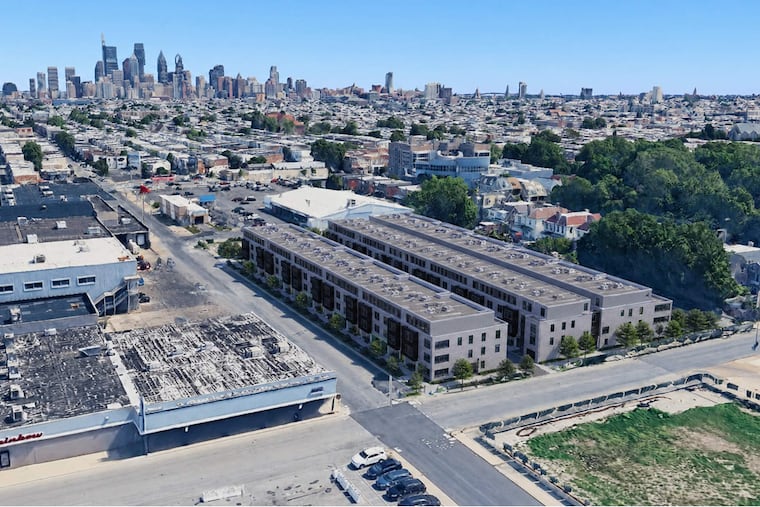
Philadelphia’s vacancy rate has been eased by the demand for apartments, with 2 million square feet of office space removed from the supply to be converted into residential. In the West Market office district alone, 1,000 new apartments are slated.
Center City and the neighborhoods that surround it have amenities like walkability comparable to European or Canadian urban areas and at a far lower price point than its few American counterparts.
The success of Center City as a neighborhood has created a flywheel effect, in which lively streets and popular restaurants attract more residents and more developers.
“Much of what we all love about Center City … comes from the fact that the population has swelled enormously,” Randall said. “It’s residents, more so than visitors or tourists, that create demand to sustain this level of a dining scene and this amount of retail.”
Last year Center City District found that over 4,000 units were sold or rented in what they call Greater Center City — Callowhill to Tasker Streets, river to river — which they described as “the strongest single-year performance on record.”
And while Philadelphia as a whole lost population through 2023 (after 14 years of growth), Greater Center City lost fewer residents and rebounded faster.
In 2025, data from Placer.ai showed that while Philadelphia’s population grew by only 1.6%, Greater Center City increased by 3.3% and the core of the area — Vine Street to Pine Street — grew 4%.
Gupta highlighted two issues beyond the city’s tax structure that affect Center City’s fortunes: SEPTA’s perennial funding battles and an increase in people with mental health challenges living on the street.
“We think we live in the richest country in the world, and we shouldn’t let people languish on the streets,” Gupta said. “Having visibly homeless people on the streets drives a perception of lack of safety. But more than anything, it’s not fair for the most vulnerable among us to live that way.”