Planning Commission considers how — and if — data centers should be built in Philly
While no data centers have been proposed in Philadelphia, city planners are preparing for the debate to come.
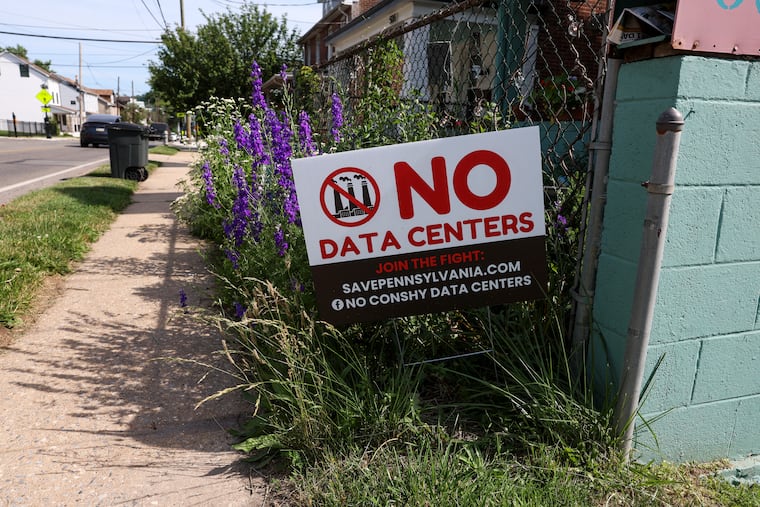
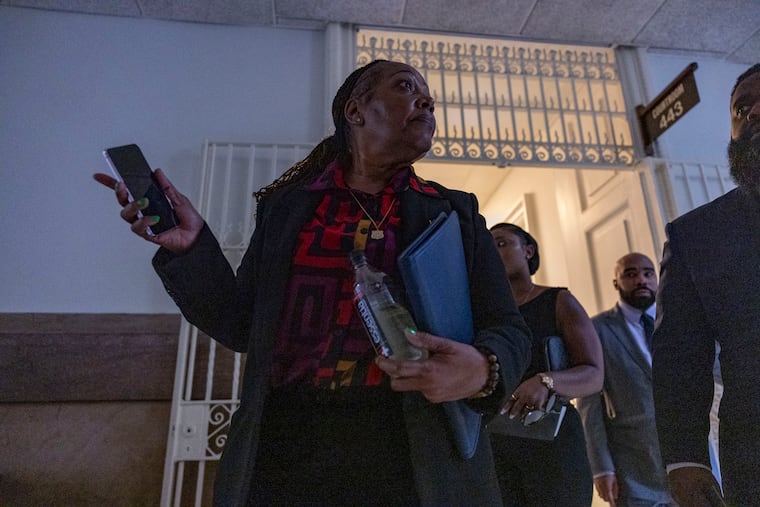
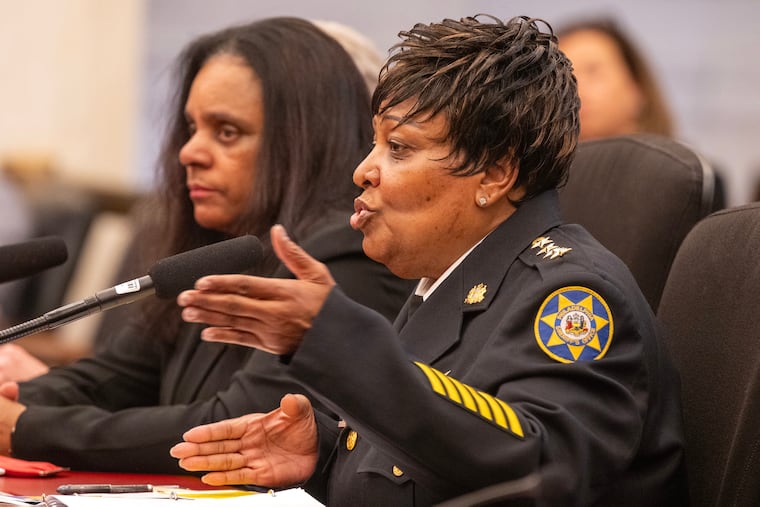
An information-only presentation about data centers before the Philadelphia Planning Commission provoked a firestorm of controversy Thursday, with more than a dozen community groups and other activists rejecting the idea of bringing this energy-intensive use to the city.
Demand for data centers has soared in recent years, as tech companies have invested heavily in artificial intelligence products that require vast amounts of computing power.
Several large projects have been proposed in Philadelphia’s suburban counties and South Jersey.
Data center foes, who dominated the public comment section of Thursday’s presentation, repeatedly called for a moratorium akin to the policy recently enacted in New York State.
“Data centers are a hot topic in land use around the country,” said Amy Boyd, a city planner who presented the research to the commission. “Staff wants to stay up to date on this issue, so that when the topic becomes more pressing in our city, we can be prepared.”
» READ MORE: Human reporters explain why AI data centers are so controversial in the Philly suburbs and beyond
Thursday’s presentation is not a reaction to a particular proposal. Instead, the Planning Commission presented research on the employment, energy, and health effects of data centers, the current state of zoning law in the city, and what parts of Philadelphia could accommodate them.
The Planning Commission found there are only two sites in Philadelphia that could accommodate the largest size of data center, the kind currently being built to support the artificial intelligence boom. Any other possible sites would require consolidating properties and changing zoning.
One possible location is the former refinery site in South Philadelphia known as the Bellwether District, 3143 W. Passyunk Ave., which contains 1,300 acres of mostly undeveloped land zoned for industrial uses and has long been rumored as a potential data center site.
The other possible site is 2600 Grant Ave., a city-owned property by the airport in Northeast Philadelphia.
The idea of municipally owned land being used for a data center drew protests from citizen attendees of the commission meeting.
But policymakers emphasized that the presentation was just meant to highlight parcels that were large enough to accommodate the use — and were not meant to indicate support for such an idea.
“We are not currently considering that site. We have not been asked to consider that site,” Octavia Howell, director of the Planning Commission, said about the Grant Avenue property.
“We were strictly looking at industrial land that is of a size that could be attractive … to someone who is looking at Philadelphia and curious about data centers,“ Howell said. “There is no proposal that this research is responding to.”
Boyd’s presentation noted that Philadelphia already hosts eight smaller data centers from an era when they were not such a controversial topic.
These include 365 Data Center, which operates at 3701 Market St. in University City, and 4775 League Island Blvd. in the Navy Yard. At 25,000 square feet, that South Philly building is only a quarter of the size of the smallest contemporary “hyperscale” data centers.
Boyd’s presentation also emphasized the amount of resources that are required to keep huge, new data centers going.
She reported that data centers are now among the 10 largest water-consuming industries in the United States and use 4% of the nation’s electricity — with that figure expected to grow to 12% by 2035. Local energy providers have had to make large capital investments to accommodate the industry.
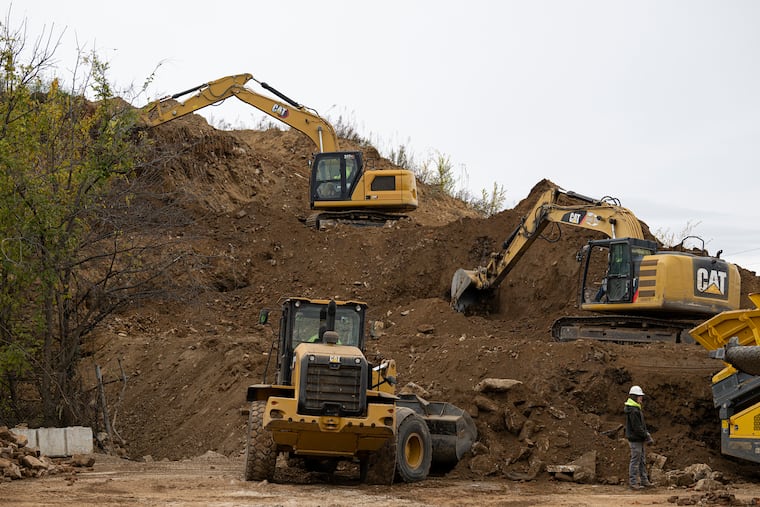
Boyd noted that many of the jobs and tax benefits to data centers take place during construction, when up to 1,500 well-paid union workers are employed.
Afterward some well-paid positions will still exist, including tech and maintenance staff, but she found that data centers employ only one worker per 5,000 square feet — roughly 13% of the jobs that would be expected in a standard warehouse of a similar size.
But Planning Commissioner Pat Eiding said he thought that might undercount the job-creation potential.
“I don’t know if it considers the amount of maintenance that goes on in these critical facilities,” said Eiding, former head of the Philadelphia AFL-CIO. “As we go forward, I’d like to see research on how many man hours are needed for maintenance and keeping a facility going.”
Public response to the Planning Commission’s report was wholly oppositional to data centers. No one spoke in favor.
Potential health effects were highlighted, and many speakers expressed concern that the amount of electricity used by potential centers would likely be powered by fossil fuels.
Others expressed concerns about surging electricity costs, as capital improvements are paid for by increased consumer costs.
“It’s what’s causing people to not be able to pay their bills,” said Linnea Bond, environment and health education director at Physicians for Social Responsibility Pennsylvania. “It’s a huge health issue, and it’s a huge affordability issue.”
The Planning Commission staff emphasized that data centers are not currently specifically regulated in Philadelphia’s zoning code and suggested the possibility of a new law creating a specific category for them.
While talk of a potential data center moratorium swirled around City Council earlier this year, only two nonbinding resolutions have been passed related to the topic so far.
One from Councilmember Rue Landau called for hearings on data centers, which have not been held yet. Councilmember Isaiah Thomas held hearings late last year about rising energy costs, citing data centers as one of the driving forces.