Can City Hall keep 925 West Philly homes affordable?
Local leaders are racing again to keep subsidized housing affordable. United Way thinks it has the answer.
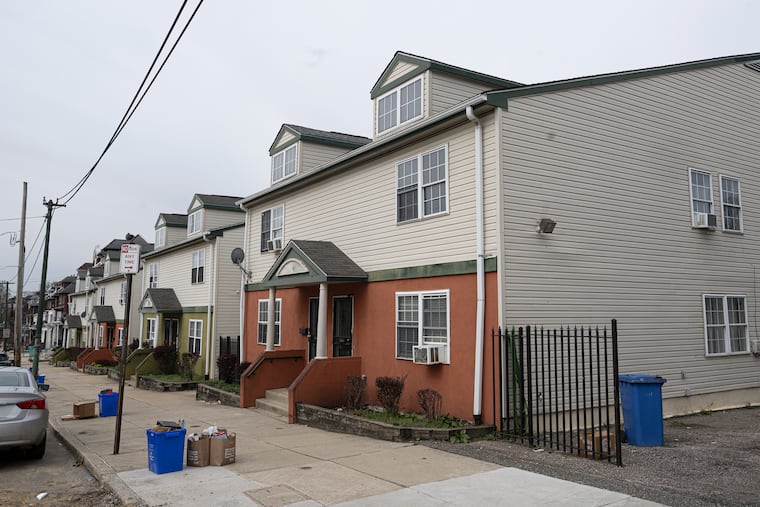
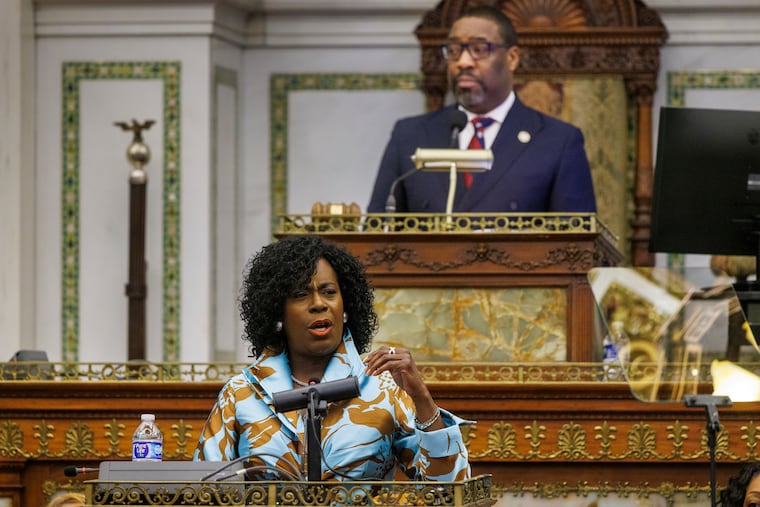
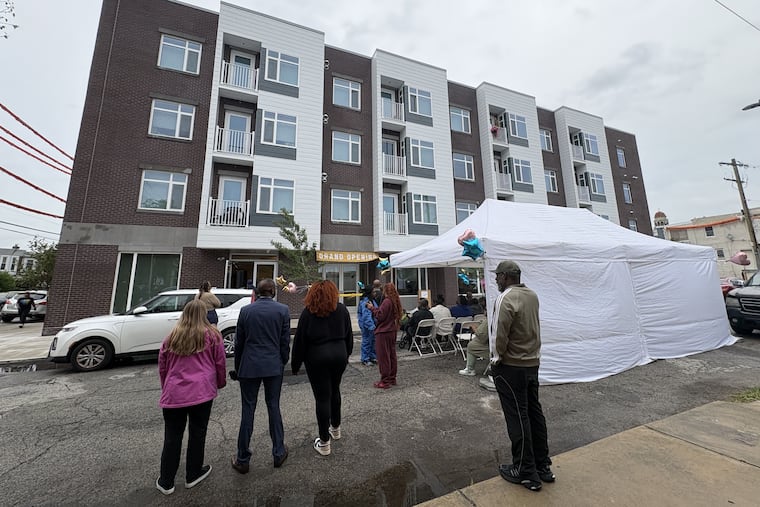
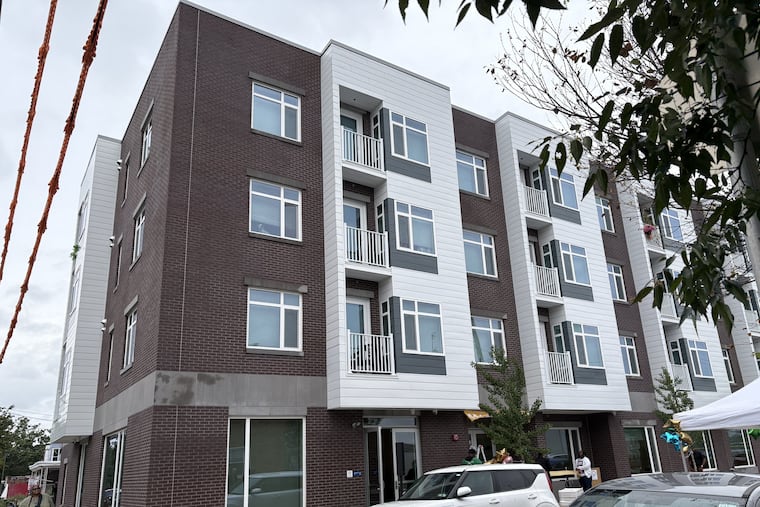
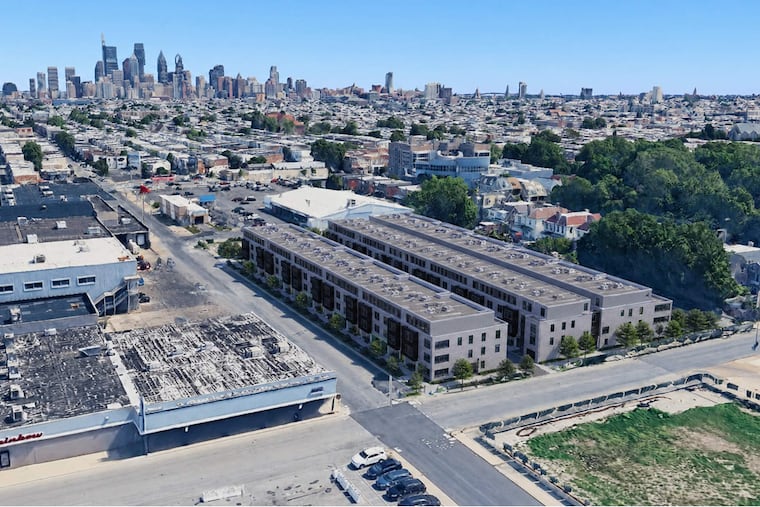
Another 925 units of affordable housing in Philadelphia are in danger of disappearing, leading to a heated exchange between Philadelphia officials and Councilmember Jamie Gauthier at budget hearings this week over how to preserve them.
It’s the latest chapter in a rolling crisis around expiring federal housing subsidies. The University of Pennsylvania estimates that more than 7,500 federally backed low-income homes could lose their affordability protections in the next decade.
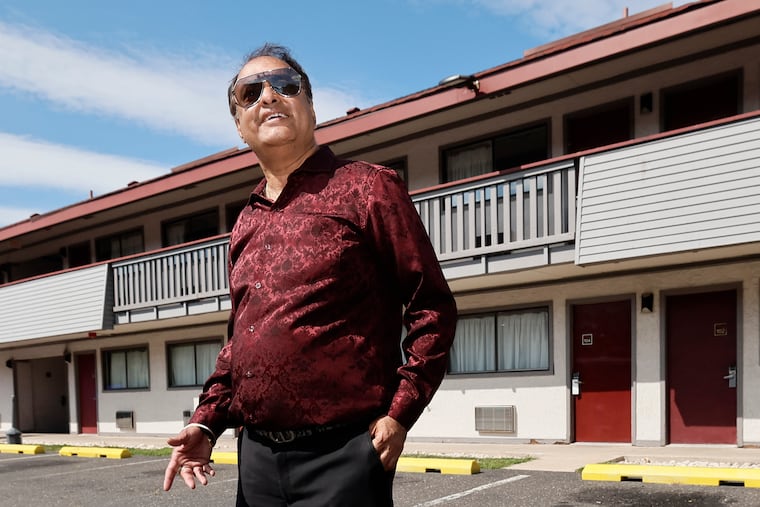
Gauthier says she wants to quickly intercede and “help fund” the purchase of the units, as the owner Jim Levin of Neighborhood Restorations says he wants to sell them to the city and is holding off on putting them on the open market — for now.
“If we fail to act, it would be incredibly hard, if not impossible, to build enough affordable homes to replace what we have lost,” said Gauthier, who represents the neighborhoods where many of the homes are.
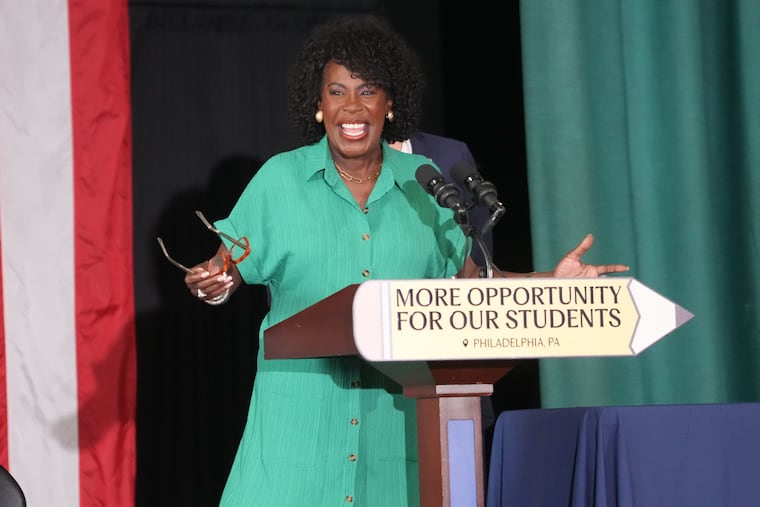
Parker administration officials declined to negotiate in the midst of Tuesday’s budget meeting — “We are not going to make that commitment today,” said Mayor Cherelle L. Parker’s chief of staff Tiffany W. Thurman — but affirmed that they are exploring how to address the situation.
Although the exchange over Neighborhood Restorations’ fate was tense, both sides are well aware of the larger problem. “Affordable Housing Preservation” is one of the largest line items in the $800 million Housing Opportunities Made Easy (H.O.M.E) plan, which was hammered out between Parker and Council.
Gauthier has passed legislation requiring owners to give tenants and policymakers a year of advance notice if they intend to sell their affordable unit.
The debate in Council also comes as the United Way of Greater Philadelphia and Southern New Jersey is raising capital to set up a permanent answer to the issue of expiring affordability.
Most federal housing programs rely on public-private partnerships where affordability lasts for only a set window of time, unlike earlier public housing programs that ensured permanent affordability. In neighborhoods where property values have shot up, owners have been enticed to abandon low-income housing subsidies at the end of their contracts.
United Way wants to create a revolving fund that buys properties with expiring affordability and keeps them in good repair and manages them short-term as responsible buyers are found to maintain affordability long-term.
“Neighborhood Restorations is the crisis of the moment, but it’s not going to be the last. It might not even be the last one this year,” said Greg Heller, a consultant who is working with United Way to set up the $100 million fund to purchase at-risk properties.
United Way’s board has voted to approve an initial $2.5 million contribution to the fund.
The organization’s CEO, the Rev. Bill Golderer, said in an email that United Way has approached “three anchor [local] institutional investors” and have identified over 130 individual investors. He expects an answer from the institutional investors by the end of the fiscal year, June 30.
“This could serve our community for decades because this problem isn’t going away, and it’s the most cost-effective affordable housing intervention,” Golderer said in an interview.
Today, when subsidies expire or a low-rent building goes for sale in a gentrifying neighborhood, “it’s a fire drill, and there’s a scramble to try and assemble capital,” he said. “It would just be better to have the capital assembled and prepared for this exact kind of moment.”
How United Way’s idea could work
This kind of preservation fund to acquire endangered affordable housing has been discussed since at least Mayor Jim Kenney’s administration, when Heller led the Redevelopment Authority.
It’s a fairly commonplace innovation in other urban areas, with cities as varied as Minneapolis; Charlotte, N.C.; and Boston having their own versions in place.
Once capitalized, here’s how the fund would work. When local leaders became aware that the owner of an affordable building — subsidized or otherwise — wants to sell it on the open market, the fund’s investment committee members would take a look at the property.
If they determine it’s worth buying, the fund would create a limited liability corporation (LLC) for the property with the preservation fund and the potential buyer if there is one at that stage.
The idea is that the LLC would hold the property for three to seven years, with the fund providing the building’s management and repair needs and collecting rent.
That would give an affordability-minded buyer time to put together the funds to acquire it themselves. Applications for Low Income Housing Tax Credits, which many nonprofits rely on, often take at least a year to secure.
Once the entity in question has the money it needs, it can buy out the preservation fund. The investors would get a small return from the collected rents and could either reinvest in their fund or get their money back.
Once the fund is capitalized, “we would be prepared and able to buy the time it takes to do preservation,” Heller said. “If we don’t have it, we’re just going to have to keep having fire drills without guaranteed success.”
As United Way approaches potential investors, law firm Ballard Spahr has set up the preservation fund’s legal entity, and asset manager Forsyth Street is ready to administer it. The HOW Property Group, a prominent local developer and property owner, would manage the buildings short term.
“It’s fully structured and fully ready to go,” Heller said. “As soon as it has enough capital, it can start to acquire properties.”
The timeline for Neighborhood Restorations’ properties
It is unclear whether United Way’s preservation fund will be put together in time to intervene for the Neighborhood Restorations properties — which are 94% occupied.
In Levin’s sprawling portfolio, 224 homes already have reached the end of their regulatory restrictions, with the remaining 701 exiting the program over the next 11 years.
Levin was unavailable for an interview this week due to medical reasons, but in an February email, he assured tenants that he was seeking to sell their homes to the city in a bid to keep them affordable.
“To be clear, the only group we have spoken to about purchasing our properties is the City of Philadelphia because they would and we would like to keep the properties affordable,” the email reads. “We have no idea how this will resolve.”
Organizers with the progressive group One Pennsylvania are working with tenants and Gauthier’s office to ensure that the portfolio ends up priced for lower-income people.
Although owners of LIHTC properties can extend the affordability subsidy, Gauthier fears that if Levin sells on the open market many of the properties will be transformed into market rate housing — especially those closer to University City.
“This owner is at the table and wants to make this work, but the city has to demonstrate that we are willing to step up and ensure that these 925 homes remain permanently affordable,” Gauthier said at the budget hearing.
The scale of Levin’s holdings makes it difficult for the city to handle them all at once, Parker’s representatives say.
“We’re in the preliminary part of that conversation. We’ve been able to identify how massive … this portfolio is, which means it takes a significant amount of resources" to acquire the properties, Jessie Lawrence, the city’s director of planning and development, said at the budget hearing.
Neighborhood Restorations will not say how much they are asking for the portfolio. Two people familiar with the sales pitch said the company is asking $115 million, although the state of some properties could affect that number.
The company disagrees and says only cosmetic repairs are needed. The city’s physical-needs assessment of the homes hasn’t been completed yet.
But the amount of money allocated to “affordable housing preservation” in the first year of the H.O.M.E plan is $46.2 million.
“To be able to rehab [this portfolio], some of which is not in the best condition, it would be not smart for us ... to invest everything into one area when we are committed to a very comprehensive strategy that is citywide,” Lawrence said to Gauthier.
Parker’s chief of staff said the administration would work with Gauthier on a solution.
“We are committed to work with you. We’ve already told you that last week. We’re saying it on the record today. You can hold us accountable,” Thurman said. “We understand the impact and the opportunity at hand, but we’re not going to do it at this table right now.”