A historic farmhouse in West Norriton
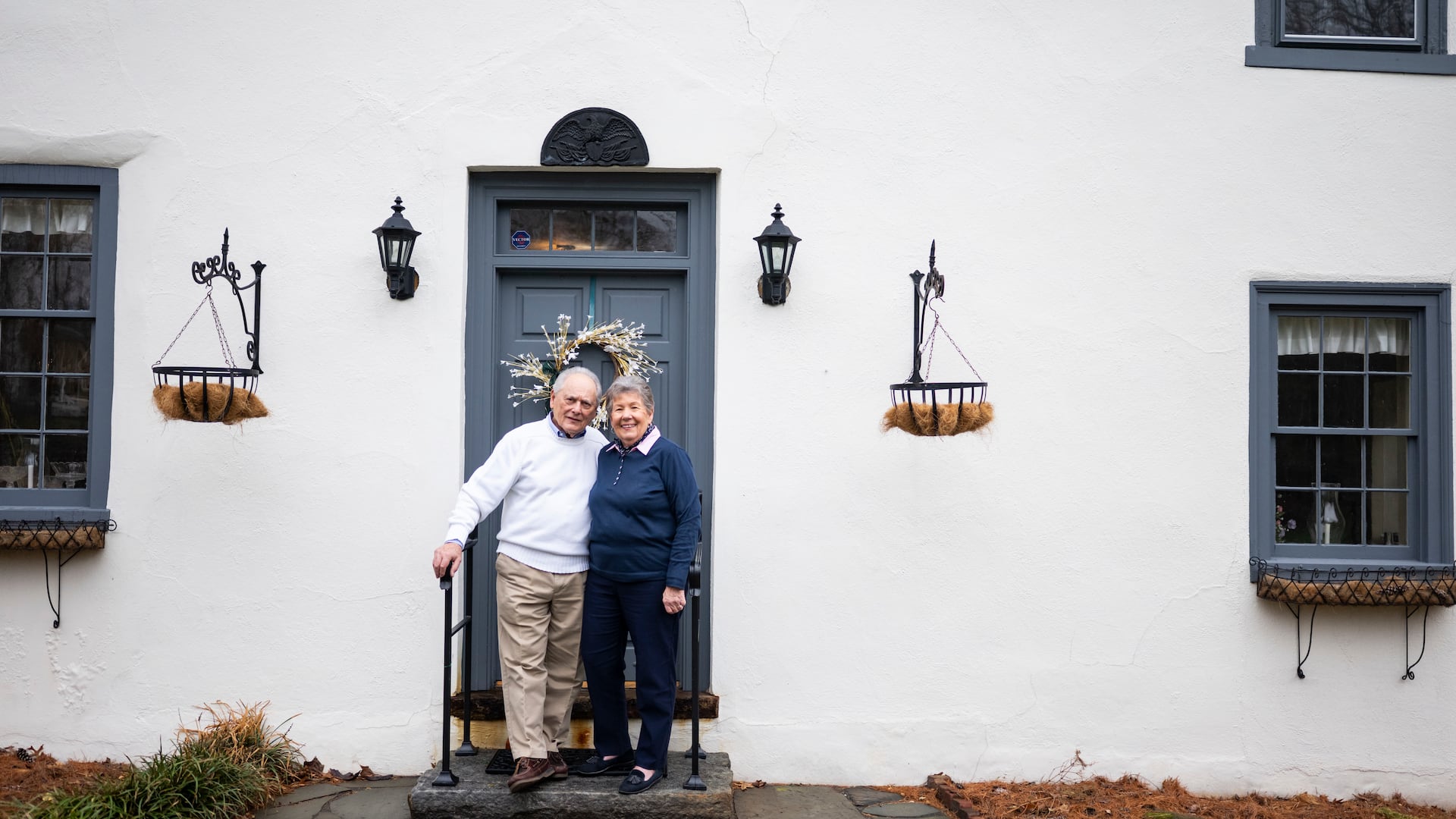
Jean and Carmen Branco had nearly given up their search when they found their home in 2007. They’ve enjoyed highlighting its history.
The sign under the knotty pine kitchen cabinets in Jean and Carmen Branco’s West Norriton farmhouse reads, “All Because Two People Fell in Love.”
It was a gift from Carmen to Jean, a reminder of how they came to be in their home, which was built in the 1700s.
The couple raised their daughter Susan in a Colonial Revival house in Audubon. They began searching for a farmhouse when they retired from teaching in elementary schools in Montgomery County.
“Everyone was downsizing but we were upsizing,” Jean said. She wanted a proper place to display her family treasures. “I was an only child so everything came to me,” she said.
All the farmhouses for sale, though, needed major renovations. “They were horrible,” Jean recalled, with dropped ceilings and inappropriate add-ons.
Then Carmen found the West Norriton listing online. The photos showed a nice kitchen and the center hall layout they wanted. Jean was ready to quit their search but Carmen insisted they see it.
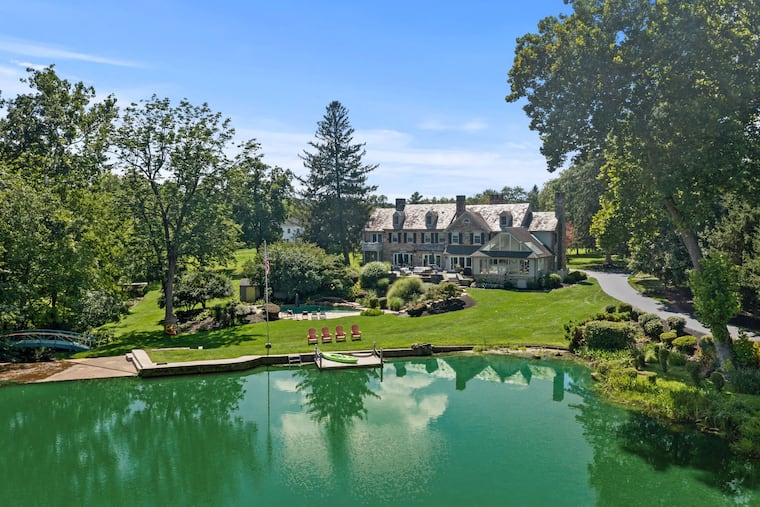
The couple bought the white stucco, three-story dwelling in 2007. It was included on the Norristown Garden Club Holiday House Tour in 2008 and this past December.
The Brancos directed tour goers to look up when they entered the front hall. Stenciled on the wall below the ceiling are the names of the 20 individuals who have owned the property beginning with William Penn and ending with the Brancos.
Records indicate that by the time the third owner’s widow, Mary Curry, died in 1804, a small two-story house stood on a 200-acre property planted with apple trees.
The Brancos only have eight-tenths of an acre, but their house is bigger. The parlor and dining room with beamed ceilings and fireplaces date from the late 18th century. Upgrades and additions to the house were made over the years but owners kept the integrity of the vintage structure.
In the 1950s, then-owner C. Allen Thomas, a lumber broker, added a kitchen and library with beamed ceilings and handsome woodwork and a first-floor au pair suite with a bedroom and bath. The bathroom features a green tub and yellow tiled walls painted with flying geese. Thomas built a bedroom on the second floor with a dressing room and walk-in cedar closet. There were already three bedrooms and a bath on the second floor and a bedroom and bath on the third floor.
The Brancos’ mahogany dining room furniture and grandmother’s clock are suited to the house, as are the upholstered gray sofa and crimson-and-white-patterned arm chair in the parlor.
Dining room shelves and a shelf over the parlor fireplace display Jean’s collection of blue and white Royal Copenhagen china, which started with four pieces an aunt gifted her.
The sleigh bed in the first-floor bedroom was purchased to match Jean’s grandmother’s washstand. On the windowsill are powder boxes and a comb and brush set made of celluloid. The man-made material was an inexpensive substitute for ivory in the late 1800s. A round celluloid box made to store men’s collars belonged to Jean’s father, David Washburn. “He was a truck driver who loved antiques,” she said.
The spice cabinet in the breakfast room also belonged to her father. A bible trimmed in gold leaf belonged to Jean’s great-grandmother. Quilts on beds throughout the home were stitched by Jean’s mother, Grace Washburn. An uncle gave Jean the dollhouse in the upstairs hall.
Friends ask her: Isn’t this house too much work? She answers, “It’s not a chore. I love to touch my things. I dust and Carmen does the wood floors.”
Carmen grew up nearby in Bridgeport. Jean grew up in Blakely, Lackawanna County. They met at what is now West Chester University and married in 1966, two years after graduating.
Their wall art includes a painting of Jean’s bridal bouquet and several floral water colors by the late Jean Woltemate of Audubon. The landscape oil painting over the dining room fireplace was a gift to Jean from high school classmate William Scolere. The tureen and porcelain cows on the mantle belonged to Jean’s grandmother.
Carmen points out to visitors the stone threshold separating old and new sections of his home. He and Jean are honored to own the farmhouse, “We are its caretakers,” he said.
Is your house a Haven? Nominate your home by email (and send some digital photographs) at properties@inquirer.com.