Many homes have mold. But when is it a bigger problem?
Where moisture hides, mold can grow. Philadelphia-area homeowners share how they dealt with the problem.
Gregory Harth’s family wasn’t feeling well. His wife felt achy and tired and his two teenage daughters had unexplained rashes.
His wife, a trained physician assistant, also suffered from Lyme disease and experienced some autoimmune complications, but she and Greg had a feeling that something else was making her sick.
As part of a medical deep dive, she had blood work drawn that came back positive for mold. Greg and his daughters then had a similar blood test done, and all four family members tested positive for mold.
“Mold can trigger autoimmune issues and does a whole host of bad things to us,” said Harth, president and chief visionary officer of Harth Builders, who lives in Blue Bell. “We discovered our HVAC system was distributing mold all throughout the house.”
Molds are a natural part of the environment that can be found almost anywhere that moisture and oxygen are present, according to the Environmental Protection Agency (EPA). They produce tiny spores that waft through the indoor and outdoor air continually.
Available national data doesn’t shed light on how common mold is in residential buildings. Several published studies estimate the prevalence at 47%, according to Jordan Zambrana, an EPA biologist.
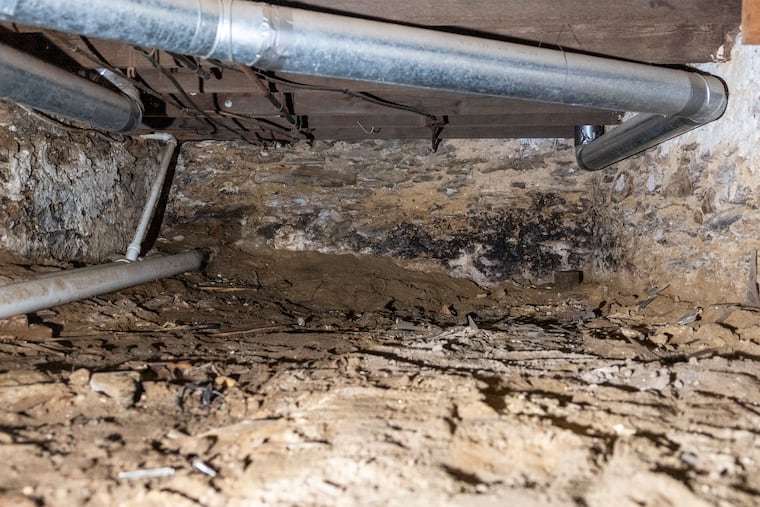
But it’s safe to say all homes have some amount of mold, which easily builds up in bathroom grout, basement crawl spaces, under kitchen sinks, and around poorly ventilated windows or HVAC systems. In small amounts, it’s usually harmless, experts say. But when moisture builds up from leaks, flooding, high humidity, or poor ventilation, mold can grow quickly and affect indoor air quality.
How mold affects health
“The most common thing to worry about with mold exposure is respiratory symptoms” said Cheryl Bettigole, executive director of the Penn Center for Public Health at the Perelman School of Medicine at the University of Pennsylvania. These can include “coughing, sneezing, itching running eyes, sometimes difficulty breathing or asthma exacerbations for people who have asthma.”
If those symptoms occur while someone is in a specific building or room, but when they leave that space they feel better, that’s a clue there may be mold nearby. Once the source of the mold is identified and cleaned, the person’s symptoms should go away.
“Inhaling or touching mold or mold spores may cause allergic reactions in sensitive individuals,” said Zambrana. “Mold does not have to be alive to cause an allergic reaction.”
Does your home have a mold problem?
Signs of mold include dark fuzzy patches, water stains or discoloration, peeling paint, bubbling drywall, warped floors, and a musty odor.
“Mold is the result of too much moisture, either humidity buildup or water intrusion,” said Micah Forsyth, founder of Philadelphia home inspection company Inspectadelphia. “Mold is not invisible, so if there’s mold in a home, we should be able to find it.”
In older homes, mold is often found in attics, basements, and crawl spaces, Forsyth said. He recommends running a dehumidifier in the summer to reduce moisture and prevent mold from forming.
“Especially if the crawl space has a dirt floor rather than a concrete floor, it’s more likely moisture can come up through the ground,” he said.
How to test your home for mold
As Amy Ryan and Sean McBride walked through their prospective new home in Roxborough on inspection day, they spied a dark, slimy patch in the crawl space. Upon further investigation, home inspector Forsyth determined it was mold.
“My overarching concern was that this was the mold I could see,” said Ryan. “There’s always that little niggling worm in the back of your brain that says, ‘Oh no, is there mold elsewhere in the house that I can’t see?’”
As part of any inspection, Forsyth looks for moisture. “Mold can only grow in the presence of moisture, and we shouldn’t have moisture or high humidity in our homes,” he said.
Removing the source of the moisture and remediating the existing mold will resolve the problem.
During Ryan’s inspection, Forsyth discovered a broken sewer drain pipe in the crawl space. After the couple’s settlement, they had the pipe repaired and the mold remediated. Ryan feels secure that the problem is fixed and is hopeful that there isn’t more hiding somewhere else.
“That’s a risk you take with any property, especially one that’s 100 years old,” she said.
There are many types of home mold tests, both DIY and through companies that will come to the home. Using different testing methods — air, dust, surfaces, or moisture — a report is then provided indicating the types of mold detected.
Getting rid of mold
Once mold is found, the source needs to be identified, damage repaired, and the mold needs to be eradicated.
It’s important to get rid of mold safely. The EPA recommends wearing gloves and goggles, and scrubbing mold off hard surfaces with detergent and water. Let the area dry completely and check back periodically to make sure the mold isn’t returning.
Absorbent or porous materials, including ceiling tiles and carpet, may have to be discarded if they become moldy.
Harth purchased The Dust Test, a $299 kit that comes with a dust cloth for the homeowner to use to collect dust around the house. The company started in 2022 and sells between 300 and 800 kits per month, according to cofounder Corey Levy.
“Every test finds some degree of mold,” said Levy. “The goal is to find out if there are multiple sources that exist in the home and does it warrant a further detection?”
Following the company’s instructions, Harth wiped down surfaces throughout his home, returned the cloth back to the company and received an analysis of the molds that were present in his home.
Armed with that information, he had a mold testing company scour his home to find the source of the mold. That revealed a laundry list of items, including moisture in the dirt-floor crawl space, and mold in the HVAC.
“The mold started in the basement and the HVAC systems distributed it through the house,” said Harth.
He hired a remediation team to methodically clean the entire house and spray a protective coating over all of the exposed wood. He replaced the HVAC systems and much of the duct work and installed dehumidifiers to keep moisture at bay.
Harth’s daughters’ skin rashes are now clear and blood tests for all four family members are now negative for mold. “My wife was the most susceptible, possibly because she already had autoimmune issues,” Harth noted.
For Harth, the journey to seek out mold and eradicate it was important for his family’s health. But for most homeowners, the process may not need to be so extensive or expensive.
Zambrana notes that even when mold is visible in the home, the EPA says sampling is unnecessary, and there are no federal limits on mold and mold spores for building compliance.
“If you don’t see any visual evidence of mold and there are no other signs of potential issues such as odor, current or previous water damage, or ongoing health issues, then it is very unlikely that sampling for mold will provide any meaningful results,” said Zambrana.