Inside Callowhill’s Willow Street plant as it is transformed into apartments
The long-neglected industrial building will see new life as an apartment building after a half-century of vacancy.

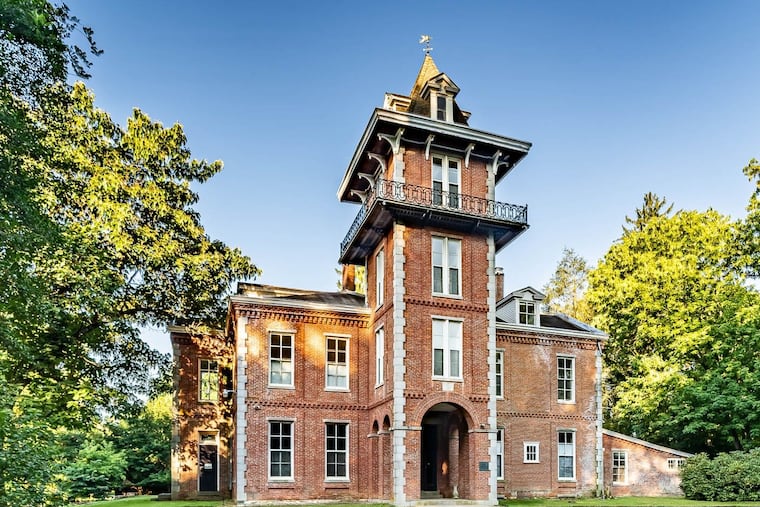
The Willow Street Steam Plant has loomed over the eastern stretches of Philadelphia’s Callowhill neighborhood for almost a century. For half its existence, it has been vacant, a rusted, asbestos-stuffed hulk decaying in spectacular fashion.
But if all goes according to developer James Maransky’s plans, after decades of failed redevelopment attempts, the industrial ruin will begin welcoming residents next year. At the building’s 100th anniversary in October 2027, its 73 apartments could be full.
“I used to run around this area when I was in my early 20s, and I used to look at this building, and always thought it looked cool,” said Maransky, president of E-Built, a Philadelphia-based developer and contractor. ”There were a couple nightclubs over here that we went to in our early 20s, like Shampoo, and then you’d come out, and you’d see this huge building.”
During Maransky’s clubbing days in the early 1990s, the steam plant was still owned by an energy company, which in the late 1980s sought to reactivate the dormant building as a trash-burning power plant. That idea did not prove popular, and the structure languished for decades.
Several developers have sought to reuse it for nonindustrial means, including an indoor amusement park. Most recently developer John Wei went through a costly environmental remediation process, removing asbestos, lead plant, and disused fuel tanks from the property to make way for his own apartment plan.
Instead, amid larger financial difficulties, Wei sold the property to Maransky in 2024 for $8.8 million. E-Built plans 73 units — the majority being one-bedroom — with some studios and two bedrooms, 14 parking spaces, an array of amenities in the basement, and a series of roof decks studded throughout the building. No commercial space is planned.
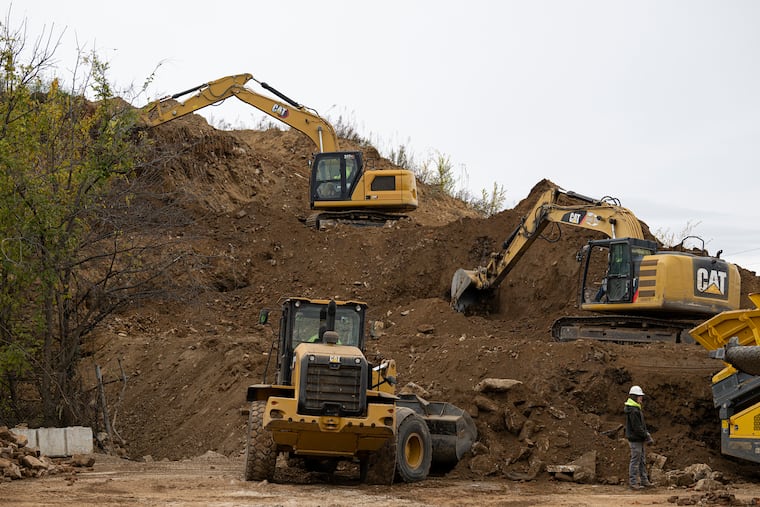
Maransky said that the project has been the most difficult of his career. Normally with a historic redevelopment project, his team needs a month or two for demolition and prep work. With the steam plant, it‘s been more like a year and a half.
It took two weeks to cut through four-foot concrete walls in the basement to make door openings, a process that for masonry walls usually just takes a day. Further complications appeared on every floor. Most apartment buildings have a similar configuration of units on every floor, but the intricate layout of the steam plant means each level is unique.
“It is as strong of a structure as you’ll ever see. It’s built like a fortress,” said Maransky, who believes the project would have been impossible to budget for without his own in-house building contractors.
The renewal of the steam plant is the latest in a tradition of reusing Philadelphia’s industrial heritage for 21st-century purposes. Philadelphia-based developer Lubert-Adler recently refashioned an old power plant into The Battery, a 500,000-square-foot apartment building, hotel, and a sprawling indoor sporting facility called Ballers.
“Along with The Battery in Fishtown, this project shows how the creative reuse of a long fallow industrial structure adds character and a steampunk style to the cityscape,” said Paul Steinke, president of the Preservation Alliance of Greater Philadelphia.
Heating Center City from Callowhill
The seven-story Willow Street Steam Plant was built in 1927 by the Philadelphia Electric Co. It was part of a system that was the principal means of providing heat in Center City for decades, as millions of gallons of water were heated in oil-fired boilers to generate steam that was pumped through a 33-mile grid of underground piping.
After its construction, Willow Street provided steam heating to prominent Center City buildings including the Wanamaker department store, the PSFS building, One South Broad, and even Independence Hall. The steam heating system was popular enough that two more plants were built to bolster supply.
At the system’s peak in 1977, there were 770 steam customers in Center City. By that time, Willow Street had already been sidelined. In 1959, it was relegated to second-tier status and used only at periods of peak demand.
In the 1970s, it was closed entirely. The 1980s saw the failed proposal to turn it into a trash-to-steam plant. Decades of inactivity followed.
“It’s been this big, hulking presence in the neighborhood for a long while,” said Vincent DiMaria of the Callowhill Neighborhood Association. “After multiple false starts, it is pretty surprising but very exciting that someone saw the vision and is actually making it happen.”
A pivot to adaptive reuse
Maransky began his development career with condos and townhouses in Fishtown and Northern Liberties with an emphasis on sustainable features like green roofs. In the last decade, he has begun concentrating on historic redevelopment projects.
The largest is the 170-unit Gotham Silk Factory at 2034 N. Second St., and the most recent is the 19th-century Firehouse at 1221 N. Fourth St., which was designed by John Windrim, the same architect behind the Willow Street Steam Plant.
In addition to the interior work, Maransky’s team has been outfitting the exterior to conform with Historic Commission standards. Two of the steam stacks had to be removed from the north side of the roof because they were too rusted to be saved. But the principal and most prominent three stacks have been preserved and painted midnight black.
“Everybody does white [paint] on steam stacks and all their rooftop things, which to me just kind of disappears into the background,” Maransky said. “For how masculine and strong this building looked, I thought matte black would be a much better contrast to the brick.”
In the basement, amenities will include a large fitness facility, heated yoga room, golf simulator, theater room, and a large hot tub in a former vault area.
The apartments in the first and second floor have ceilings over 16 feet, so 15 units are lofted with polished concrete floors, exposed brick walls, and huge windows. Overall 20% of the units will be studios, 20% will be two-bedrooms, and 60% will be one-bedroom.
The cheapest units will rent for $1,400 a month and the larger two-bedroom a little under $4,000.
Maransky said the pricing will allow the steam plant to be competitive with a lot of the recent new construction on nearby Spring Garden Street, the Delaware riverfront, and in Northern Liberties.
“We will be less than our neighboring competitors, so we’ll have a cost advantage,” Maransky said. “We’ll be in the same market at a lower price and have really unique units, so hopefully that’ll be a recipe for success for the building.”
Maransky also owns the vacant lot just to the north of the steam plant, where he hopes to construct another residential building. While he’s bullish on the area, he believes its fortunes will be even greater if the Chinatown Stitch ever comes together — despite the Trump administration’s recent existential budget cuts to the project.
“All this area carried such value for industrial and commercial development for years, but now that’s not happening,” Maransky said. “So the next step, does it fill in with residential? That’s the question. I think it’s really going to continue to go north.”