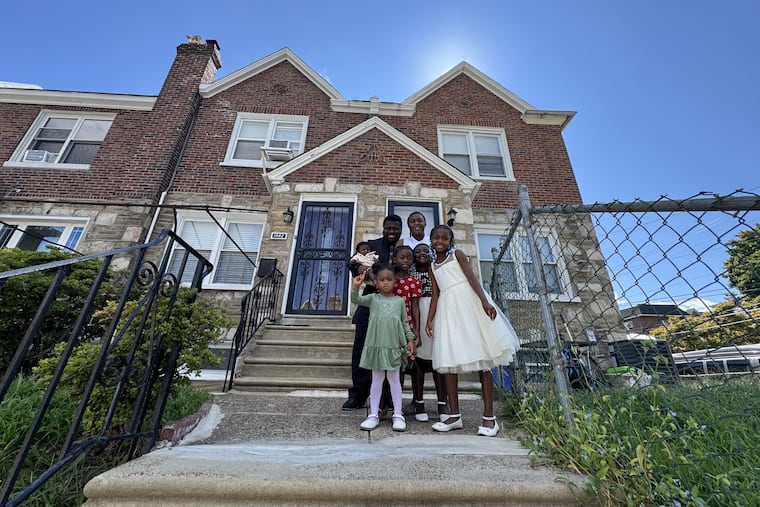
She needed to leave fast. She bought a four-bedroom house in Germantown without any money saved. | How I Bought My House
After an unsafe relationship forced her to move quickly, Kia Wilson settled for a 1900 house and learned to fix what she couldn’t afford to change.
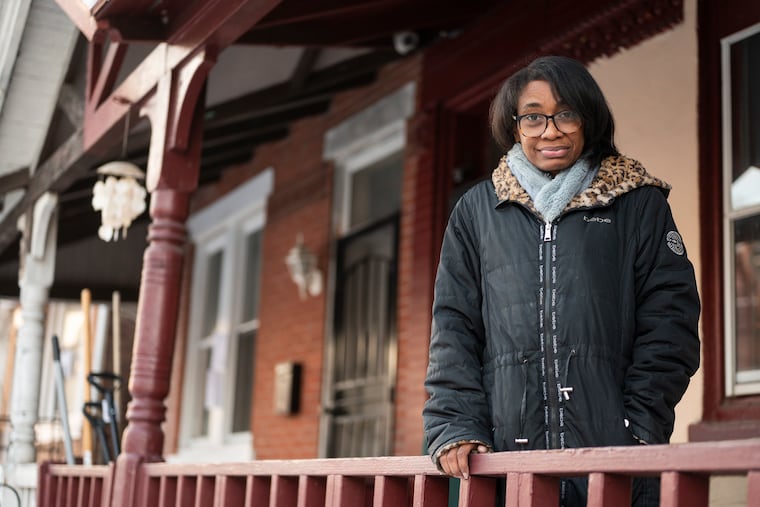
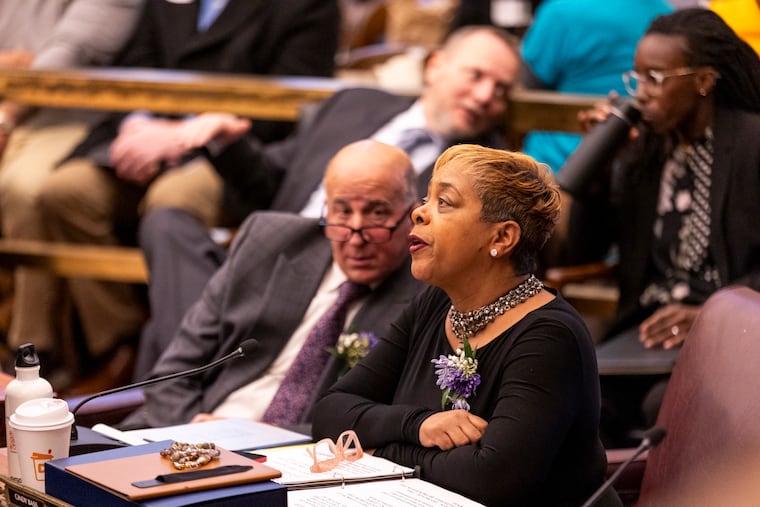
The buyer: Kia Wilson, 53, behavioral specialist
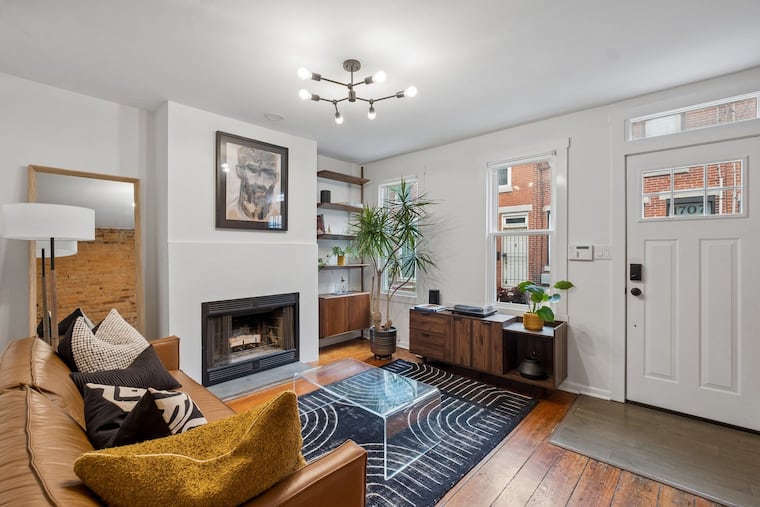
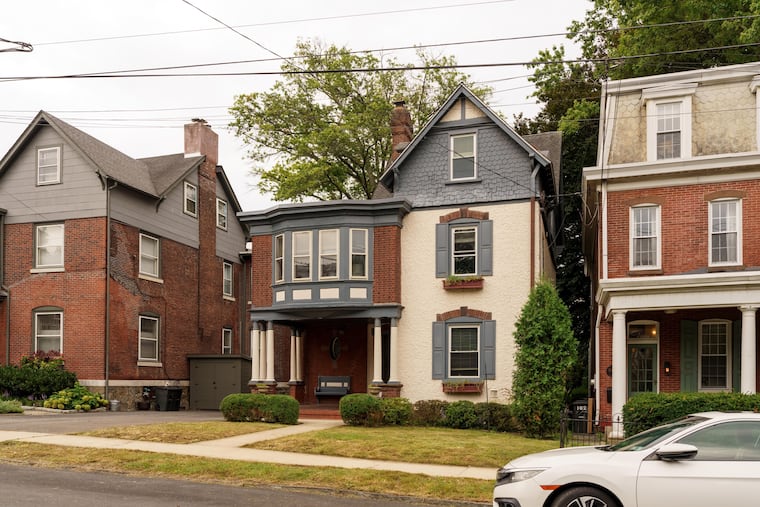
The house: a 1,620-square-foot single-family residence in Germantown with four bedrooms and 1½ bathrooms built in 1900.
The price: listed for $170,000; purchased for $165,000
The agent: Shante Jenkins, Long & Foster Real Estate
The ask: For years, homeownership was something that Kia Wilson considered in the abstract — something she might get to one day. In 2020, she gave herself a timeline. Within five years, she told herself, she would buy a home. She would save. She would fix her credit. She would do it the “right” way.
Then everything changed.
In 2021, a relationship turned unsafe. Wilson’s then-partner threatened her family, including her children. “I was like, ‘I need to leave now,’” Wilson said. ‘Without the money saved up, without my credit being good. I just needed to move.’”
Wilson’s requirements were practical and shaped by urgency. She needed space for herself, her two children, and eventually her mother. She wanted her teenage daughter to have her own bathroom, and she needed a fenced-in backyard for her dogs. Above all, she needed a mortgage she could afford. She wanted it to be $700 a month — the same she paid in rent.
As for location, “I didn’t care,” she said. “Just not Kensington.” And not near her ex’s parents.
The search: Wilson began looking seriously in late 2022, working with a friend and coworker who had just gotten her real estate license. Together, they saw about 15 houses over a few months. Some were impractical. Some were strangely laid out. One was in a flood zone, so Wilson didn’t even bother going inside. Another, she is convinced, was haunted. During the showing, a radio suddenly began playing in the basement. “That radio was loud enough for us to hear it on the third floor,” Wilson said.
That house wasn’t the only one that lingered. Wilson and Jenkins returned to another three separate times just to switch off the lights they’d accidentally left on in the basement and on the porch. That hadn’t happened anywhere else. “I was like, ‘Why does this house keep calling me back?’” Wilson said.
The appeal: The house Wilson ultimately bought wasn’t perfect, but it checked her most important boxes. It had four nice-sized bedrooms, a small backyard with a full basement, and a semiattached layout that gave the house a little breathing room.
But the feature that sold Wilson was surprisingly specific. “At the very top of the steps is the bathroom,” she said. “If I come in the house from work and I have to pee really bad, I can run straight up the steps to the bathroom.”
The kitchen was a major upgrade from her previous place, where the kitchen had essentially been an unheated shed. This one was huge and had cabinets. That alone felt luxurious.
The deal: The house was listed at around $170,000. Wilson offered $160,000, expecting a counteroffer. The sellers came back at $165,000, which she accepted.
Since the sellers wouldn’t meet her lowest price, Wilson requested that they remove a large oil tank from the basement. They agreed. They also patched flooring gaps in the kitchen and near the front door and removed a mysterious electrical switch that carried power but didn’t control anything.
Flush with the concessions she’d already secured, Wilson made one more request. “I was like, wow, what else can I ask them to do?” she said, laughing. She asked for a sump pump in the basement, but the sellers said no.
The money: Wilson didn’t have savings for a down payment. “People think you have to have this ridiculous amount of money [to buy a house],” she said. “I had nothing.”
What she did have was persistence — and grants. She took first-time homebuyer classes and applied for multiple assistance programs, including funding through the Mount Airy CDC and her employer. In total, she received four grants and roughly $16,000. Her mortgage company told her they’d never seen someone with so many grants. Her mother also contributed $1,000, which served as Wilson’s down payment. All in, she spent $17,000 on her home.
The move: Wilson closed on March 12, 2023, and moved in one month later. Moving was a “pain in the butt,” she said. “I was trying to do it myself because I didn’t have any money.” The friends who promised to help bailed, and the coworkers who stepped up broke her dresser and her refrigerator. “It was terrible,” Wilson said. “I didn’t have a refrigerator for two weeks.”
Any reservations? Some days, Wilson wishes she never bought the house. It’s old and needs extensive work. “Things are falling apart,” she said.
If she could do it again, she would prioritize a house where the cosmetic work was already done and pay closer attention to small details — like mismatched bathroom tiles. Still, the house has “great bones,” she said.
Life after close: Since moving in, Wilson has taken classes at the West Philly Tool Library, where she learned to patch drywall and tile. The bathroom is now all one color. She’s changed the locks, plans to replace the front door, and has begun slowly making the house her own. This year, she grew a watermelon in the yard.
“It’s really surreal,” Wilson said. “I’ve owned a house for two years. Only 28 more to go.”
Did you recently buy a home? We want to hear about it. Email acovington@inquirer.com.

- Behind the scenes at world-renowned Martin Guitars
- She left the dating parlors and courting buggies of Lancaster behind. Now she’s learning to date from scratch.
- My mother-in-law gifted me an ugly Eagles table runner. Do I have to keep it?
- Philly named the world’s best place to visit in 2026, apparently | Weekly Report Card
- The best things we ate this week
- How to have a Perfect Philly Day, according to WXPN host Joey Sweeney
- Citywide Quest: Do you know where in Philly these Mummers-themed photos were taken?
- Eat your way through Honolulu, from poke to shave ice | Field Trip
- She needed to leave fast. She bought a four-bedroom house in Strawberry Mansion without any money saved. | How I Bought My House
- Capturing the winter solstice

How I Bought This House