The University Avenue Bridge is a Philly gem. It’s embarrassing how it remains neglected.
The bridge, designed by the esteemed French-born Philadelphia architect Paul Philippe Cret, may have newfound importance, but a rescue isn’t on the way anytime soon.
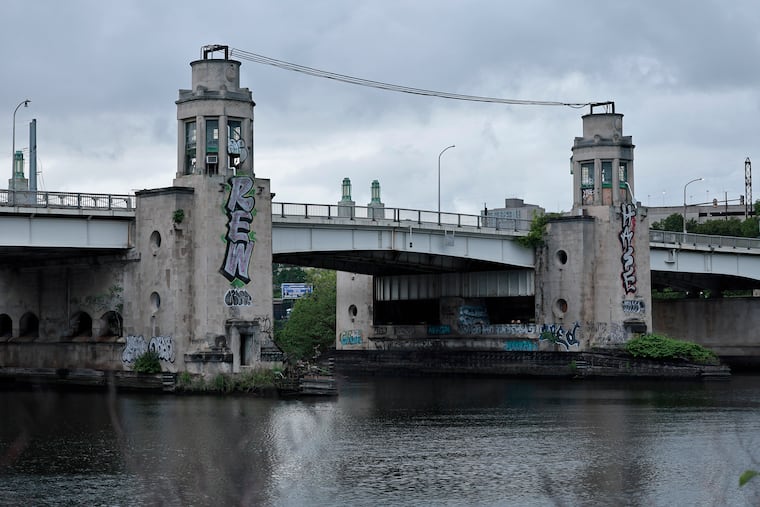
The University Avenue Bridge was designed and built as a prime specimen of the City Beautiful aesthetic, an architectural and urban design movement that pushed back against industrialization and urban decay.
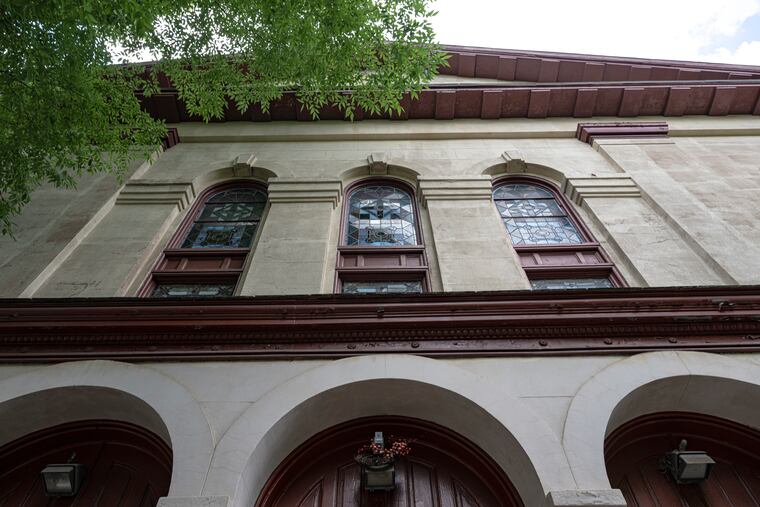
Today, the bridge that connects West Philadelphia and Grays Ferry is a monument to decrepitude. Elegant, round window openings are missing their windows. Saplings grow in the seams of the bridge’s masonry.
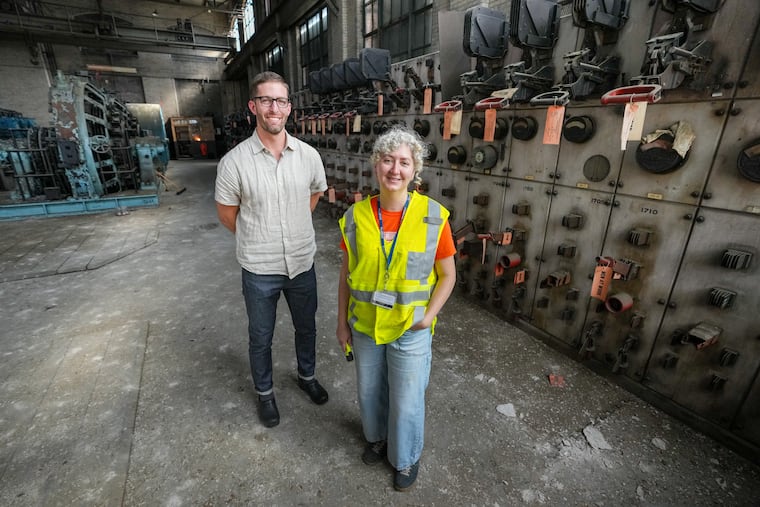
Down in the bowels beneath one of the bridge’s two proud, stylized operator’s houses, you can see the mechanisms designed to lift the span. Now packed with debris, their electrical parts stolen, the gigantic mechanical components no longer work.
This is a drawbridge that does not draw. It feels like the final insult from the bridge’s stewards, who have been missing in action.
A bridge to Philadelphia
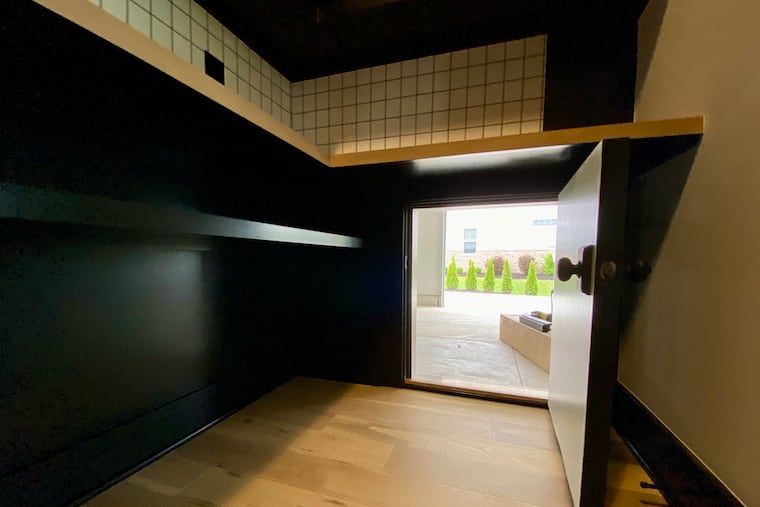
The way to the steampunk-ish chamber of secrets should not be open to anyone except workers, but the chevron-patterned bronze doors on the operator’s houses were stolen in 2024, and the plywood intended to keep trespassers out is missing. Strewn on the floor are paper records from 1984 documenting the lifting of the bridge’s leaves for passing ships — sad evidence of a utility now in the past.
And yet in many ways, the University Avenue Bridge, almost a century old, has never been better poised for a starring role among the city’s many spans.
As the vast medical district of West Philadelphia has exploded with billions invested in new buildings, this bridge has become an important gateway from I-76 to the city — a first impression of Philadelphia for many. With the opening of the Schuylkill River Trail’s extension last spring, there are now two beautifully landscaped gardens and ramps (instead of one) connecting the bridge to the trail, giving pedestrians and cyclists a new reason to cross the bridge or pause at one of the bump-outs that exist for no other reason than to take in the view.
The bridge may have newfound prominence, but a rescue is not on the way anytime soon.
The Pennsylvania Department of Transportation, which owns and is largely responsible for the structure, is in the process of contracting with a firm to remove debris and graffiti, a spokesperson said, but the time frame is uncertain. What is really needed is a restoration, which the agency estimates would run $50 million, and the bridge has not made it to the state’s list of proposed projects for funding.
This despite Mayor Cherelle L. Parker’s Clean and Green Initiative and a “Gateways to Philadelphia” highway beautification project for the nation’s 250th anniversary meant specifically to spruce up prominent approaches into the city. The $11.5 million project includes murals, graffiti removal, enhanced maintenance, and landscaping at several highway interchanges and other sites, but not one penny for our beloved bridge.
‘It’s one helluva great bridge’
The University Avenue Bridge is a substantial piece of civic architecture, and it deserves a great deal more respect than it is getting. Other proximate spans across the Schuylkill — at South Street, Walnut, Chestnut, Market, JFK Boulevard, and Spring Garden — have a mostly utilitarian feel to them.
If those bridges are transactional and efficient, this one, designed by the esteemed French-born Philadelphia architect Paul Philippe Cret and completed around 1930, is experiential.
“It’s not just a bridge. It’s meant to be beautiful, and it’s meant to be a place for art,” said Randall F. Mason, professor and chair of the University of Pennsylvania’s historic preservation department, after a recent exploration of the bridge’s spaces.
“It’s one helluva great bridge,” said Philadelphia-based architectural historian David Brownlee. “I would say if you were looking at just the transportation infrastructure of Philadelphia, we have a really great railroad station which brings you into the city, and I would say two really great bridges — the Delaware River [Ben Franklin] Bridge, and the University Avenue Bridge.”
Both were designed by Cret, who taught at Penn for more than 30 years and was responsible for some of the most prominent buildings and bridges in Philadelphia and across the country.
Seashells, seahorses, porpoises
The University Avenue Bridge does not have the soaring drama of its Delaware River colleague; one is Garbo, the other Ethel Merman. But the more you linger at the Schuylkill bridge, the more you notice.
An exuberant frieze of spirals and chaffs of wheat lines the hip of the operator’s houses, crowned by seashells above. Seahorses and porpoises are rendered in delicate bronze tracery over panels of glass in the lanterns on the southbound side.
The operator’s houses are sleek, neoclassical works of art in themselves, forming a geometric progression from eye level to sky: an angular base with triangular slopes and a procession of square stairs; the tall, columned, octagonal house; and a circular “top hat” adorned with a bit of whimsy — a medallion sporting what appears to be a curvy sturgeon.
Whether crossing by foot, car, or bike, there is a sense upon encountering these details that you have arrived in a place that cares about how you interact with the built environment.
“Without intervention, these unique design elements risk permanent loss,” the Preservation Alliance for Greater Philadelphia wrote in a recent issue of its magazine that lists the bridge as one of the city’s places to save.
Some elements are already gone, including the bronze doors and the shapely cast iron railing that once lined the bridge. Its elaborately detailed lanterns survive, but appear to no longer light up at night.
A neglected work of art
The bridge’s last major rehabilitation was in 1985, according to PennDot. The agency’s own interactive map of bridges categorizes its condition as “poor,” though a PennDot spokesperson says “the deterioration of the structural components does not limit its ability to carry legal loads safely.”
A Philadelphia Streets Department spokesperson said that the bridge last lifted in 2018, and that the city was working with PennDot on plans to rehabilitate the drawbridge mechanism.
What is at stake is not just a means of conveyance or a few beautiful architectural details.
The University Avenue Bridge is one of those things that give Philadelphia its unique sense of place. It connects to something special about this urban pocket — an oddly complementary juxtaposition of the city’s maritime past, its industry, eds and meds, and the natural world.
Like 30th Street Station, the Ben Franklin Bridge, and the Ben Franklin Parkway, it communes with something larger in the business of being human, beyond just the need to get from one place to the next: the delight in how great design, whether a building or bridge, can make you feel different about your world.
This is the promise of civic architecture: that it can surprise and delight, and is available to anyone.
When the bridge was under construction in 1928, Cret wrote an essay in the Architectural Forum about the relationship between the engineer and the architect in which he tipped his hat to engineers in general and the ones for this bridge in particular.
At the same time, he wrote, architecture begins where engineering leaves off — and architecture serves “an intense and ineradicable human craving, which art alone can satisfy.”
The stone, steel, and bronze Cret assembled make the case: The University Avenue Bridge is undeniably art, even amid the neglect.