The March of Dimes campaign for a polio vaccine offers a model for restoring Americans’ faith in science
Cuts to government science funding require mass campaigns that convince Americans to become personally invested in scientific research and the possibility of conquering disease.
America’s scientific enterprise, once the envy of the world, is in crisis. Sweeping cuts to federal research threaten to ground what has been, for over 80 years, the most productive and innovative scientific infrastructure in history. These changes signal an uncertain future but also call for lessons from our past.
In the mid-20th century, before widespread governmental support for research, millions of ordinary Americans donated small amounts to the March of Dimes, a private philanthropic campaign to fund a major scientific breakthrough: the world’s first polio vaccine. The result was the elimination of the disease within the U.S. by 1979. The groundbreaking campaign is a triumphant story of belief in science and public health participation — one that suggests a path forward for sustaining America’s scientific momentum.
» READ MORE: Vaccine refusal is making Philly-area kindergarteners more vulnerable to measles
For much of the early 20th century, summer was polio season. Poliovirus thrived in warm temperatures, spreading through contaminated water and human contact, before breeding in the intestinal tract. It attacked the nervous system and, in severe cases, caused paralysis. Just as school let out, cases would peak, closing movie theaters and swimming pools, and sending entire towns into quarantine for weeks.
In the shadow of World War II, polio incidence in young children mysteriously skyrocketed. Thousands of American children died, or suffered life-limiting disabilities. By 1952, the yearly toll had reached a record high of 58,000 — a surge that made polio the fastest growing infectious disease of the era.
While three times as many children died of cancer during this period, the threat of polio incited unique fear in parents. Polio struck without warning, leaving children in wheelchairs, leg braces, and breathing devices. A 1952 survey found that the only thing Americans feared more than polio was a nuclear attack.
The nation’s leaders met the moment — none more so than President Franklin D. Roosevelt, who had been paralyzed from the waist down after contracting the disease at 39. Determined to fund a cure, in 1938 Roosevelt founded the National Foundation for Infantile Paralysis. The organization proposed an ambitious new model for supporting research. Philanthropy previously relied on wealthy donors, but Roosevelt spearheaded a revolutionary new model: Instead of asking only for large donations from a select few, his Foundation asked for small donations from many.
The campaign encouraged Americans to give what they could to fund polio research and treatment, even if it was just a dime. To promote their new initiative, Foundation officials turned to Hollywood celebrities. Eddie Cantor, a comedian and trusted household voice with close ties to Roosevelt, announced the campaign from his popular radio show, coining its prolific name: the March of Dimes.
The call to donate became culturally inescapable. Movie stars Judy Garland and Mickey Rooney filmed public service announcements in front of mailboxes telling children to send their dimes to President Roosevelt at the White House. Singer Frank Sinatra hosted radio broadcasts where he leveled with listeners between performances. “That’s what the March of Dimes is all about,” Sinatra said. “It’s you and I, sending every dime we can possibly afford, and more, to help where help is needed so desperately.”
The campaign’s message captured the nation, insisting that every American could — and should — help end the scourge of polio. Soon, envelopes filled with dimes poured into the White House. The support was so great that the dimes were delivered to the nearby Treasury Department by the truckload.
The campaign was still in full force in 1945, when Roosevelt unexpectedly died. Even in the absence of its leader, the March of Dimes continued apace.
To further personalize polio and show millions of donors the real-life impact of their generosity, the campaign launched its first official polio “poster child” in 1946, featuring 6-year-old Donald Anderson. The posters depicted Donald in two states — bandaged in a hospital bed in one image and then walking freely with a smile in another. The top of the poster read, “Your dimes did this for me!” Each year, the campaign featured a new young survivor whose recovery at March of Dimes-funded centers was made possible by donations.
The campaign also began appealing to the movement’s most motivated advocates: American mothers. In January 1950, a group of grassroots volunteers in Phoenix organized the first Mothers March, in which over 2,300 women canvassed the city collecting donations in shopping bags and Mason jars from every home with a porch light on, raising $44,890 in an hour. The Foundation took notice and organized a nationwide Mothers’ March in 1951, equipping local March of Dimes chapters with militaristic plan books to strategically canvas neighborhoods.
Mothers inherently engendered public trust in the campaign’s promise of a cure, which would later prove essential in persuading parents to take a leap of faith and volunteer their children to receive an unproven vaccine.
Fundraising continued to climb, with donations reaching $66.9 million in 1954, roughly $834 million in 2026 dollars. Donations from ordinary Americans directly supported grants to scientists racing to develop an effective vaccine — including Dr. Jonas Salk.
Salk’s lab was the first to develop a vaccine ready for piloting. But the vaccine required a large-scale trial tested against a placebo to determine efficacy. That necessitated mass American participation, with no guarantees of safety. Yet, since the campaign had spent years making every American feel personally invested in defeating polio, participation proved to be no deterrent. When the call for young volunteers went out, millions of Americans, coined “Polio Pioneers,” responded.
On April 26, 1954, 6-year-old Randy Kerr became the first to receive the vaccine as part of the trial. Millions of American parents volunteered their children to follow in Randy’s footsteps. It amounted to the largest medical experiment in American history.
The anxious public waited a year to learn the results. On April 12, 1955, families across the country listened as researchers announced that the vaccine worked. The March of Dimes delivered on its most ambitious promise — a cure. The polio vaccine was declared to be “safe, effective, and potent.”
Soon, both children and adults put on their Sunday best to line up proudly to receive the vaccine. Sustained vaccination rates throughout the 1960s and 1970s paved the way for the elimination of polio in the U.S. by 1979, with no further naturally occurring infections reported domestically. Roosevelt never saw his dream realized, but to honor his role in the fight, his profile was placed on our 10-cent coin.
The March of Dimes campaign thrived not only because it raised money. It succeeded because it asked Americans to collectively invest in the hope of a country free from polio, achieved through research, innovation, and widespread vaccination. The president, who turned his own experience into a crusade, elevated science to a national priority, and the public rallied behind him and carried the work forward even after his death. The campaign’s model also leveraged community members as trusted messengers, helping to build a relationship between the public and our scientific enterprise. Ordinary Americans came to see themselves and their progeny as stakeholders and direct beneficiaries of scientific research.
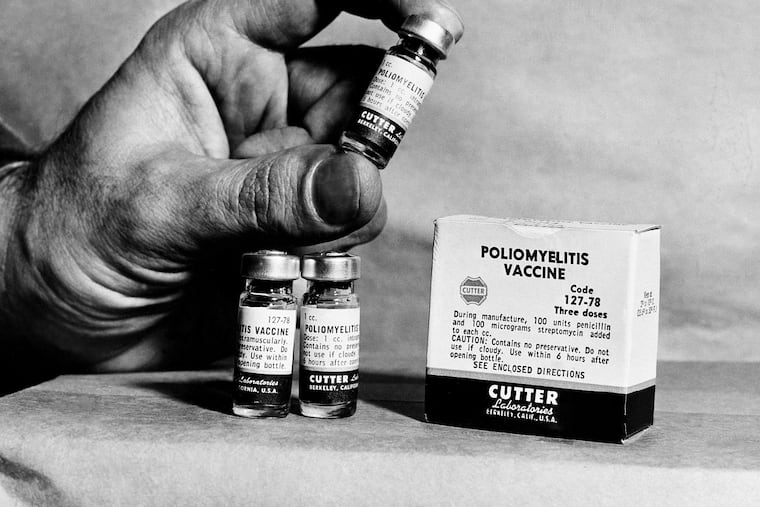
The polio vaccine illuminated how science’s potential was inextricably bound to the public’s trust and participation. So great was this trust that it endured even after the tragic Cutter Incident, when an accidental batch of live virus vaccine paralyzed 200 children and killed 10 in 1955, according to the Journal of the Royal Society of Medicine. After a pause and investigation into the incident, widespread vaccination resumed. As direct donors to its fundraising campaign for close to two decades, Americans felt personally invested in both the vaccine’s creation and success.
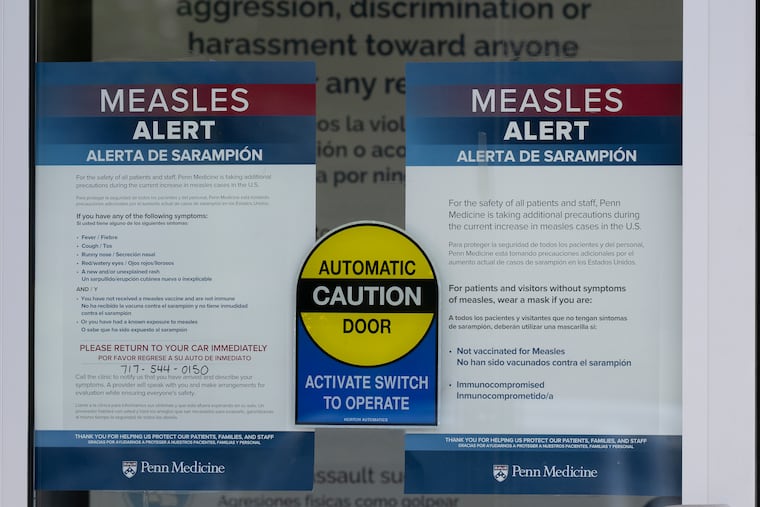
Today, a reduction in federal funds and a rise in vaccine skepticism threatens much of the scientific progress embodied by the polio vaccine. Americans are bitterly divided and outbreaks of measles, once eliminated, are again raging.
Yet, the March of Dimes campaign offers a model for moving forward. Rebuilding our health and biomedical research enterprise will require scientific and public health leaders to once again win over average Americans. It will demand that these leaders put evidence-based scientific innovation at the forefront of the nation’s agenda, committed to communicating to the public not only the problems they seek to solve, but the human cost of leaving them unexplored and unfunded.
Americans, in turn, will need to buy into the U.S.’s unvarnished potential to lead the world in solving even the most formidable of diseases. It will require them to feel a personal stake in contributing to these fights and seeing scientific progress as both a national and moral imperative.
Polio’s effects on children became unconscionable to the nation, enabling the March of Dimes to galvanize Americans to work together to end it. Millions of citizens reached into their pockets and rolled up their sleeves to end a deadly disease and protect their children, and their children’s children. For decades after, Americans believed that their scientific institutions could — and should — lead the world in fighting disease. Restoring that historic faith is vital to our future.
Molly Yeo is a registered nurse and Ph.D. student at the University of Virginia. Her doctoral research examines vaccine uptake and decision-making in the United States.
Made by History takes readers beyond the headlines with articles written and edited by professional historians. Opinions expressed do not necessarily reflect the views of The Inquirer.