The Sixers trading Jared McCain will either be a head-scratcher or an embarrassment
Everywhere else, teams got better, and many of them did so in ways beyond this season. The Sixers can hope that a late first round pick for McCain is worth something in June.
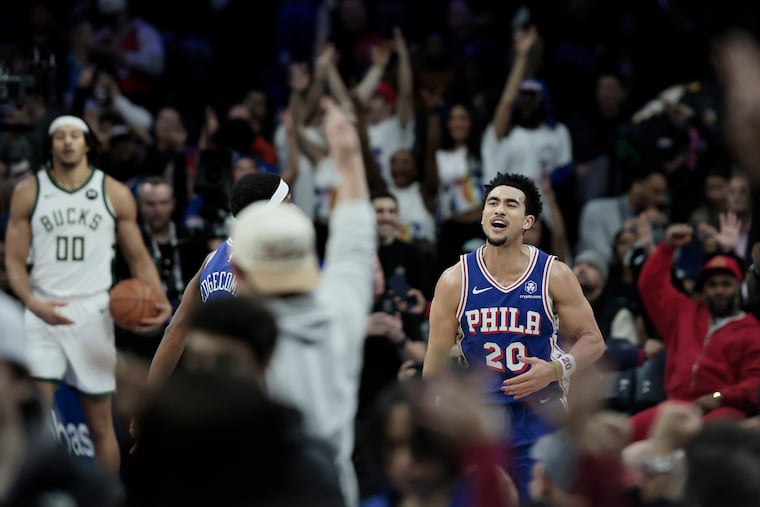
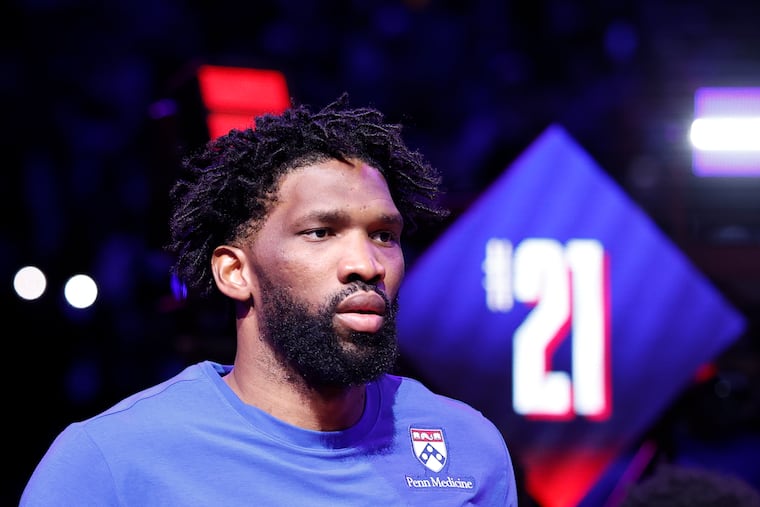
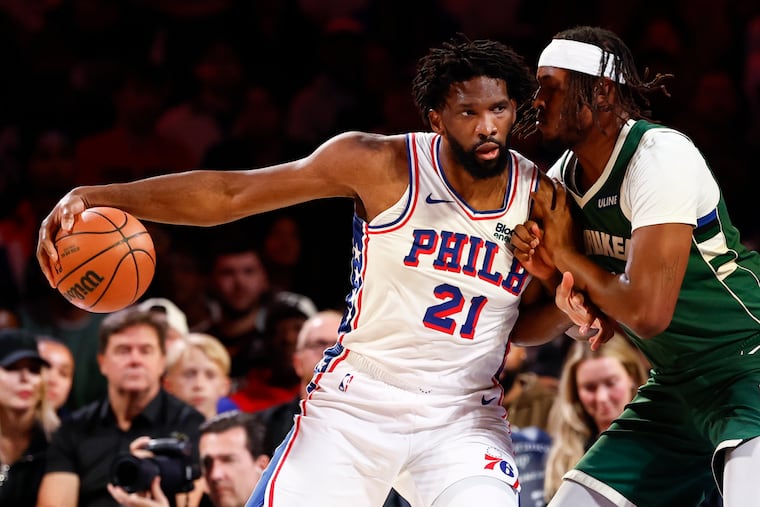
A week ago, Joel Embiid decided to spend a little bit of the organizational capital he reaccrued in recent months. In response to a question about the Sixers’ approach to the upcoming NBA trade deadline, Embiid pointedly expressed his hope that the team would be looking to add talent rather than cut costs.
“Obviously, we’ve been ducking the tax past couple of years, so hopefully, we’ll keep the same team,” Embiid said. “I love all the guys that are here. I think we got a shot.
I don’t know what they’re going to do, but I hope we get a chance to just go out and compete because we’ve got a good group of guys in this locker room. The vibes are great. Like I said, in the past we’ve been, I guess, ducking the tax, so hopefully, we think about improving because I think we have a chance.”
» READ MORE: The Sixers got under the tax and took a small step back at the NBA trade deadline
Embiid was surprisingly — some might say ungraciously — candid in noting the Sixers’ recent prioritization of shedding salary at the trade deadline to avoid paying the NBA’s luxury tax (and, thereby, to receive a share of the pooled taxpayer dollars). But he also was prescient, and unfortunately so.
Sixers president Daryl Morey is scheduled to meet with the media on Friday, so we’ll have to wait to hear the official defense of the team’s decision to trade 2024 first-round pick Jared McCain to the Oklahoma City Thunder for what most likely will be a low-value first-rounder (plus the obligatory smattering of second-round picks). We don’t have to wait to judge the optics of the thing.
The optics are poor, and that will remain true even if the thing ends up making more sense than we can immediately glean. The Sixers didn’t trade McCain for a player who is more likely to help them contend for a championship, be it this year or beyond. They didn’t trade him for a pick that they then flipped for a player who can help them capitalize on their momentum this season. Everywhere else, teams got better, and many of them did so in ways beyond this season. The Minnesota Timberwolves can re-sign Ayo Dosunmu. The Indiana Pacers can pair Ivica Zubac with Tyrese Haliburton next season. The Sixers can hope a late first-round pick is worth something in June.
A good way to judge the optics of a move is to attempt to write an executive summary of it in as favorable a way as possible. That’s an extraordinarily difficult task in this case. The Sixers just traded away a guy who they drafted at No. 16 barely a year and a half ago and who probably would be drafted higher in a redo. In exchange, they received a pick that currently projects as the No. 23 pick in the 2026 draft, two picks later than where the Sixers grabbed Tyrese Maxey almost six years ago. It is a range of the draft that rarely yields starters, let alone stars. It is a range where the odds say you are more likely to draft a player who never cracks a first-division rotation than one who becomes a meaningful starter.
Just look at the track record. Of the 42 players drafted with the last seven picks of the first round since 2020, only 17 have started more than 17 NBA games. Just eyeballing it, you’d be hard-pressed to identify 10 of those 42 who’ve turned out to be better than the median potential outcome of even this year’s version of McCain. Jaden McDaniels and Desmond Bane are stars. They are followed by Payton Pritchard, Immanuel Quickley, Quentin Grimes, and Santi Aldama. Beyond that: Peyton Watson and Cam Thomas, and then Bones Hyland, Day’Ron Sharpe, Nikola Jović, and Kyshawn George. You get the picture.
Risk vs. certainty is the name of the game. The Sixers traded McCain for a first-round pick that will be uncertain, even on draft day. Let alone five months before. Whatever negative certainty they felt about McCain’s mid-to-long-term trajectory, it can’t possibly be greater than the negative uncertainty of a draft-day replacement. Which is why, optically speaking, the move looks like one that was inordinately influenced by the cost-cutting benefits.
» READ MORE: Trading Jared McCain is a big risk, unless something bigger is in play
The Sixers surely will point to optionality as a variable. On draft day, they will have another opportunity to flip the McCain first-rounder for an established NBA player or include the pick in a package. If that influenced the move, then the bet they are making is that the pick will be more in a draft-day trade than McCain would have been himself. There’s a decent chance that is true, given how far McCain has fallen on the depth chart and how little opportunity he could have to reestablish value.
It just rings a little bit hollow to anybody who has bought into the commendable shift we’ve seen from the Sixers in their roster-building strategy over the last year. And it rings especially hollow when you consider that the team that traded for McCain is one of the best and brightest roster-builders in the modern NBA. As somebody said the other day, when Sam Presti wants one of your guys, it’s a good reason to think a few more thoughts about whether you should want to get rid of him.
Barely a year and a half has passed since the Sixers made McCain the No. 16 pick in the 2024 draft. In that year and a half, we’ve seen McCain:

David Murphy alerts
Play 23 games in which he looked like one of the top five players in the class, forcing his way into the starting lineup and then averaging 19.1 points while shooting 39.7% from three-point range in the 16 games before he suffered a season-ending knee injury.
Play 25 games where he looked like a player working his way back from a broken thumb that he suffered while working his way back from knee surgery.
Play 11 games in a 15-game stretch in which he logged just 132 minutes.
In the Sixers’ defense, they’ve seen much more of McCain than the television cameras capture. Nobody can have a more informed opinion on where he projects within the context of their roster. But it wasn’t long ago that McCain looked like a player who could eventually transcend questions of fit. His ceiling never was close to VJ Edgecombe’s, and his probable reality was always short of Maxey’s. Again, though. The Thunder have a lot of guards. They are built on a two-way mentality. It makes you wonder.
What it comes down to is that the Sixers better be right in their evaluation of McCain. Whatever the marching orders from ownership regarding the luxury tax, there is a level of player even Scrooge McDuck wouldn’t deem an appropriate cost-savings measure. McCain isn’t that player now. The Sixers could be accurate in their judgment of the odds that he ever becomes one. The question is whether they are accurate in their judgment of their risk of being wrong.