Why the NBA’s 65-game rule has players and coaches searching for solutions: ‘We’ve got to be smart enough to figure this out’
Luka Doncic, Cade Cunningham, and Anthony Edwards are among the players ineligible for MVP and All-NBA teams because of the rule implemented to try to curtail load management.
The notification popped into cellphones belonging to 76ers players and reporters alike during Friday’s pregame open locker room period.
Luka Dončić, an MVP candidate, had been ruled out for the rest of the regular season with a hamstring injury he suffered during the Los Angeles Lakers’ loss to the Oklahoma City Thunder. And it made another superstar ineligible for the NBA’s postseason awards, because Dončić would not reach 65 out of 82 games played.
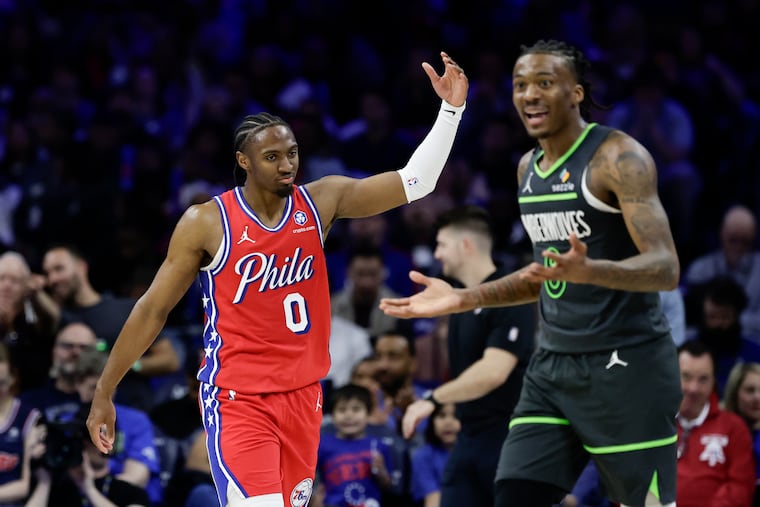
This leaguewide issue has further surrounded the Sixers in recent days. The Minnesota Timberwolves were in Philly on Friday, one night after Anthony Edwards could no longer qualify for All-NBA teams after missing Minnesota’s game the previous night with an illness.
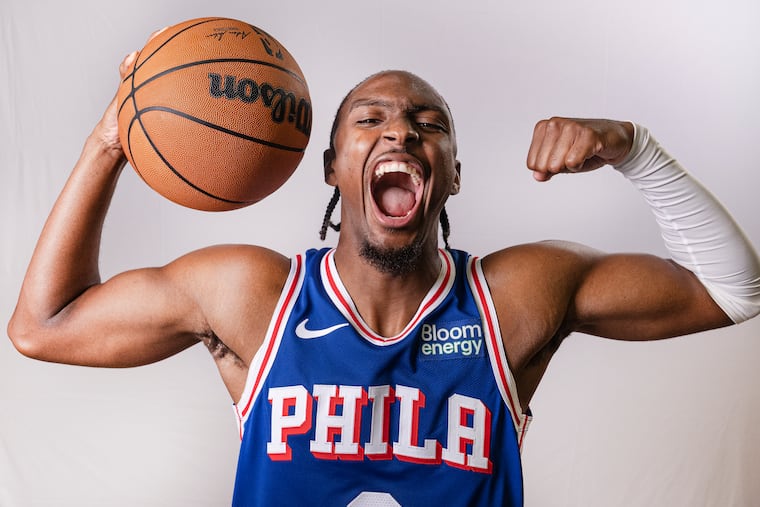
Then the Detroit Pistons were in town Saturday without MVP and All-NBA contender Cade Cunningham, who also will fall four games short of that threshold because of his recovery from a collapsed lung. Sixers All-Star guard Tyrese Maxey, meanwhile, fulfilled the criteria for such honors Friday by playing in his 65th game, though there was some previous uncertainty he would achieve that total when he injured his right little finger on March 7.
When asked about the rule, Maxey, Sixers coach Nick Nurse, Minnesota coach Chris Finch, and Detroit coach JB Bickerstaff all understood why one exists. But Nurse acknowledged that “it seems like it’s really affecting a lot of players this year that are right around [the 65-game mark].”
“It is hard to be All-NBA and MVP and all those different things if you don’t play a certain amount of games,” Maxey added. “Do I know what the number should be? No clue. But I do understand where they come from.
“You’re impactful if you’re available. I understand it.”
This season, generational stars such as Giannis Antetokounmpo, LeBron James, and Stephen Curry are not eligible for individual awards. Nikola Jokić and Victor Wembanyama, two more MVP contenders, plus fellow 2026 All-Stars Kawhi Leonard, Deni Avdija, and Devin Booker remain in danger of missing that mark entering the final week of the regular season.
The 65-game rule, which was collectively bargained by the National Basketball Players Association and the league’s owners, was implemented for the 2023-24 season to try to curtail load management and encourage star players to suit up more frequently. It runs in tandem with the player participation policy, which fines teams for sitting star players during nationally televised and NBA Cup games.
And some tie its origins back to Joel Embiid’s seasons in the MVP race. The Sixers center, whose career has been littered with injuries, played in 66 games when he won the sport’s top individual award in 2022-23. When he finished second to Jokić the previous two seasons, he played in 68 and 51 games (of 72 during a COVID-shortened regular season), respectively.
NBA commissioner Adam Silver recently said that he believes the rule is working.
“We always knew, when there’s a line you draw, that somebody’s going to fall on the other side of that line,” Silver said following the NBA’s board of governors meeting, when Cunningham’s injury was a fresh topic. “And it may feel unfair in that particular instance. …
“That was the product of a negotiation. But I generally think it’s worked. That, along with the player participation policy, there’s not nearly as much discussion around load management as there was, in part because the teams and the players have responded. You see them on the floor now.”
Still, some award voters have criticized that the rule removes trust in them to appropriately weigh players’ accomplishments and the number of games they logged. There also is an argument that the record books will no longer accurately depict the game’s history and players whose performance defined a particular season.
“Those awards, they mean things to guys,” Bickerstaff said. “They’re important [to] legacy.”
Sixers legend Allen Iverson’s recent Instagram post — saying “I played with every injury you could think of, to the point they had to hide my jersey to keep me from playing … Don’t cry now, what the babies gon do?” — illustrates that some players from past generations still scoff at the concept of load management. But the modern game has significantly upped its across-the-board athleticism and pace of play, and some fear that the 65-game rule could prompt players to come back too quickly and risk more serious injury.
Then there is the tricky reality that All-NBA designation can be tied to more lucrative salaries. A prime example of a player remaining on the floor while injured for that reason is Indiana Pacers star guard Tyrese Haliburton, who in January 2024 strained his hamstring but continued to play in hopes he would make an All-NBA team and earn a max contract extension. The next season, he tore his Achilles in the NBA Finals and will miss all of the 2025-26 season.
Finch suggested that, if a player does not reach 65 games, he should still be eligible for awards but not the salary boost. Under the current rule, the Timberwolves coach added, some players who slide into the All-NBA spots in place of those ineligible might not warrant the highest available salary level, which could hamper teams’ roster-building.
“That’s one of the things that’s not talked about [with] it,” Finch said. “Some of these awards are going to go to players [who], not to say they’re not necessarily deserving. But they’re going to get these rewards and they’re going to to get the financial bonus that comes with these rewards, and maybe they’re not quite of the standard that would normally demand that. …
“To me, the money piece seems to be the obvious trigger.”
In the immediate aftermath of Cunningham’s situation, the NBPA called for the 65-game rule to be “abolished or reformed to create an exception for significant injuries.” Cunningham, who is averaging 24.5 points, 9.9 assists, and 5.6 rebounds, has spearheaded the Pistons’ rise to the top of the Eastern Conference as one of the best stories of this NBA season.
“Cade Cunningham’s potential ineligibility for postseason awards after a career-defining season is a clear indictment of the 65-game rule,” the NBPA said in a statement. “ … Since its implementation, far too many deserving players have been unfairly disqualified from end-of-season honors by this arbitrary and overly rigid quota.”
Dončić also plans to appeal for the “Extraordinary Circumstances Challenge” exception, according to reports, because two of his games missed were to fly to Slovenia for the birth of his second daughter in early December. Doncic, however, also would have reached 65 games before his most recent injury had he not been suspended one game for his 16th technical foul.
» READ MORE: When was the best era in Philly sports history?
Maxey not qualifying for such honors would have been a huge strike against the rule’s desired purpose.
He has been one of the NBA’s top scorers and a beacon of relentless durability, leading the league in minutes per game (38.2) while max-salary teammates Embiid and Paul George again struggled to consistently stay on the floor. Before his early-March injury, Maxey had missed only two December games with an illness. Even after sitting out 10 consecutive games with the finger injury, he still ranked 10th in the league in total minutes played entering Sunday.
Nurse said he had a brief thought that Maxey might miss out on All-NBA eligibility when the injury first occurred, as medical professionals diagnosed the finger tendon strain and likely recovery timeline. Maxey returned to game action wearing a splint exactly three weeks later, without any five-on-five scrimmaging or the typical ramp-up process following a reevaluation.
He clapped his hands when informed Friday that he officially reached 65 games (with 20 minutes played in 63 of those games, plus 15 in the other two, in another part of the criteria), but assured his primary motivation to come back was to help the Sixers in a tight race for postseason seeding.
Perhaps measuring minutes played, instead of games played, over the course of a season is an alternative path to eligibility, Bickerstaff pondered before his Pistons beat the Sixers on Saturday. Cunningham averaged 34.4 minutes across 61 games before his injury, as a ball-dominant point guard.
“I don’t know if that’s possible,” Bickerstaff said. “Because now you have to come up with that number, as well. … But if guys have serious injuries, I think you have to take that into account. And they shouldn’t be limited, in my opinion, because of that.”
The San Antonio Spurs, whom the Sixers face Monday, were surely tracking Wembanyama’s minutes after he returned from a 12-game absence with a calf injury in November and December. The NBA Defensive Player of the Year frontrunner initially barely surpassed 20 minutes to ensure he fulfilled the requirement to include that as a game played for the Western Conference’s second-best team. That’s why Wembanyama will officially qualify for awards if he plays in at least two of the Spurs’ remaining four games, as long as he reaches 15 minutes in one appearance and 20 in the other.
Maxey is already there. But Cunningham, Edwards, and Dončić will not reach that mark, thanks to a rule now affecting some of the league’s top performers this season.
“I don’t see why we can’t honor someone’s season if they play 64 games, and they’re worthy of MVP,” Finch said. “ … I’m all for the rule. It has to exist. We have to protect the fans.
“But I also feel like we’ve got to be smart enough to figure this out.”