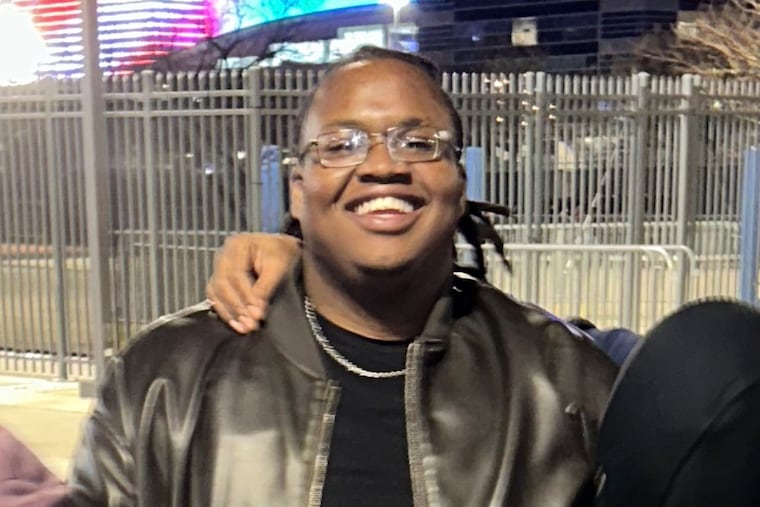
KJ Martin entered this season as a ‘human trade exception.’ After a breakout stint, he leaves the Sixers in salary-dump.
The trade to the Detroit Pistons ends Martin’s Sixers tenure that was gaining momentum just before a foot stress fracture sidelined him for the past six weeks.

KJ Martin had already gone through the “crash course” of being traded twice in less than four months. After spending his first three NBA seasons with the Houston Rockets, he was dealt to the Los Angeles Clippers in July of 2023, and, by Nov. 1, had been sent to the 76ers in the James Harden blockbuster.
So last week, Martin was not flustered by Thursday’s looming deadline — even while signed to a contract that some basketball transaction nerds said made him a “human trade exception.”
That status might have been more valuable if the Sixers were the championship contenders they envisioned they would be when the season began, and were looking for a final upgrade for a postseason push. Instead, The Inquirer reported Wednesday that the Sixers were set to trade Martin and two future second-round draft picks to the Detroit Pistons in a salary-dump move to get under the luxury tax.
That the Sixers did not fully leverage Martin’s team-friendly contract is perhaps indicative of a 20-29 season gone wrong. It also ends Martin’s Sixers tenure that was gaining momentum just before a foot stress fracture sidelined him for the past six weeks.
“I’ve been comfortable here, and whatever happens, happens,” Martin said last week. “I’m happy here. I can’t control the front office or whoever it may be, what decisions they make. I just come in every day, try to be a really good person, and do my job.”
» READ MORE: Sources: Sixers will trade KJ Martin, two second-round picks to Detroit Pistons in cost-cutting move
The 24-year-old Martin had not bristled when the “human trade exception” label was brought up to him. He also is not naive.
When he signed a two-year, $16 million “balloon” deal — which is nonguaranteed for 2025-26 — to return to the Sixers last summer, he understood it was designed to be a salary-matcher in trades. But he was not going to turn down the significant pay bump, after making less than $2 million in each of his first four NBA seasons (which created a smaller cap hold as an unrestricted free agent). The Sixers were able to pull this off because they had Martin’s Bird rights, allowing the team to exceed the salary cap to sign him for any figure up to his maximum salary.
When The Inquirer first broached this topic to Martin during a preseason conversation, he said he had already made efforts to ignore speculation that he would not remain in Philly for the full season.
“I’ve been busting my tail off,” Martin said then, “just doing what I’m supposed to do each and every day. … I can control the work I put in every day, and just making sure I’m prepared for any situation. I’ve been trying to just block that noise out, because there’s no point to dwell on it or get down on [yourself].”
Martin’s primary focus since late December had been rehabbing that foot injury. Though the Sixers’ seemingly never-ending injury issues have been dominated by stars Joel Embiid and Paul George, Martin’s 21-game absence had been sneaky-important during a stretch with sharp peaks and valleys.
The 6-foot-6, 215-pounder has long boasted explosive athleticism along with defensive versatility and physicality, which Sixers coach Nick Nurse said recently would have been valuable against opposing forwards who relentlessly attack the basket, such as the Milwaukee Bucks’ Giannis Antetokounmpo. But Martin had also become a much more efficient shooter — he had connected on 61.6% of his attempts from the floor, and 38.1% of his three-point tries before the injury — while also gaining short-roll chemistry with Tyrese Maxey in a way that reminded the star guard of former Sixer P.J. Tucker.
That Martin also continued to travel with the Sixers while injured also illustrated his positive locker-room presence. He would chat with anybody in the vicinity, hurl playful verbal barbs at teammates across the room, or attract a crowd to watch Family Guy on his tablet.
“I just try to go out there and play as hard as I can,” Martin said. " … Me trying to help my teammates offensively — whether it’s get them open, or make the extra pass, whatever it may be — and, defensively, just have a lot of energy, I think everything else will take care of itself.
“I just try to go in and fit in and do the little stuff.”
» READ MORE: With a humiliating salary dump trade of K.J. Martin, Sixers are cutting costs ... and who knows what else
It was Martin’s best on-court stretch in his year-plus with the Sixers, as the only player remaining from the package the team acquired in the Harden deal.
After starting 59 games in three seasons with the Rockets, Martin was not a rotation staple for last season’s win-now Sixers. Following their first-round playoff loss to the New York Knicks, Martin immediately hired personal shooting coach Mark Ramljak to improve his mechanics.
The first couple weeks, Martin recalled, he “didn’t leave the paint” while Ramljak recorded his form and then made necessary tweaks. Martin focused on pushing the shot more off his index and middle fingers, and moved his guide hand in a way that gave him more control of the ball.
When Martin started consistently burying three-pointers during a pickup game featuring well-known NBA names such as Trae Young, Chet Holmgren, and Coby White, his reaction was, “Oh, [expletive]. It worked.” The Sixers’ shot-tracking data backed up that sentiment during training camp and the preseason, Nurse said.
Those improvements helped earn Martin an opening-night start. By late November, he was a rotation fixture. He totaled 19 points on 7-of-8 shooting, six rebounds, three assists, and three blocks in a Nov. 30 win at the Detroit Pistons, then put up 20 points on 9-of-10 shooting a week later in a win against the Orlando Magic. Those bigger stat lines did not feel forced, and peppered outings still marked by the fill-in-the-gaps qualities to complement the Sixers’ scorers. He averaged 6.4 points and three rebounds in 24 games, with seven starts.
“He’s found himself being consistent,” George said of Martin. “We know what to expect. He’s going to play hard. He’s going to do all the dirty work. He’s going to pick up and guard, rebound, and run the lane.”
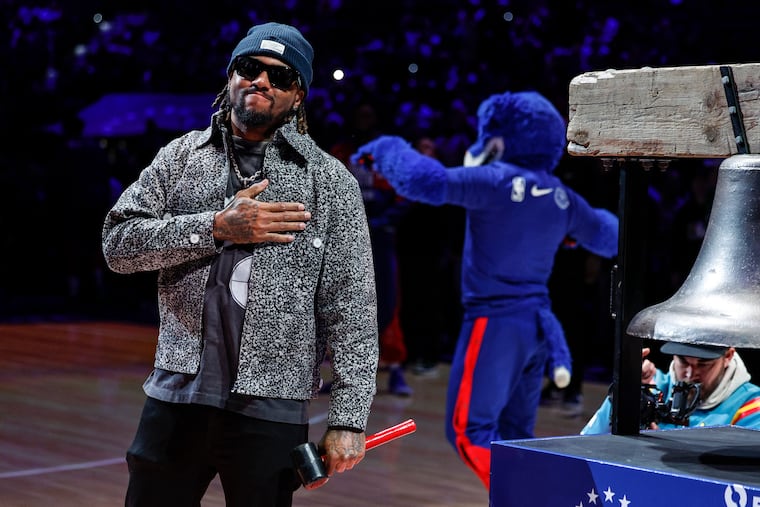
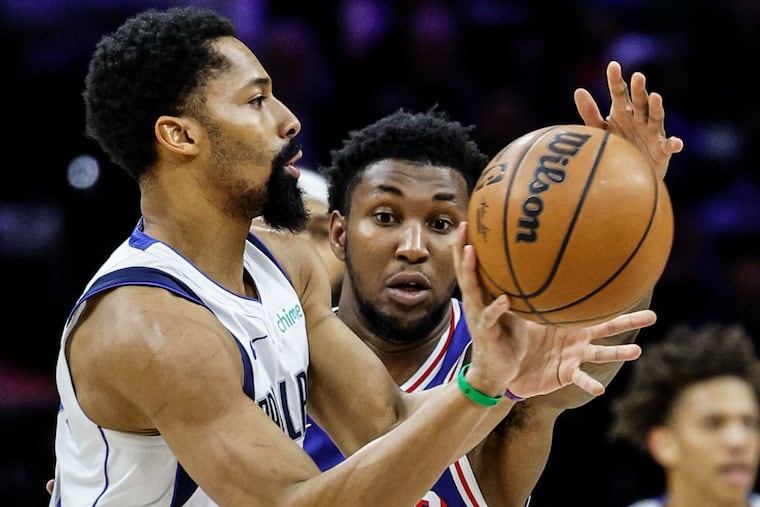
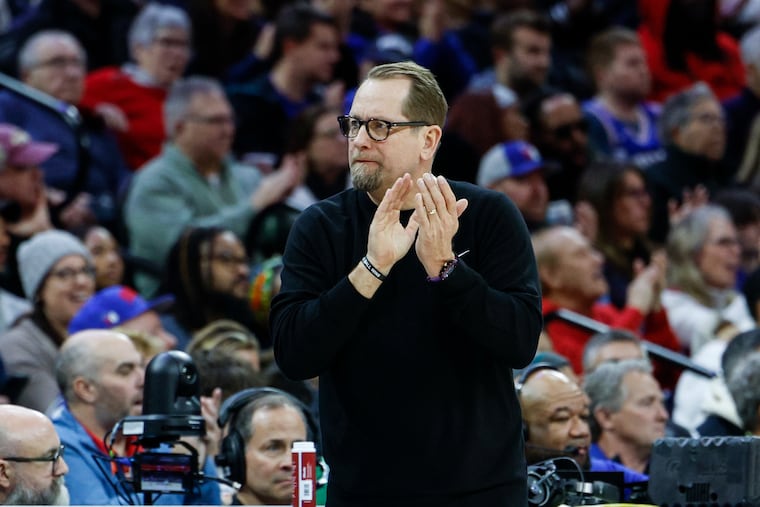
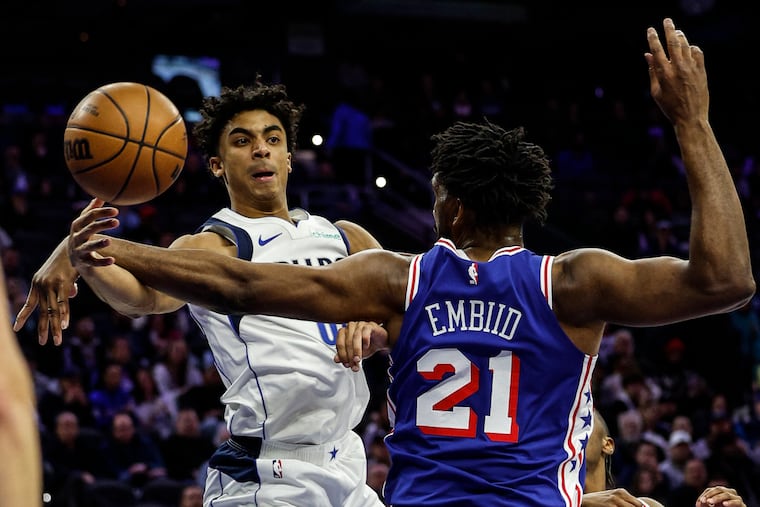
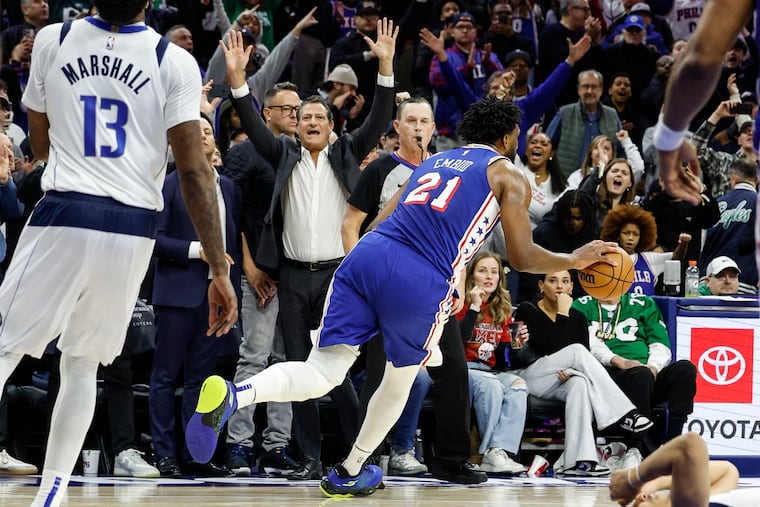
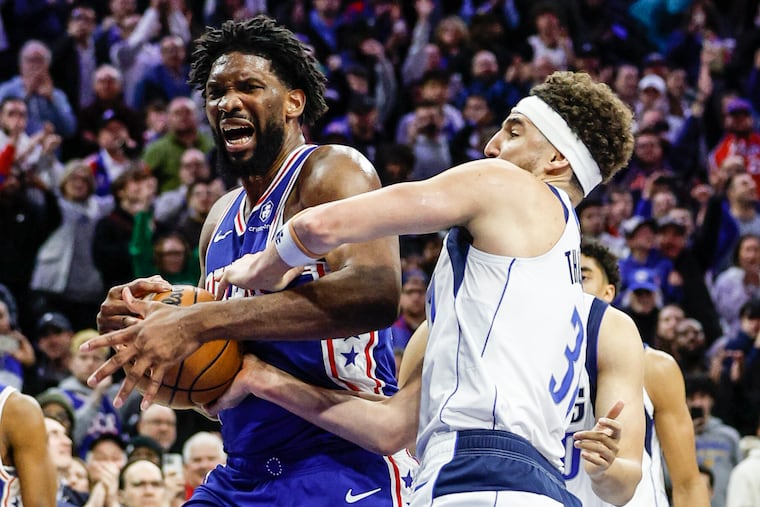
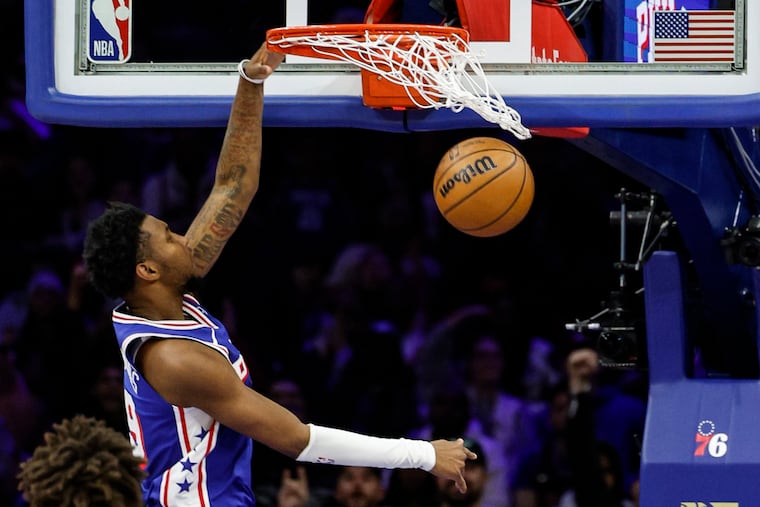
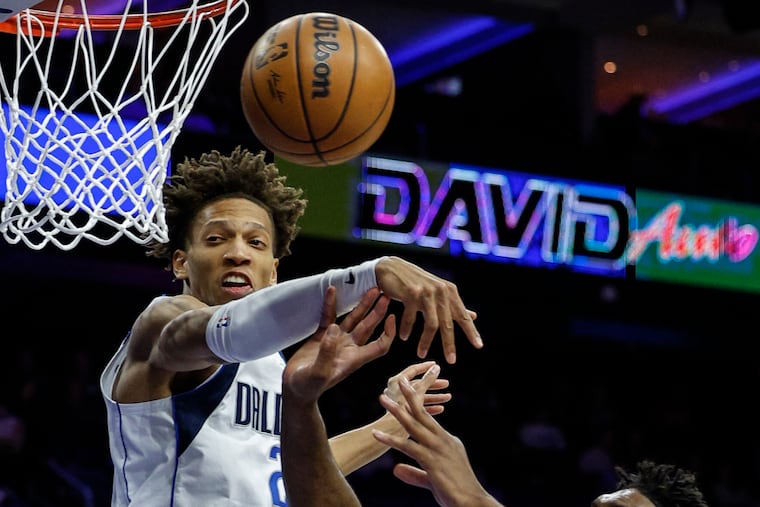
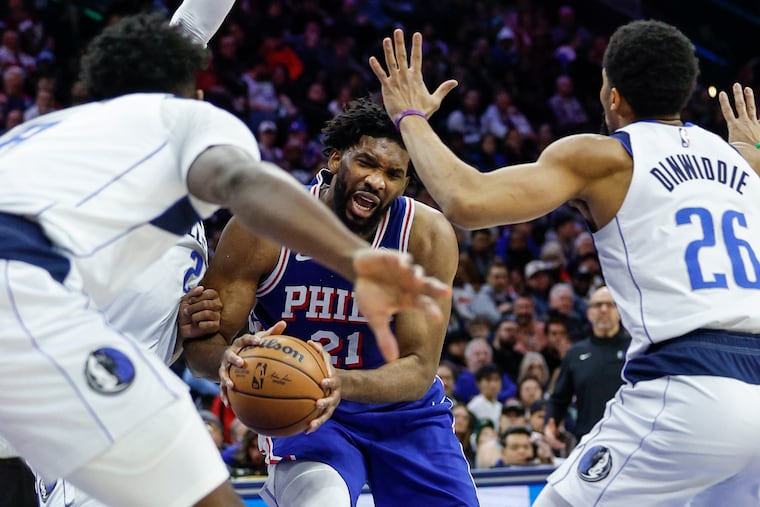

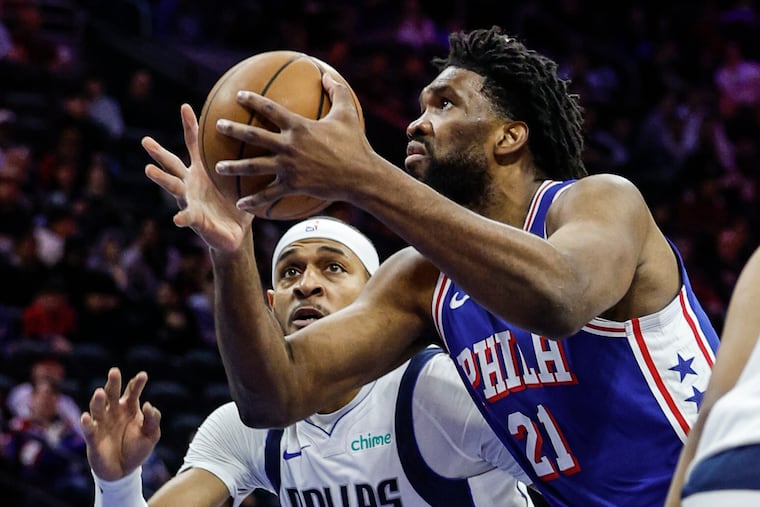
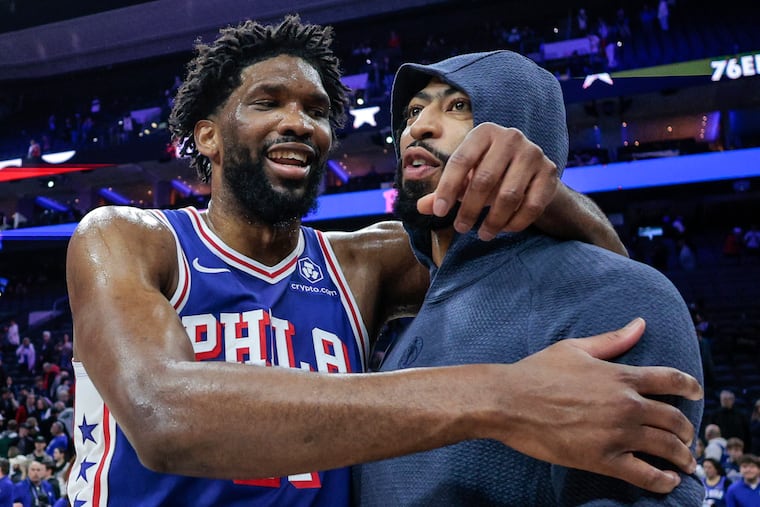
Martin returned to practice last week, then was upgraded to questionable to play in Tuesday’s game against the Dallas Mavericks. But about 45 minutes before tipoff, he was ruled out because of a pending trade and reportedly left the building.
Yet this deadline experience likely is not any crazier for Martin than being moved twice in less than four months — including across the country from his home city of Los Angeles to Philly, a place he acknowledges he “really [didn’t] know much about.”
“Your head might be in all different areas and stuff like that,” Martin said of that period. “But as time goes on, you kind of look back on it and be like, ‘Oh, maybe I went through that just to be in a different environment and have different things happen, just so you can grow as a person.’”
That was Martin’s mindset leading into Thursday’s deadline. And before his injury, he had demonstrated that he can be much more than a human trade exception or salary dump.
“I understand a lot of people are going to talk and say things,” Martin said before the season. “They’re going to have their own opinion. But I know I can just come in every day and work on my game, work on my body, and stay professional.”