Why the Union and Kai Wagner made the surprising decision to get back together
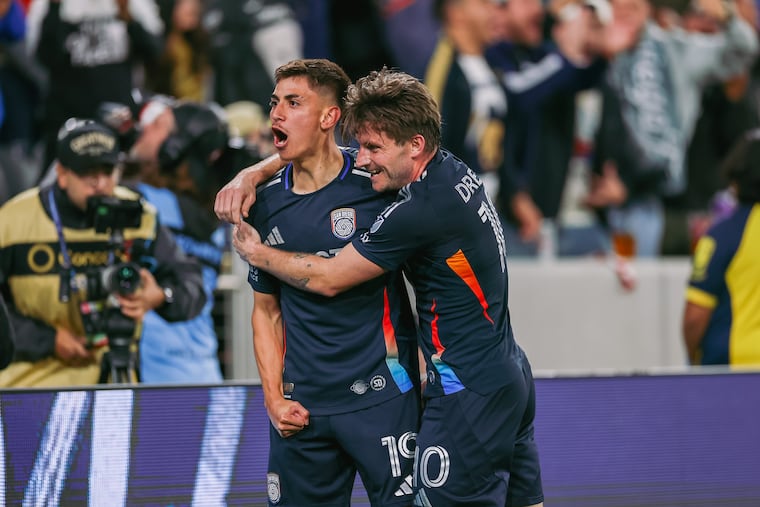
Wagner wanted the move, his family wanted to come back to Philadelphia, and the Union wanted to save the season. Those pieces added up to an unexpected return after barely six months in England.
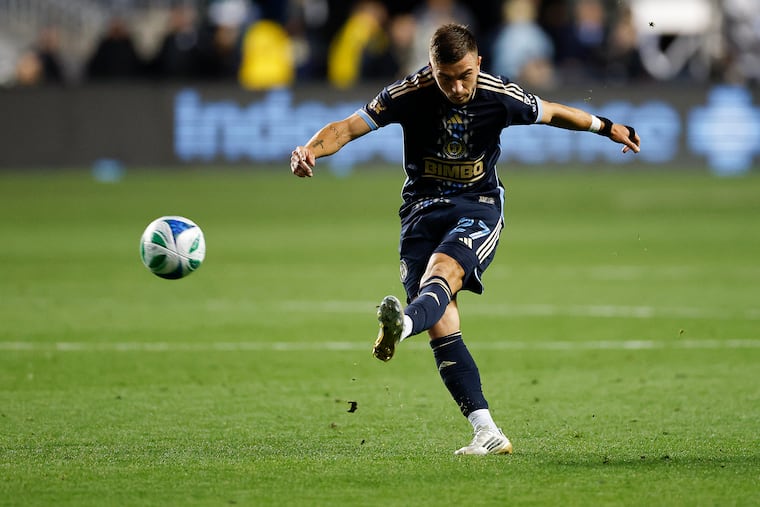
The Union don’t often pull off surprises, but Kai Wagner’s return to the club definitely counts as one.
Why did the left back want to come back here, after finally getting the move to Europe he’d dreamed of for years? And why did a Union organization that defines itself on the development of young prospects want to pay a $4 million transfer fee to re-sign a 29-year-old who had those wandering eyes in multiple offseasons?
The answer, according to multiple sources, is that both sides had stayed in touch after his departure — and they had some things to admit.
On the player’s side, Wagner’s family started missing life off the field here, and notably hadn’t sold their home in South Jersey. On the team’s side, being in last place in Major League Soccer when the World Cup break arrived (1-10-4, 7 points) set some alarms ringing.
“Through our conversations with Kai, we know what his motivations are, and what he wants to achieve with us,” sporting director Jon Scheer told The Inquirer. “That’s given us a lot of confidence that this is the right decision.”
Now the race is on to save the season, which is doable with 19 games left.
» READ MORE: As the Union resume their season, Cavan Sullivan knows the spotlight on him will only grow more
“I would say we need more at that position, in terms of some positional characteristics,” Scheer said. “This is not against any one individual, but I think if you look at the way our attacks are coming, there are limitations if you’re not naturally left-footed, particularly at this position.”
As sincere as he was about “any one individual,” it was still about a few of them. Philippe Ndinga, whom the Union signed as Wagner’s replacement, and Frankie Westfield are both right-footed. Ndinga hasn’t delivered as hoped, and Westfield has had some injuries. That led now-former manager Bradley Carnell to shoehorn attacking midfielder Ben Bender in a few times.
The Union have also missed Wagner’s set-piece deliveries, though the unusually bad execution this season has been a teamwide problem.
‘A club that wants to win’
But the most striking thing was where Scheer went next.
» READ MORE: Alejandro Bedoya reflects on his World Cup TV debut, the U.S.’ run, and lessons for Union teammates
“I would also say that for our group in general, I think we need character, we need mentality,” he said. “And I would say, having kept in touch with Kai, you could tell how much he wants this club to be successful and win. That was something to me that was the most important, more than anything in terms of what he can produce on the field.”
Those words were different from Scheer’s usual ones. He’s the face of a front office that wants the Union to be a “development club,” as he has said many times since taking the helm — first as interim when Ernst Tanner was suspended, then full-time when the suspension ended and Tanner didn’t get the job back.
There’s a promising left back prospect in 17-year-old Jordan Griffin, for example. He has played a lot for the Union’s reserves this season. Would a purely developmental club have promoted him instead of bringing back someone from the past at a considerable cost?
This was put to Scheer, and he was not surprised.
“We are a club that wants to win,” he said. “We are a development club, and that’s our vehicle, we feel, to win — and that’s not just homegrowns, but that’s any player that we sign. So, yes, while this is a move that is not always ‘on brand’ for us, I would say that the starting point is what will give us the best chance to be successful and to win.”
» READ MORE: Meg Kane was the perfect face of Philly’s World Cup campaign. Her family, and its tragedy, shaped her message.
That is the new boss’ imprint.
“We feel like our young players can learn a lot from veteran players that still have the ability to improve and get better by seeing their habits, by seeing their quality,” Scheer continued. “I think right now, with where our club is, we knew going into this window what those ingredients were that we needed to look for in terms of positions, but also in terms of some of the intangibles that we’ve been talking about.”
How will the Union look now?
The $4 million transfer fee isn’t much by MLS standards, but it’s among the bigger ones the Union have stumped up. It’s also more than the $2.5 million they got from Birmingham City in the first place.
That’s another odd look. Wagner wanting out should have given the Union some leverage on the price tag. But Birmingham didn’t want to give him up, having signed him there until the summer of 2028. So the Blues held firm, and the Union were ready for that.
» READ MORE: Hall of Fame broadcaster JP Dellacamera has called his last World Cup game
The size of the fee means Wagner is a Designated Player for the rest of this year. His salary won’t make him one, and he might not be one next year, but transfer fees count toward the status. So he is for now. He also got a new contract that’s guaranteed until the summer of 2029, with a team option for the 2029-30 season.
We’ll see if he jumps straight into the starting lineup when the season resumes Wednesday with Red Bull New York’s visit to Subaru Park (7:30 p.m., Apple TV). That game will also give us a first glimpse of how interim manager Ryan Richter wants to play, and how different it is from Carnell’s 4-2-2-2.
Scheer said Richter has latitude to be flexible.
“I would say that what formation and shape we play is not as important and significant as the game model itself, and our principles,” he said. “We want to be aggressive, we want to be ball-oriented, we want to be forward-first in our approach in all phases. The shape in which we play more than likely at times will still look like a 4-2-2-2, but Ryan has flexibility, as does the staff, to press out of a different shape, to attack out of a different shape.”
He added that there is an expectation to stick with two strikers, “because this is something that we’ve scouted and recruited for over a period of time now for quite a few years.”
That means there still won’t be traditional wingers, a philosophy Tanner first implemented. It makes the outside backs especially important, even though the 4-2-2-2 lets the attacking midfielders move wider than the previous diamond-shaped 4-4-2’s central midfielders could.
“Finding Cavan [Sullivan], Quinn [Sullivan], Agustín [Anello], these types of players in 1-v-1 situations a little bit wider, is a little bit more apparent in a 4-2-2-2,” Scheer said. “But yes, we don’t play with pure wingers, and I don’t see that changing in the near future.”
» READ MORE: The USWNT will play reigning World Cup champion Spain at Subaru Park in October