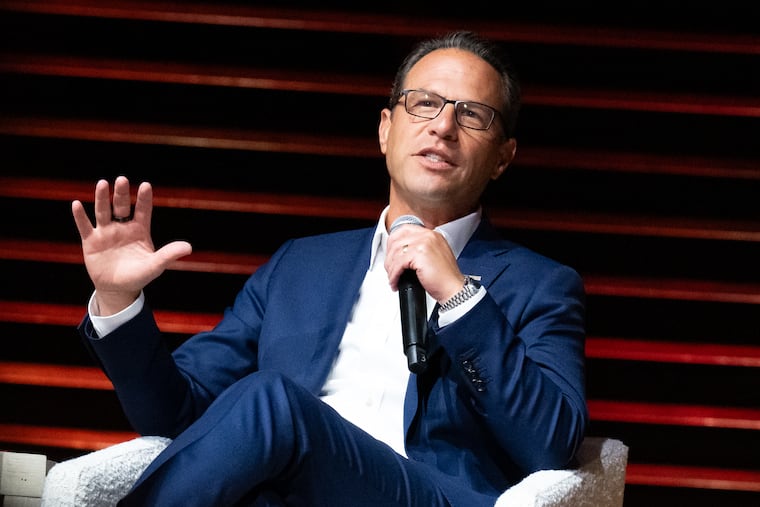
Q&A: Brent Flahr on the Flyers’ draft strategy with the 21st pick, whether trading the pick is an option, and more
The Flyers' assistant GM breaks down how past picks and this year's playoff run impact the upcoming draft.

BUFFALO, N.Y. — The 2026 NHL draft is quickly approaching, and things look a little different for the Flyers this year.
After making it to the second round of the Stanley Cup playoffs for the first time since 2020, the Orange and Black are picking at No. 21 in the first round and only have five picks across all seven rounds.
In Part 1 of The Inquirer’s two-part interview with Brent Flahr, who runs the team’s draft, the assistant general manager chats about the team’s approach heading into the draft, which will be held on June 26-27 back in Western New York.
This interview has been edited and condensed for clarity and was conducted on June 3.
» READ MORE: Flyers Q&A: Danny Brière on Sam Ersson, Trevor Zegras, the biggest needs this offseason, and more
Q: Several young players entered the lineup for the Flyers this season and impacted the game. Does how they performed change how you look at things for the draft?
A: A little bit. But where we’re picking, we know we can’t be that selective, especially early, we’re going to go with the best player. But we know where maybe our holes and our depth charts are going forward, or where we need to add more depth. At the same time, sometimes the draft doesn’t fall that way; you can’t go way off. The way we do our draft is we have layers and, obviously, we’ll target the best player, and if it’s all equal, then we’ll go by position. It’s kind of the way it always works.
Q: What do you consider missing in the depth chart then?
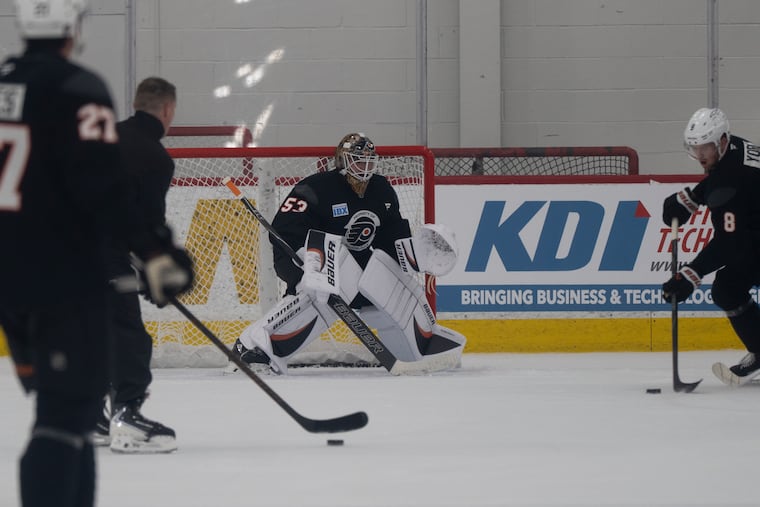
A: Well, we do have a number of centers coming now, which was kind of our [issue in] depth before, and we have some younger D on the team. But besides Spencer Gill and Ty Murchison and Hunter McDonald, Oliver Bonk, the next layer of younger defenseman we would probably use. We didn’t draft a goalie — we drafted two a couple of years ago, which takes the heat off — but probably go with adding a goalie, maybe. And then up front, we can always add depth.
Q: Does it change your approach when there’s only five draft picks?
A: Certainly doesn’t change it early. We’ll look at options, whether you’re trying to trade up or trade back, maybe adding a pick or changing things to get another higher pick, but just the way the draft was, we were aware. I think it’s a good draft at the top end; it’s not quite as deep as maybe some of the drafts previously. So when we were talking about giving away picks, we kind of targeted this year as the year that we’re going to be short a pick or two. But we still feel like, as the year has gone on, we have some guys targeted to the later rounds, which our guys [will] be happy with and excited about.
Q: When you see the success of players like Ty Murchison, Hunter McDonald, Alex Bump, who were late-round picks, does it give you confidence you can find someone there?
A: For sure, and that’s the challenge of the draft. Not everybody plays — we’re well aware of that — but you’re trying to draft players with multiple assets to give them a chance down the road. Some guys you think are slam-dunk players maybe don’t come through, for whatever reason. ... And there’s some guys who are overachievers that really push themselves, like a Murchison, and Alex Bump from where we drafted him to now; a lot of that’s because of how hard he’s worked to get himself in that position. It’s a competitive business, and it’s not only getting there but staying there, too. But obviously the key for organizational success is hitting on some of those late-rounders, too.
Q: Do you look for that specific internal drive or confidence then?
A: You can watch them play, but, yeah, when you meet with them — and we’re not talking about 24-year-old kids, either — we interview kids here. You’ve got to understand some kids are in high school, so they’re less polished than the kid that’s already been in college for a year, or a kid that’s [played for] Hockey Canada and been in front of microphones and rooms full of people before. So, you got to take that into account, but you can tell players who have a presence, people that are leaders, just by sitting there, the presence they have. And some kids can grow into it, but some people just have that.
Q: In past drafts, the Flyers seem to prioritize size, 200-foot play, and high compete. With who you have in the system, does it change your outlook?
A: A little bit. The one draft [in 2025] where we had a really big draft randomly, some of it was, obviously, a focus [that] we wanted to try to get bigger, but at the same time we had all those guys that were that big, and that was just kind of circumstance, too. So, there’s good small players in the game, and there’s certain things you have to have when you are a smaller player. For instance, our forward group, we have some top-end smaller players, and we also need some size to build around that. We’ve added a lot of size to the organization with the younger players, and you want to be as big and strong and fast as you can [but] there are some good players, and we’ll be cognizant of that.
Q: There are several smaller players in this draft, specifically defensemen under 6-feet like Tommy Bleyl and Xavier Villeneuve, who are puck-movers and high-offense players. With the power-play struggles, does it impact your thought process?
A: Yeah, obviously the power play is a problem. Realistically, the guys in this year’s draft, especially the guys you mentioned, are going to need quite a while to get there. So, hopefully, we have our power play addressed before these players arrive. But, no, for being a small player, a small defenseman, it’s getting harder and harder to play. I think you need an offensive dimension, or you’ve got to be special. ... You watch the playoffs, size does matter, and it’s harder to get to the net. But it’s something we take into consideration, and this D class, especially at the top end, is pretty good — really good — especially top 10.
Q: So, you’re not necessarily looking for size still?
A: No, but I think in certain positions I think it’s certainly important. But if you’re undersized, you have to be dynamic.
» READ MORE: Flyers mock draft 2.0: Alexander Command will surely garner attention in the first round
Q: Picking at 21 is very different than where you’ve been in the last couple of years. Does it change things and make it harder to build your draft board with such uncertainty?
A: Yeah, still a little early, because we usually have a pretty good idea of the projection of where guys are going. There are always a few surprises, outliers, but yeah, we’ll build our list the same way. This year it’s obviously a little bit different, the number of players going ahead, but you’ve got to make sure your list is tight, and you can’t just assume players are gone because we will go off our list in the first round. And then maybe later in the draft you’ll go [for] guys you maybe have a stronger feel for or position or whatever, if it’s close. But, yeah, it’ll be interesting. Got a lot of work to do yet. We’ve had our meetings already, and obviously the combine kind of fills up some gray areas, testing and seeing the body type, personalities of these kids a little bit more. Yeah, we’ll tighten it up, certainly through the first couple rounds and beyond, and we’ll be ready to go at the end of the month.
Q: Is there usually a big shift after the NHL scouting combine in your list?
A: Well, we have some red-flag players. Or, maybe, players who, whether it’s body type, or our strength guys think they can get there, or we also have some maybe character flaws or something. So you just address it here, and sometimes you take players off, sometimes you move them up or down, and if there’s no issues, or whatever, you can move them up. But yeah, we still have some things to tighten up for sure.
Q: How would you compare the value of having a 21st pick versus last year at sixth overall?
A: Well, it’s a big difference, but at the same time, happy where our team got to this year. We’ll do the best we can to find players who can have impacts down the road, but obviously you’re dealing with a different level of player. ... So, it’s a little more challenging, a little more projection probably because some of these kids, where we’re looking at, aren’t as maybe as close to playing or a little more work or a couple more years away. But, same time, we’ll have the same concepts, and what we like in players.
Q: Is there any thought of moving up and seeing what you can get higher up in the draft?
A: For sure. We’ll be talking about those scenarios here going forward, whether it’s trading up at a certain level if players are gone, maybe trade back and add a pick, or move up the pick and give them a later pick. Whatever you got to do. But I know Danny [Brière’s] talking to teams here already about certain scenarios, and then once you get to the draft and see what players are available, you react. But usually before then, we talk to the teams, and you have an idea what it’s going to take to move up and whether it’s worthwhile, and vice versa, to move back and have things in place. It’s a little more challenging now [because] you’re not right on the draft floor anymore; you’ve got to do it by phone and just keep in contact with teams. So you create the relationships now and put a bug in the ear that maybe we’ll move, and calls take place after that.
Q: The Flyers have a history of taking players who played well at U18 Men’s World Championship or the Hlinka Gretzky Cup, like Jett Luchanko. How much do you actually factor that in?
A: I think what happens is the media says that’s part of the case. ... There’s kids that we see all year — our scouts see them all the time — and there’s certain players that the media have no idea about as far as the quality, and sometimes they don’t get to see them live, and then when they see them at the U18s, they see these guys climbing the list. So it doesn’t matter to the teams; lists are the same. But, no, in certain cases, you see these players against their peers, so I think any time a player has a lot of success at the end of the year in a big tournament and wins a championship, or whatever, puts up a big number and performs well, it’s the last thing on our minds. And vice versa, a kid has a tough tournament, or doesn’t produce, or whatever, doesn’t mean they’re not a good player. You’ve got to be a little careful with that kind of stuff. It’s a recency [bias] effect, but at the same time, it is real. We’re all there to watch, and you want to see guys perform on a big stage, too. That’s a big part of playing in the NHL.
Q: Russia was not allowed to play internationally this year. How does that impact looking at those players?
A: Well, me personally, and a number of our staff, we have to do everything by video. [Gold Star agent] Dan Millstein has a camp down in Florida [before the draft], which we’ll attend and get to know players personally, but for some of the other players, we have to rely on Kenny [Hoodikoff], our Russian scout, and [director of European pro scouting] Reid Simpson is able to travel, so he sees a number of these guys live. But other than that, it’s video and interactions with Kenny and the player interviews, and doing the background that way. But it is a challenge, and there’s some risk there, too.
Q: What kind of involvement does Rick Tocchet have in the draft? Does he give you any directions?
A: Not much. His coaches come by and talk to our scouts ... just what type of players they like. But no, he doesn’t get involved.
Q: It’s hard to gauge when a player will be NHL ready, and he may not be the coach when that time comes. Do you still look for players that would fit his structure or systems?
A: Hockey sense is a big factor for players that we try to get. But there are types of players that his staff [and Tocchet] are confident they can develop. He’s had a lot of different players play for him that have had success over time. So, the biggest thing for our coaches, they want competitive people; they’re competitive, and they’re smart, and they can adapt and adjust to the league. So they’re pretty easy to deal with. Obviously, we’ve had a lot of guys jump in the lineup here this year, and they’ve been great.