Is anything real anymore? In 2025, even sports fans started to doubt.
The year 2025 may be remembered as the year a reckoning began over the unholy marriage of sports and legalized gambling.
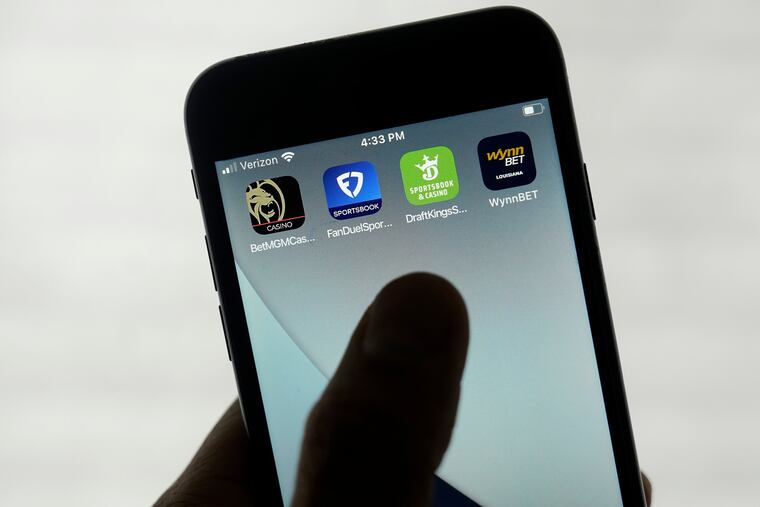
It may be difficult to remember now — here at the end of 2025, with major sports so entwined with gambling as to make you wonder whether our games still exist to crown champions or merely as fodder for young, twitchy-fingered sportsbook customers — but not so long ago, sports leagues spoke of the gambling industry as if it were the devil itself.
“It’s evil,” Bud Selig, then MLB’s commissioner, said in November 2012 of the dangers of gambling. “It creates doubt, and it destroys your sport.”
“Gambling,” NFL Commissioner Roger Goodell said that same week when asked about threats to pro football’s integrity, “would be number one on my list.”
Both statements were made under oath, in depositions pertaining to a lawsuit filed by America’s major sports leagues against the state of New Jersey over its plans to legalize sports gambling. Eventually, that case would wind up before the Supreme Court, which in 2018 handed down a landmark decision, Murphy v. NCAA, that effectively legalized sports betting nationwide.
Faced with that new reality, those same American sports leagues didn’t merely shake hands with an industry they once regarded as the enemy; they leaped into bed with it — and in the process fundamentally altered the way sports are packaged, marketed, and consumed.
Stadiums plastered with ads for sportsbooks. Broadcasts filled with gambling commercials and commentary on betting lines and odds. An ever-growing menu of live, in-game microbetting opportunities — effectively giving fans a casino in their pocket. In 2024 alone, Americans legally wagered a record $148 billion on sports, more than 95% of it online, and they will almost certainly surpass that figure in 2025.
But 2025 may also be remembered as the year a reckoning began over the unholy marriage of sports and legalized gambling. Betting scandals rocked the NCAA, the NBA, and MLB. At the same time, the modern phenomenon of athletes being harassed and threatened online by angry bettors grew into something resembling an epidemic. In both cases, the driving force appeared to be the ubiquity and ease of prop bets — those focusing on a specific player’s events or performance as opposed to the outcome of a game.
Largely as a result, the integrity of games — perhaps the most precious commodity in sports and the one that once united the leagues’ commissioners against gambling — is increasingly being called into question, a trend some are calling an existential threat to the long-term viability of sports.
“It doesn’t matter if, as I believe, 99.99% of the competition is untainted by gambling,” longtime sports commentator Bob Costas said. “All you need are a few examples for people to make the leap of logic to ‘I can’t trust any of it.’ You have to literally put [the doubts] aside. You have to compartmentalize all of this stuff to have the same relationship you once had to what you’re watching.”
This month, a Washington Post-University of Maryland poll of 1,032 American adults found plummeting support for sports gambling nationwide, compared with a similar poll conducted in 2022, and widespread concern about the possibility of fixed or rigged outcomes. Some of the largest drops in support for legalized gambling came from frequent sports consumers and those who bet on sports — the ones who know best the havoc it has wrought.
Overall, 66% of respondents, including 72% of those who have gambled in the past five years, expressed concern that games could be fixed or rigged. If you think those numbers sound high, try this experiment: The next time you’re watching a big game, search for “rigged” along with one of the teams’ names on social media, and prepare to be amazed by the constant stream of users dropping that term as they decry each misplay or blown call.
“The integrity of American sports is plummeting in terms of public perception,” Sen. Richard Blumenthal (D., Conn.) said in a telephone interview. Blumenthal co-sponsored a bill, the SAFE Bet Act, that, while focusing largely on the public health issues surrounding gambling, also would restrict some in-game prop bets. “Americans are becoming cynical and disgusted after all these repeated scandals involving big money corrupting sports.”
‘People have been too greedy’
Americans long ago made peace with the post-reality media environment in which we are living. TikTok’s algorithm pumps fake videos into users’ feeds. Spotify is full of AI-generated pop songs interspersed with real ones. The federal government routinely disseminates altered videos. We can even accept feature-length documentaries “enhanced” with so-called “synthetic materials.” The financial success and relative lack of outrage suggest we have stopped trying to discern between real and fake. We have stopped caring.
But sports are required to be different. Reality, above all else, is what they are selling. It is the last remaining entertainment enterprise that demands to be viewed live. Remove the authenticity of the competition and the credibility of the outcomes, and the whole thing collapses.
Only in high-level sports — and only in the name of authenticity — would leagues ban specific drugs and even over-the-counter supplements because they might give one side an unfair advantage, or spend five minutes in the replay booth examining a play from seven different angles because it is imperative above all else to get the call right.
“No matter how unfair life may be in other arenas,” Costas said, “people turn to sports and expect them to be completely fair.”
The about-face on gambling is staggering. MLB once banned Mickey Mantle and Willie Mays for taking jobs as casino greeters. Now it tacitly accepts David Ortiz serving as a pitchman for DraftKings, offering new customers the chance to “win Big Papi’s money.”
The major American sports leagues would never acknowledge that aligning themselves with the gambling industry equated to an abandonment of the mission of integrity or even a compromise.
“Our highest priority has been protecting the integrity of the game” read a memo reportedly sent by the NFL to its 32 teams in the aftermath of this year’s NBA and MLB scandals.
“Obviously, our number one priority,” MLB Commissioner Rob Manfred told reporters during this fall’s World Series, “is to protect the integrity of the game.”
One bedrock axiom of the sports industry’s partnership with sportsbooks is the notion that it is far easier to catch cheaters under the regulated system of legalized sports betting than it was when everything was underground. The scandals making headlines, the industry says, only prove the system of regulation and monitoring is working.
But experts in the field of sports integrity and gambling say the monitoring entities tasked with flagging suspicious activity can be commercially conflicted because they are the same entities providing the data feeds fueling global betting — a case of “the fox guarding the henhouse,” according to Nick Raudenski, a former criminal investigator for the Department of Homeland Security who now runs a sports integrity consultancy firm. “Integrity and independence,” he said, “have to be championed as fundamental sporting objectives, not a form of detrimental risk to be buried far from view.”
“The people who should be guarding [sports leagues’] credibility are involved in multibillion-dollar deals with the very product that is bringing [the threat]. People have been too greedy, too fast on the legalization of sports gambling,” said Declan Hill, a professor at the University of New Haven and author of “The Fix: Soccer and Organized Crime.” “It desperately needs [enhanced] regulation. It desperately needs sports leagues to take a long step back.”
‘So easily lost and so hard to regain’
With the benefit of hindsight, the current predicament may have been the inevitable result of rushing to deliver a known addictive product, via an addictive personal device, into the hands of a cohort — young, male sports fans — that is predisposed to risky behavior. Imagine if, at the end of Prohibition, the alcohol industry had the data to know which customers were most susceptible to getting hooked on booze and the technology to put it within reach of those customers anytime, anywhere.
“This is the dance with the devil that the leagues are doing and have done,” Hill said. “It seemed really attractive at first … but now comes the payment. Now comes the cost.”
Hill believes one problem is that we have not come to terms with the problem of gambling addiction among the athletes themselves — who, after all, largely come from the same demographic as the consumers targeted by the industry. One study found athletes were four times as likely as the general public to become addicted to gambling.
Jontay Porter, the former NBA center who received a lifetime ban last year in part for feigning injuries to manipulate certain “under” bets on his performance — incidents that were caught in large part because of integrity monitors that flagged suspiciously large wagers on an obscure player — was addicted to gambling and deep in debt at the time of his transgressions, according to his lawyer.
“Everything that makes an athlete great makes them susceptible to gambling addiction,” Hill said. “They never give up. They isolate themselves and obsess on overcoming great odds, on doing things people wouldn’t believe were possible. That’s great if you’re an athlete. But it makes you a lousy gambler.”
The problem of “spot-fixing” — manipulating individual prop bets — has proved to be particularly insidious. Throwing a game or tilting a point spread requires scores of machinations, but prop bets can be swung in an almost undetectable manner by a single athlete: Just one missed free throw, one dropped pass or one double fault can make someone a fortune.
These prop bets, as well as multi-bet parlays in which bettors stack props and get a much larger payoff if they all hit, have become the sportsbooks’ biggest moneymakers — which is another way of saying they are unlikely to be legislated out of existence despite recent efforts such as state bans of college athlete props and MLB convincing sportsbook partners to cap pitch-level props at $200 each.
It remains to be seen whether 2025 — for all its upheaval, scandal. and shifting public sentiment — represents a turning point in the relationship between sports and gambling. If anything, the sports gambling industry is still growing, still reaching new customers — one study found gambling ads and logos were shown to viewers at a rate of one every 13 seconds during some broadcasts — and still exploring new products. One of the latest: the NHL’s recent partnerships with Kalshi and Polymarket, predictions markets that allow users to bet on yes-or-no outcomes ranging from sporting events to elections to who will win the latest season of “Survivor.” This fast-growing industry operates outside the licensing and regulatory systems that govern sportsbooks.
But new and bigger industry models undoubtedly will bring new and bigger opportunities for corruption.
“You ain’t seen nothing yet,” Hill said. “There is a wave of stuff to come.”
If that’s the case, it’s fair to wonder how close we are to a breaking point. Already, recent polling, such as the Post-UMD one, suggests the accumulation of scandals has led many sports fans to question the legitimacy of what they are watching. Once the possibility of spot-fixing nestles in your mind, it can be hard to shake. Suddenly, every time a pitcher unleashes a fastball to the backstop, it’s only natural to wonder whether it was an honest mistake — or a dishonest one.
Such questions, Blumenthal said ruefully of his own sports viewing, are “always in the back of my mind. There’s always something there if a pass is dropped or a pitch is missed. Trust and credibility are so easily lost and so hard to regain.”