Kevin Willard may soon have his Massimino moment at Villanova, but does this Big 5 format make sense for all?
The new format for the City Series breathed some life into one that was getting stale, but it may have run its course because of financial concerns.
In 1991, a Villanova coach whose team had risen to national prominence was vilified for killing the Big 5 when the association of Philadelphia’s Division I hoops programs moved away from its round-robin format to a scaled-down version.
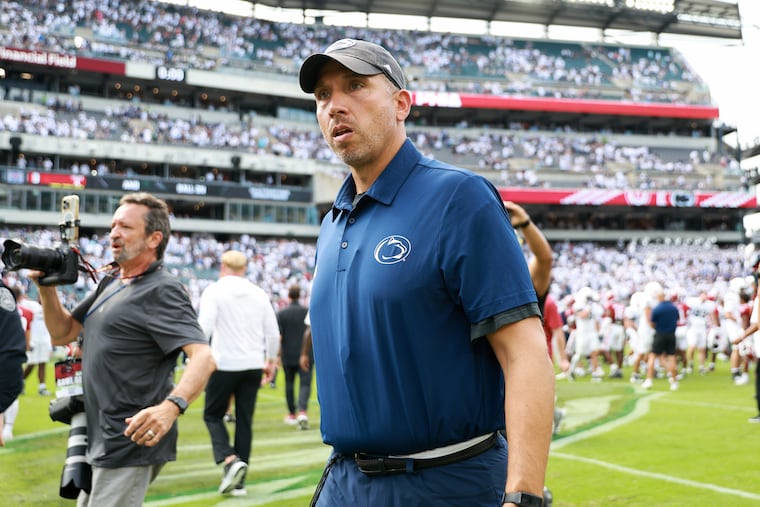
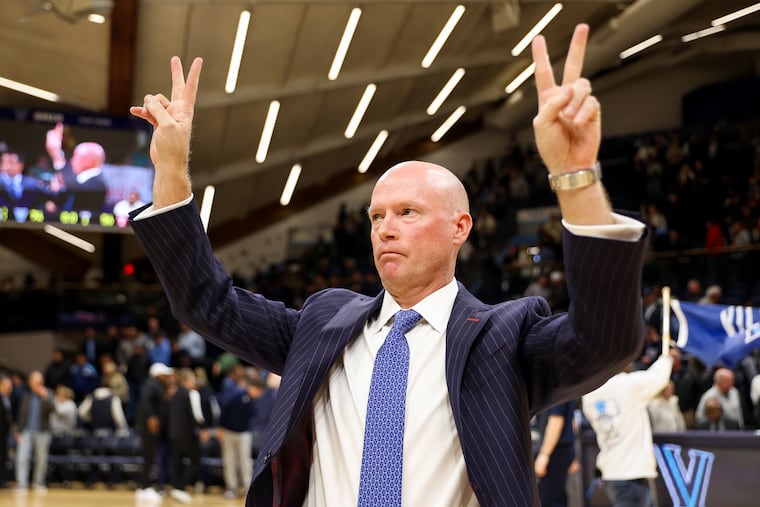
Thirty-five years later, new Villanova coach Kevin Willard may soon face his Rollie Massimino moment.
“It’s not going to go away,” Willard said of the Big 5 in an interview over the summer. “I think there’s ways to make things better.
“I want to go through it and figure out what’s best for it.”
On Saturday, Villanova will play for a Big 5 Classic championship vs. Penn. But what’s best for Villanova probably isn’t what’s best for the other five schools, and what’s best for Penn, St. Joseph’s, or Temple might not be what’s best for La Salle or Drexel.
» READ MORE: The steady hands of Acaden Lewis guide Villanova past Temple and into the Big 5 title game
To be sure, the sport has changed greatly since 1991. The gap between Villanova and the other local programs has not just grown, it’s never been greater — with Jay Wright’s run of dominance and, more relevantly, the implementation of a payment structure in college sports. Villanova is the only Big 5 school in a power conference with a major television deal and probably can afford to spend more money on its men’s basketball roster than the other five Big 5 programs combined. It probably will be a 15-point favorite over Penn on Saturday in the title game.
The money is at the heart of all of this. Forget your grandfather’s Big 5; this isn’t even your older brother’s Big 5. There are myriad reasons why the rivalries themselves aren’t the same, and they have been covered ad nauseam over the years: Young people don’t attend college basketball games the way they used to, the teams haven’t been very good, the transfer portal era has created a culture of mercenaries who travel from school to school year after year, and so on.
Fran Dunphy, the man they call “Mr. Big 5,″ who still watches plenty of basketball in his retirement, had an entire row to himself at Glaser Arena for a large part of the La Salle home game vs. Villanova last month. The Palestra has been removed from the equation almost entirely. The Villanova-St. Joe’s rivalry won’t happen this season for the first time in nearly 30 years. All of that is to say things change and nothing lasts forever.
But the financial component of it is why the current format of the Big 5 in its nascent stages — in which the six teams are divided into two rotating pods before playing two pool games to determine which teams match up in first-, third-, and fifth-place games during the Big 5 Classic tripleheader — seems unlikely to last very long.
The House v. NCAA settlement that resulted in schools directly paying players has only increased the need for financial diligence.
Villanova has to be considering the merits of keeping together an aging tradition vs. the cost of doing so, and it shouldn’t be alone in its considerations.
Instead of taking a bus ride to Olney to play at La Salle and winning by 15 in a sleepy building, wouldn’t Villanova have been better off having a home game, even if that means spending something like $100,000 to have a lesser opponent come to Finneran Pavilion? Maybe it’s not a buy-game and is instead another opportunity to host a team like Pittsburgh, which Villanova will do on Dec. 13.
Regardless of the replacement opponent, the current format means Villanova could be missing out on essentially two home games. One is the automatic road game from the two pod-play contests, the other is the Big 5 Classic itself, which divvies the pot from ticket sales seven ways between the six schools and the building.
That’s hundreds of thousands of dollars in revenue Villanova isn’t bringing in. Sure, your reaction to that can be “boo-hoo,” but that could be the salary of a rotational player floating away for the sake of nostalgia.
» READ MORE: Penn and La Salle played a Palestra classic, even though it wasn’t a Big 5 game
“When you play 20 conference games, playing an [Atlantic 10] road game every year is really difficult,” Willard said in June. “You’re also taking away a home game when revenue has become extremely important.”
Which brings us to the other element of this, and why Villanova isn’t alone, even if the Main Line school again will be vilified publicly for whatever happens next to the Big 5 (if its competition, for example, ends up being something like a one-day-only event with rotating matchups).
Let’s take Drexel or La Salle, for example. What if instead of playing two of these three Big 5 games, those schools got $100,000 to fly to a high-major program? A few hundred thousand may be a rotational player at Villanova, but that’s a starter or two at either of the aforementioned schools.
It may be reductive to view all of this through that lens, but that’s the reality for these schools. Money is all that matters, and the toothpaste is out of the tube in that regard. There will be no going back, which means traditions, even new takes on them, can’t last forever.
The new Big 5 format breathed some life into one that was getting stale, but it was agreed upon before the House settlement. The six athletic directors soon will have to put their heads together and figure out the best path forward.
“Scheduling is as important as anything in college sports,” Willard said. “Scheduling is everything.”
Massimino felt something similar in the early ’90s, too. That much hasn’t changed, but the financial implications certainly have.