Wilmington’s minor league team recently was acquired by an investment firm. The CEO wants to embrace the community.
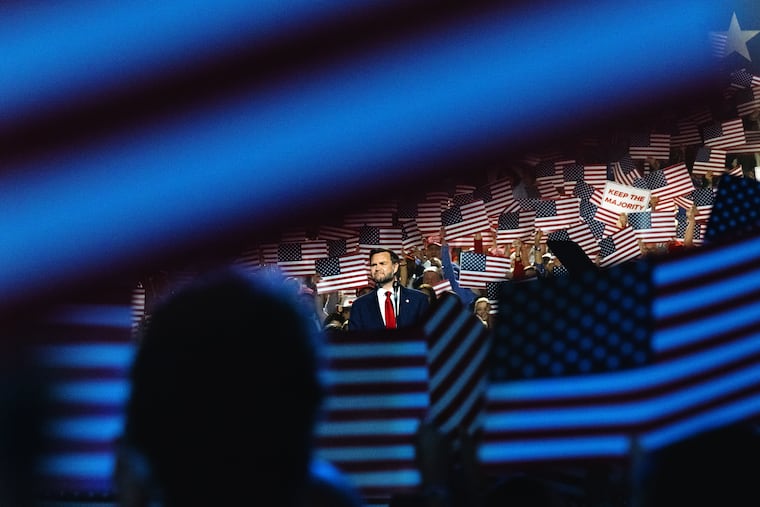
The Blue Rocks, the high-A affiliate of the Washington Nationals, were acquired by OnDeck Partners, which is backed by billionaire Marc Lasry, the head of private equity firm Avenue Capital Group.
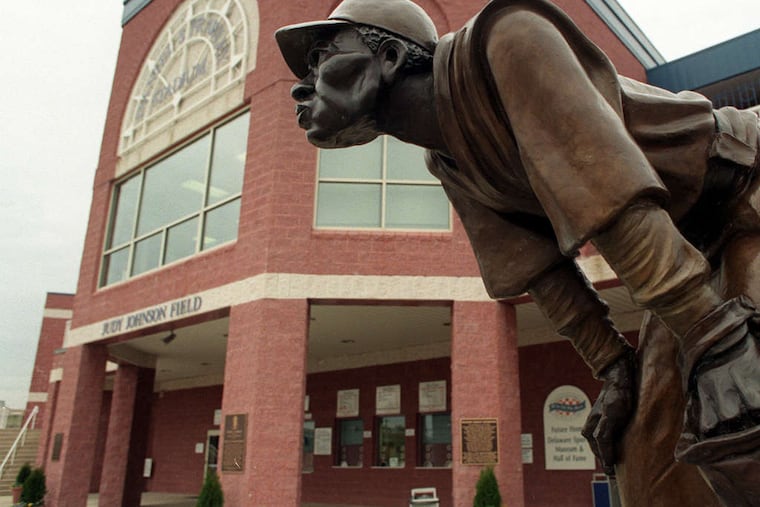
Private companies buying minor league teams isn’t new. Now, one group’s portfolio includes a team roughly 30 miles southwest of Philadelphia.
On July 20, sports investment group OnDeck Partners announced its acquisition of the Wilmington Blue Rocks, the high-A affiliate of the Washington Nationals.
Since it was established in December 2025, ODP has quickly gained ownership of three minor league teams. Backed by billionaire investor Marc Lasry, ODP also owns the Montgomery Biscuits (the double-A affiliate of the Tampa Bay Rays) and the Visalia Rawhide (the single-A affiliate of the Arizona Diamondbacks).
ODP CEO Mike Carney is ready to hit the ground running and says the group is approaching its third team with a community-forward mindset.
“For a lot of the minor league owners, it is about legacy. It is about community,” said Carney, who has prior experience working for the Nationals. “There are a lot of factors that go beyond just the financial transaction … you really need to embed with the community in minor league baseball. That’s what we’re about.”
» READ MORE: Rowan student Allan Wylie recently added calling baseball games to his resumé. But there’s one catch — he’s blind.
Lasry, who heads private equity firm Avenue Capital Group, is the former owner of the NBA’s Milwaukee Bucks. ODP is part of the $1 billion Avenue Sports Fund, which aims to mirror companies like Silver Lake Technology Management LLC, which funds Diamond Baseball Holdings, the subsidiary that owns 48 of the 202 affiliated minor league teams across the country — the most of any private group.
Though the Blue Rocks previously were owned by another small private group, Main Street Baseball, for 11 years, the acquisition by ODP is an example of the intricacies within the business of minor league baseball.
History of the ‘farm system’
On May 29, 1922, the Supreme Court ruled that baseball is exempt from antitrust laws in Federal Baseball Club v. National League. The ruling held that “exhibitions of baseball … are purely state affairs” and outside of interstate commerce regulations, exempting the sport from the Sherman Antitrust Act and effectively allowing the league to operate as a legal monopoly.
That decision paved the way for the farm system used today, in which major league teams own affiliate teams ranging from rookie ball to triple A.
“The farm system is basically where they’re growing talent,” said George Diemer, a professor at Temple and a sports economist. “Normally the courts would say, ‘Well, that’s against antitrust law. There’s no competition; you can’t do that. But baseball enjoys full immunity, so they can do whatever they want.”
Now, more than 100 years later, that decision has been called into question multiple times — in 1953, 1972, and, most recently, in 2022, when Sen. Bernie Sanders (I-Vt.) pushed to target baseball’s antitrust exemption. While some regulations have been put in place, Diemer and others believe that the original 1922 ruling likely won’t ever be overturned, allowing American baseball to continue functioning as it does today.
That system creates a chasm in which players and coaches controlled by a major league franchise are separate from the daily operations of the team and ballpark. Carney insists that with this transition, the Blue Rocks plan to keep the community at the forefront of their vision.
“How can we get some of the scale and efficiency that large companies can get while still maintaining the strong local tie to the local community?” Carney said. “I think, just candidly, that’s a challenge we still have to solve.”
» READ MORE: Dave Dombrowski’s no good, very bad year (tenure?) continues at the MLB trade deadline | David Murphy
The acquisition came with no staff changes to the team and instead focused on building upon what already was in place. Plans to expand offseason programming are a major focus.
“These ballparks, oftentimes, especially the ones that we look at, are the center of entertainment,” Carney said. “We want the ballpark to be a place for families to be able to come for affordable entertainment as close to year-round as possible.”
For Carney, the Blue Rocks include a personal connection, too. Formerly the senior vice president of business operations and chief revenue officer of the Nationals, he says buying the Blue Rocks marked a “homecoming” with the Lerner family, which owns the Nationals.
On the field, Wilmington entered Thursday a half-game behind the Greensboro Grasshoppers in the South Atlantic League North with a 21-16 record. The Blue Rocks on Tuesday celebrated ODP with a ribbon-cutting ceremony and fan fest featuring music, games, and free tickets to the game against the Brooklyn Cyclones, which they lost, 7-1, the first of two straight losses.
“We only have about seven months officially behind us right now,” Carney said as he reflected on the business so far. “So we know we have a lot more trust to build, but we are up for the challenge, and want to emphasize that the ballpark is here for everyone and has its place aside from the game.”