Amtrak and three counties are teaming up to restore passenger trains between Reading and Philly
Intermediate stops are planned for Pottstown and Phoenixville.
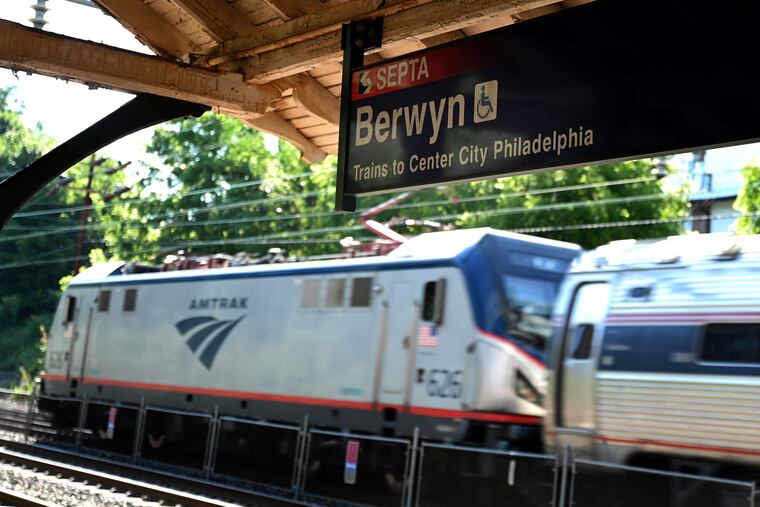
Amtrak and the Schuylkill River Passenger Rail Authority agreed Wednesday to work together to revive passenger train service between Philadelphia and Reading after an absence of 45 years.
Federal Railroad Administration officials designated the route as one of 60 intercity rail corridors to be developed in part with start-up funds from the 2021 bipartisan infrastructure law.
Intermediate stops are planned for Pottstown and Phoenixville.
The agreement is a step forward, committing Amtrak to complete formal ridership forecasts and revenue estimates and to determine likely costs to operate and maintain the route.
That is the second step of the four required before passenger service can restart.
“We’ll rocket through Step 2,” said Thomas Frawley, executive director of the Schuylkill River Passenger Rail Authority, because of Amtrak’s commitment to the project. “We’re excited and optimistic.”
Berks, Chester, and Montgomery Counties created the rail authority in 2022 to take advantage of Washington’s interest in establishing intercity passenger service.
Amtrak will handle the next stage of work, estimated at $4.8 million. Federal officials have approved the budget, but the money needs to be obligated before the bipartisan infrastructure bill expires Sept. 30, Frawley said.
Congress is discussing reauthorization of a new surface transportation law, and future funding of the rail corridor program is uncertain despite bipartisan support.
After the business plan in Step 2, the Philadelphia-Reading line would require preliminary engineering, final design and engineering, and some construction.
Ever since rail service along the route ended in 1981, people have been trying to figure out a way to bring back the trains.
Other proposals fell by the wayside, including the state’s 1990s Schuylkill Valley Metro plan to build an electric-powered commuter service on the route. It was estimated at $2 billion. In 2003, Gov. Ed Rendell canceled the effort amid funding concerns.
By contrast, the SRPRA plan is projected to cost about $100 million.
Backers say the SRPRA plan has advantages that could pay off. For one, the partnership with Amtrak and the national passenger railroad’s interest in running the line.
“We look forward to the opportunity to reconnect communities like Reading to the Northeast Corridor and beyond, to support their economic and community development,” Nicole Bucich, Amtrak’s vice president of planning and state partnerships, said in a statement.
Another: Norfolk Southern owns and hauls freight on existing rails with diesel locomotives — no need for a massive project to build tracks or a system of overhead wires to power passenger trains.
“They’re running trains today on the railroad, and it’s in very good condition,” Frawley said. “We’re not talking about a greenfield project.”
The Northeast Corridor itself is an advantage, too, Frawley said, giving more people access to Philadelphia’s 30th Street Station to Boston, New York, Washington, and points between.
“It can have a powerful synergistic effect” on the regional economy, he said.