How Malvern’s Pa. Turnpike ramp sparked billions in economic development
Thousands of people moved in to take advantage of the new jobs or a suddenly more convenient commute to Philadelphia.
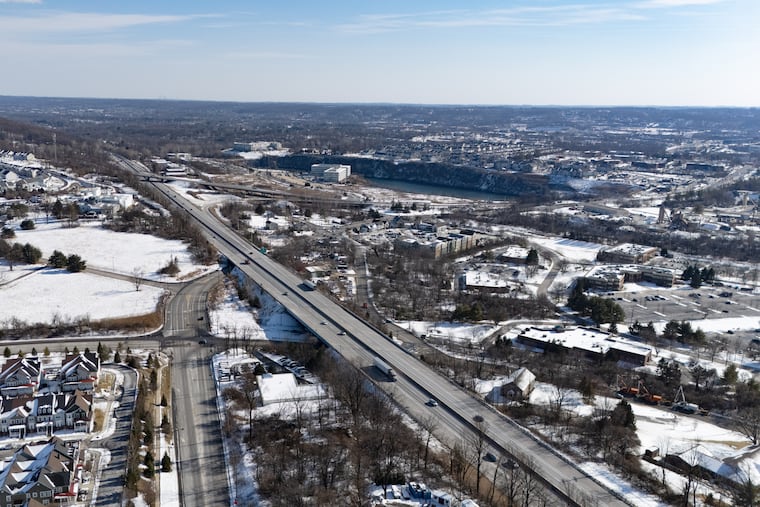
Michael Chain Jr. once had to exit the Pennsylvania Turnpike at Downingtown and drive a zigzag pattern on State Routes 100, 113, 401, and 29 to reach his hotel.
So did his customers.
But then the turnpike built Exit 320, an all E-ZPass interchange that connects to Route 29 and brings traffic right to the family-owned Hotel Desmond Malvern, a DoubleTree by Hilton.
“It would easily take 20 minutes,” said Chain, general manager of the property. “Now you cut that in half, if not more.”
When it opened in December 2012, the interchange helped spur billions in new commercial and residential development in Chester County’s Great Valley.
Corporate office parks expanded and new ones sprouted. Vanguard relentlessly expanded its campus for its 12,000 workers. Pharmaceutical and biotech companies moved there. Pfizer, Johnson & Johnson, Teva, and other pharmaceutical companies planted offices and research laboratories there.
Thousands of people moved in to take advantage of the new jobs or a suddenly more convenient commute to Philadelphia and its inner-ring suburbs, Berks County, Lancaster, or even Harrisburg.
More than 10 years later, the effects of the turnpike’s project are evident, but the real estate market is evolving to meet a lower post-pandemic demand for traditional office space and a higher demand for more housing.
Through American history, transportation and development have been yoked. Towns and cities have grown around navigable rivers, post roads, national highways, railroads, interstates, turnpikes, and public transit.
“This new interchange was explosive in terms of the economic impact in that particular region in a way I’m not even sure we had anticipated,” said Craig R. Shuey, chief operating officer of the Pennsylvania Turnpike.
The key to success
Experts caution it would be a mistake to attribute too much of the growth in the Great Valley solely to the turnpike exit.
The area’s transition from agricultural and industrial to commercial mixed-use was already well underway when it opened. Real estate developers Rouse & Associates acquired land in 1974 and began building the Great Valley Corporate Center, a 700-acre business park.
As the Pennsylvania 29 interchange was under construction, the U.S. 202 widening project occurred, helping ease the flow of traffic, although it still gets congested at peak hours.
The exit “plays well with an improved Route 202,” said Tim Phelps, executive director of the Transportation Management Association of Chester County.
It’s also served by SEPTA Regional Rail Service and Amtrak, and there’s a connection to the 18.6-mile Chester Valley trail for biking, running, and walking.
“The key is all the multimodal access to the area from different points,” Phelps said. “You move goods and freight along corridors and people to jobs; transportation is economic development.”
New rise in residences
Growth hasn’t been linear.
”Since COVID the office market has been struggling everywhere, and a couple of years ago the funding for biotech became harder to get,“ said John McGee, a commercial real estate broker and developer. ”Both of these events had a negative impact on demand for [office] space in Great Valley.”
He and partners have turned an empty Exton office building into the Flats on 100, 24 studio and eight one-bedroom apartments, marketed to consultants and visitors who need to stay awhile while working with local companies.
Other signs of a softer market in commercial space:
Malvern Green, a 111-acre office park owned by Oracle, is up for sale, marketed as a redevelopment opportunity. It has 759,000 square feet in four buildings on Valley Stream Parkway, off Route 29.
A 10.3-acre office property on Swedesford Road is slated to be demolished and turned into a mixed-use campus, with 250 apartments and about 6,700 square feet of retail and dining.
With the pandemic rewriting the rules of work beginning five years ago, residential development has picked up, driven by housing scarcity and lack of affordability.
Deb Abel, president of Abel Brothers Towing & Automotive, has seen the area evolve from her position as chair of the East Whiteland Planning Commission and as a member of the Chamber of Business & Industry.
“We talk all the time about workforce development,” Abel said. “People don’t want to come to work where they can’t afford to live.”
More — and more affordable — housing is key both for current and future staffing needs. Workers shouldn’t have to commute from other areas with more housing options, Abel said.
‘A tangible asset’
To Chain, the hotelier, travel time saved by the interchange is a tangible asset.
“It improves the quality of life on a personal level, and [in business] I’m a beneficiary of people staying on the turnpike,” he said.
As corporate travel budgets waxed and waned in the Great Recession and pandemic years, the Hotel Desmond beefed up other lines of business. An events space at the resort-like hotel now provides about half the revenues, Chain said.
The interchange has helped him draw conference business from statewide associations, most of them in Harrisburg.
And in recent years, youth sports travel teams from New York and New Jersey attending weekend tournaments in the region have filled rooms while using the interchange for easy access. Hockey teams are big.
‘A natural progression’
A new multifamily project for Greystar Real Estate Partners is rising next to Route 29 on undeveloped land.
IMC Construction is building a five-story, 267-unit apartment building featuring a rooftop lounge, fitness center, coworking space, pool courtyard, grilling stations, and more.
A 133-unit “active adult” apartment building for people who are 55 and older is also under construction.
Project manager Bob Liberato grew up in the area when Route 29 was a country road with one traffic light between Phoenixville and Route 30.
It seems ironic now, but he remembers a petition circulating among fellow students at Great Valley High School to oppose the turnpike’s interchange proposal. Pretty much everybody signed.
“We wanted to stop the turnpike because we liked our life,” Liberato said. “It was open, mostly fields and trees. Being able to go outside, have parties in the woods — all of that was great.”
So what he’s doing now is, in a way, part of the circle of life.
“We’re seeing a shift toward more residential projects, and there is a runway for more in the Great Valley,” said Liberato. With a scarcity of new development, ”it’s a natural progression in a lot of Philly suburbs."

Want to get Inquirer Chester County straight to your inbox every week? Sign up here for our guide to the news, stories, and events shaping life in your community.