Cameras will soon enforce speed limits in five Philly school zones
Driving 11 miles faster than the school-zone speed limit will carry a $100 fine.
Philadelphia drivers are about to get a new incentive to obey the flashing caution lights and 15 mph speed limit near schools.
On Tuesday, the Philadelphia Parking Authority plans to turn on automated speed-enforcement cameras in five school zones, targeted because they have had a relatively high rate of crashes. All are on major roadways.
Violators will get warnings until April 20, when the cameras start enforcing the law. Driving 11 miles faster than the school-zone speed limit will carry a $100 fine.
“The goal is to protect students,” said Rich Lazer, executive director of the PPA. “Speed cameras work. They reduce dangerous behavior.”
Roosevelt Boulevard has seen a 95% reduction in speeding violations and a 50% reduction in pedestrian-involved crashes since cameras went up in 2020.
The high-priority school zones were selected based on an analysis of Pennsylvania Department of Transportation crash data by the Philadelphia Office of Transportation and Infrastructure Systems.
From 2019 through 2023, the five locations recorded 10 crashes in which a person was killed or seriously injured, and 25 pedestrian crashes, as well as several speed-related vehicle-on-vehicle crashes, the PPA said. (Victims included people of all ages; it was not clear how many were students.)
“We have tried many traffic-calming methods to stop people from driving dangerously fast in school zones, but many drivers still speed,” said Michael A. Carroll, a deputy managing director for the city who is in charge of OTIS.
“Speeding is the No. 1 cause of fatal crashes,” he said. The cameras will protect students walking to and from school, as well as crossing guards, “who often put their lives at risk,” Carroll said.
Automated speed enforcement remains controversial, despite studies that show it is effective, particularly on major urban roadways like the Boulevard.
The cameras are also popular in dense cities.
Recently, the Trump administration’s Department of Transportation restricted cities from using federal road safety grants for cameras that enforce speed limits and other traffic laws, unless they are in work or school zones.
The Pennsylvania legislature, historically skeptical of automated enforcement, in 2024 gave Philadelphia permission to use school-zone cameras through Dec. 31, 2029, on a trial basis.
There was some hesitation last March when City Council considered an ordinance to authorize the cameras. Three members held up the measure in committee, expressing concerns about a “money grab by the city.” The members also said they did not have enough information about the bill.
After they met with Councilmember Isaiah Thomas, the chief sponsor, the legislation was enacted.
“Everybody thinks it’s a money grab, but it’s really not,” Lazer said. “Resources are stretched; police are dealing with a lot of things. … If we can use technology, and it works, why not? Don’t speed, and you won’t get a violation.”
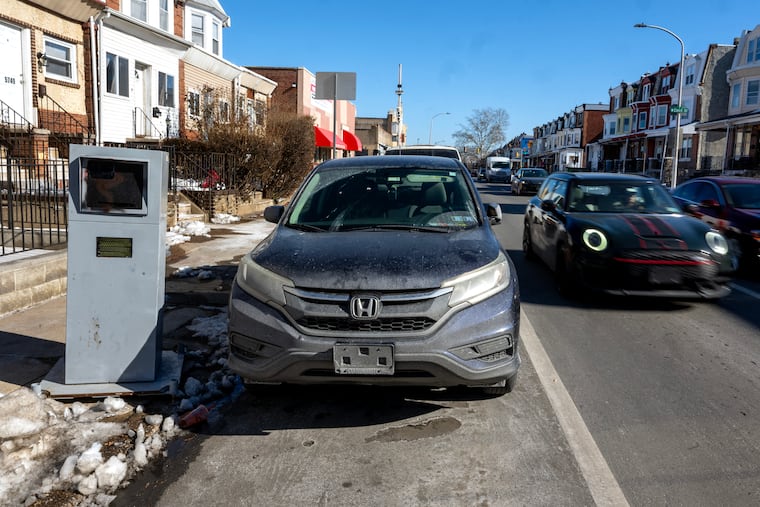
Unlike the speed cameras on the Boulevard and those along 13 miles of Broad Street since November, the school-zone units deployed by the PPA are squat and at street level.
Some people say they look like mailboxes or small refrigerators.
They are meant to be portable, PPA officials said, so that cameras can be moved to other schools with problems, as long as they are operating in only five school zones at any one time.
That limit is fixed by state law. Cameras can operate only when school zones are active, meaning weekdays when students are arriving in the morning or departing in the afternoon.