Activists and City Council want Waymo stopped in Philadelphia until concerns are answered
City Council is trying to assess how autonomous rideshare cars might affect Philadelphia and what they can do about it.

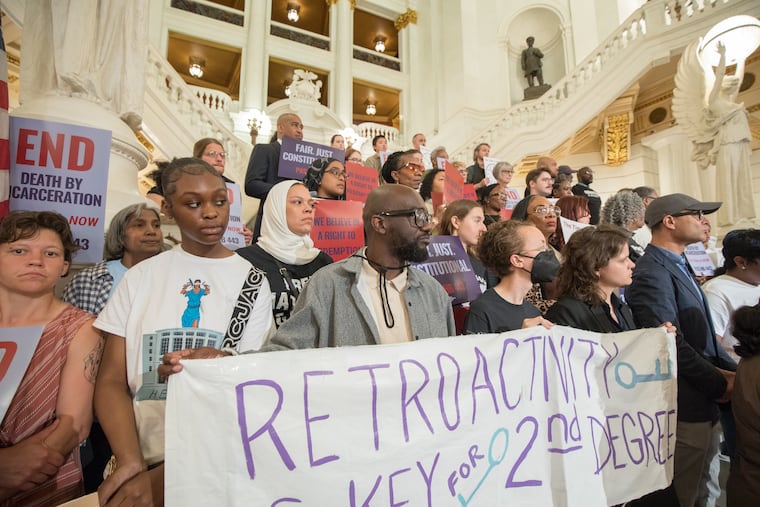
City Council members and a coalition of religious leaders, labor unions, and rideshare drivers on Tuesday demanded the Pennsylvania Department of Transportation put the brakes on Waymo in Philadelphia.
Serious questions remain about the safety of self-driving cars and the possibility of job losses when Waymo begins carrying human passengers at scale in the city, they said.
“Progress for the sake of progress is not enough,” Councilmember Nina Ahmad said at a news conference before a Council hearing on the technology. “We have to look at the impact of that progress.”
Waymo has been testing its self-driving cars in Philadelphia for months and is expected to begin offering ride service at some point this year. The company has declined to discuss timing.
“We are incredibly proud of the work we do every day to deliver on our safety mission and revolutionize how communities move,” Waymo said in a statement prepared for a joint hearing of the Council committees that deal with labor and transportation matters.
“We look forward to being a supportive, reliable and deeply engaged neighbor … with the highest standards of safety, accessibility and collaboration,” the company said.
Philadelphia and other local governments in Pennsylvania have no direct say over Waymo.
Under a 2022 state law, PennDot regulates the safety and operation of autonomous vehicles; it also issues permits for passenger service when it certifies the robo-cars are safe.
“The city is entirely preempted in regulating this technology by state law,” Anna Kelly, senior policy adviser for the Philadelphia Office of Transportation and Infrastructure Systems, told Council members during the hearing.
No representatives of Waymo testified before the lawmakers, which earned scathing remarks from some.
Council members asked whether the city could enter an agreement in which Waymo would promise a certain level of investment in Philadelphia or community benefits.
“Because we are preempted by the state legislature, we don’t have the leverage to request any of those things,” Kelly said.
In its statement, Waymo cited studies of 170 million “fully autonomous” miles that found its cars caused 92% fewer serious injury and fatal crashes than human drivers did in the same areas.
The company also said that there is no clear evidence it has displaced significant numbers of local workers in cities where it operates and that research has found no link to a decline in driver pay there.
The company is serving riders in the San Francisco Bay Area; Los Angeles; Phoenix; Austin, Texas; and Atlanta, as well as in Miami; Houston; Dallas; San Antonio, Texas; Orlando; and Nashville.
Waymos use LIDAR, which emits millions of infrared laser pulses per second that bounce off objects to make a 3D map of the autonomous vehicle’s physical surroundings. The cars are also outfitted with cameras and radar.
Beforehand, the news conference took on the tenor of a rally that captured a bubbling backlash in the nation against the power of Big Tech, fueled by concerns about the potential effects of rapidly developing artificial intelligence.
“Where does the working-class person find their place, our place, in this new age of automation, in this second Gilded Age,” said Councilmember Nicolas O’Rourke.