The Curtis Institute vows to rebuild the beloved Art Alliance building on Rittenhouse Square
It has a “pretty special character that we think is possible to bring back,” a Curtis leader said of the building where a blaze broke out in the early hours of July 4.
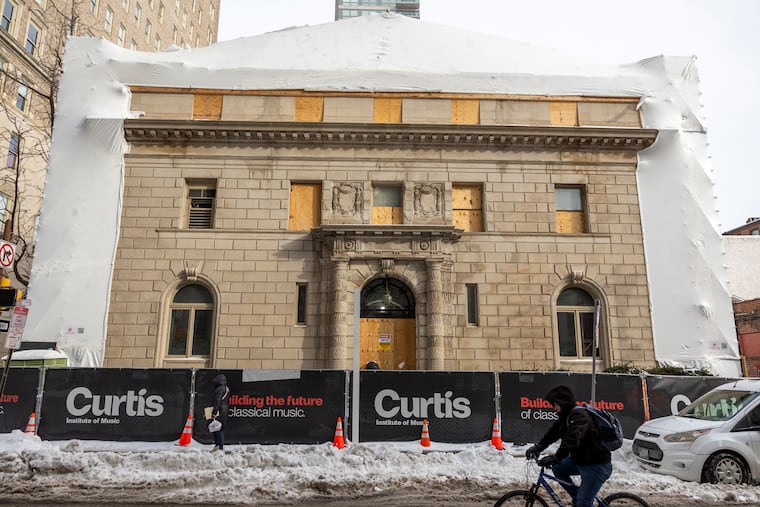
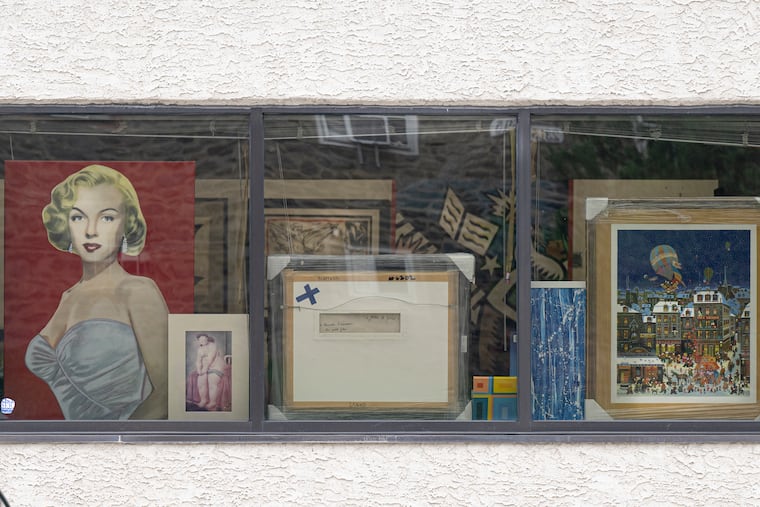
A temporary shrink-wrap covering has been draped over the Art Alliance building as damage is being assessed. The Curtis Institute of Music, which owns the historic, jewel-box structure on the southeast edge of Rittenhouse Square, is in the early stages of dreaming about the building’s eventual use.
Curtis had only recently taken over the Art Alliance, when, in the early hours of July 4, a blaze broke out that took more than 120 firefighters to extinguish. The building’s roof was largely destroyed, and other portions of the building were severely damaged by fire, smoke, and water.
The fire marshal categorized the cause of the fire as undetermined, and Curtis isn’t expecting to ever arrive at an answer.
“We haven’t thought much about it in a few months because it just hasn’t come up,” said Curtis chief financial officer Chris Dwyer, who is overseeing the building rehabilitation process. “What I’m concluding is that the damage is so bad that there’s no answer with a capital A.”
At the time of the fire, Curtis was overseeing modest repairs and cleaning and transferring archival materials from the building to other institutions, with an eye toward being able to host a few small community gatherings, a school spokesperson said.
A full damage assessment is due shortly, and while it’s already clear that some historic elements of the interior survived, it is not yet known whether others were lost.
“The whole front of the building is more intact than you might have thought, but [there is] definitely a lot of water and smoke damage,” Dwyer said. “But things like the staircase is still there, the stained glass window [on the south side] is essentially intact.”
Curtis aims to incorporate the surviving historic elements into the design of a rehabilitated building, he said.
What exactly the renowned music conservatory will use the 15,000-square-foot building for is an open question at the moment.
“We’re definitely constrained as far as teaching space, rehearsal space, performance space, and places to welcome the community,” said Dwyer.
The fire has left the configuration of the building slightly changed. The third floor included an attic that was destroyed by the fire, which raises the possibility that a reconstructed third floor will offer higher ceilings than before.
VSBA Architects and Planners has been engaged to assess damage and develop some preliminary concepts for eventual reuse. The firm designed Curtis’ nearby Lenfest Hall on Locust Street, and has a long track record in historic preservation work.
Though reuse plans are still developing, some public-use element seems likely, Dwyer said.
“We’d love for the building to be used year-round. We’d be open to partnerships and rentals and maybe some new imaginative public programming. So it’s definitely on our minds that it would be public and in some way, shape, or form.”
A timeline is far from certain, but if various elements fell into place quickly enough, the building — which was built in 1906 — could reopen by summer or fall of 2028, leaders say.
Curtis is aware of the place the Art Alliance holds in the hearts of many — “of all the nostalgia and the memories of the building that folks in the community cherish,” said Dwyer. “I was at a wedding there in the late ’90s. It seems like everyone has been in that building at least once.”
It has a “pretty special character that we think is possible to bring back.”
Curtis conducted a special fundraising campaign to acquire the building for $7.6 million from the bankruptcy estate of the University of the Arts. The conservatory and its insurance company are working toward arriving at a payout for the damage, but Curtis may want to do more to the building than simply what the insurance would cover.
That would mean more fundraising.
“It’s hard to see how we wouldn’t need to raise funds,” said Dwyer.