
See it, hear it, feel it: All the Philly art we loved this week
By Dan DeLuca, Peter Dobrin, Morgan Ritter, Bedatri D. Choudhury
An 1891 building that looks like a castle, a cathedral, and a factory
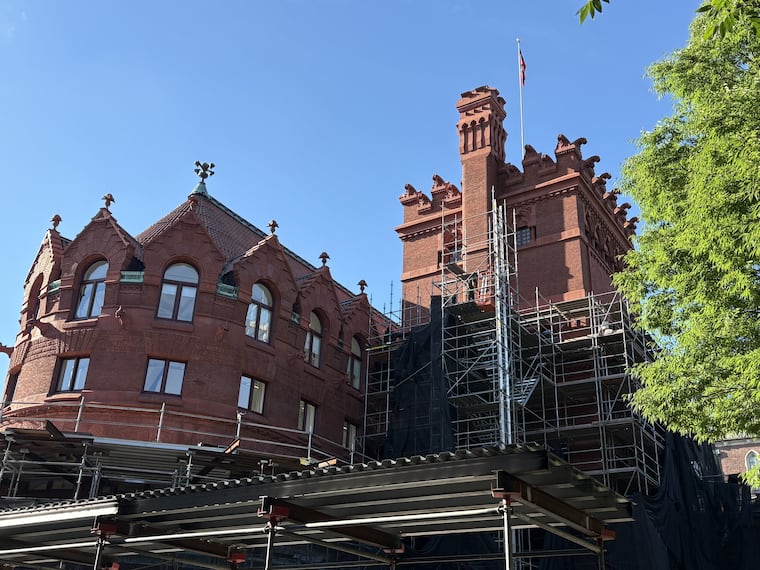
he Anne and Jerome Fisher Fine Arts Library on 34th Street near Walnut hasn’t quite been itself lately, cloaked in a metallic web of scaffolding. But it will soon reemerge after an exterior restoration and promises to be as striking as ever.
Dedicated in 1891, the building has had frequent updates.
“There was a significant [restoration] project done in the 1980s that Venturi’s firm led. It finished around the 100th anniversary of the building in 1991, and that really brought the building back,” said Mark Kocent, Penn’s university architect, referring to the Philadelphia practice then called Venturi, Scott Brown and Associates.
“This is coming back 35 years later and saying, ‘OK, it’s a building that you need to continue to reinvest in.’”
If Penn’s campus is a kind of museum of architectural eras and styles, Frank Furness’s exuberant piece of distinctly Philadelphia Victoriana hits the eye as a masterpiece. Highly ornamented and rendered in deep red-orange tones, the building in one section suggests a castle, a cathedral in another, and, on yet another side, a factory.
The current restoration project, whose principal architect is Vitetta, has a price tag of $16.5 million, and includes attention to the brick and terra cotta plus cleaning of masonry; repairing of the roof; replacing some windows and repainting of windows and doors; and adding lightning protection.
“So really, just kind of tightening the envelope of the building,” said Kocent.
The project began last April and is expected to wrap up this fall.
Penn’s core campus in West Philadelphia has close to 200 buildings totaling around 17 million square feet, says Kocent, and the university conducts ongoing assessments to determine which structures need work.
Among other recent notable restorations was a $87.4 million project at College Hall finished in 2025, and a $238 million renovation of the Quadrangle Dormitories along Spruce Street and Woodland Walk now nearing completion.
The Furness library building, though, is a favorite of Kocent’s, because of its detail and character, but also for a more personal reason: He was once a student at the school himself.
“It was kind of wonderful to have studios in there back in the day where as an architecture student you could go there in the evening at sunset and you’d see the sun setting on the west side of the building, and then after pulling an all-nighter, you’d watch the sun come up on the east side.”
The Fisher Fine Arts Library is at 220 S. 34th St. within the University of Pennsylvania campus.
— Peter Dobrin
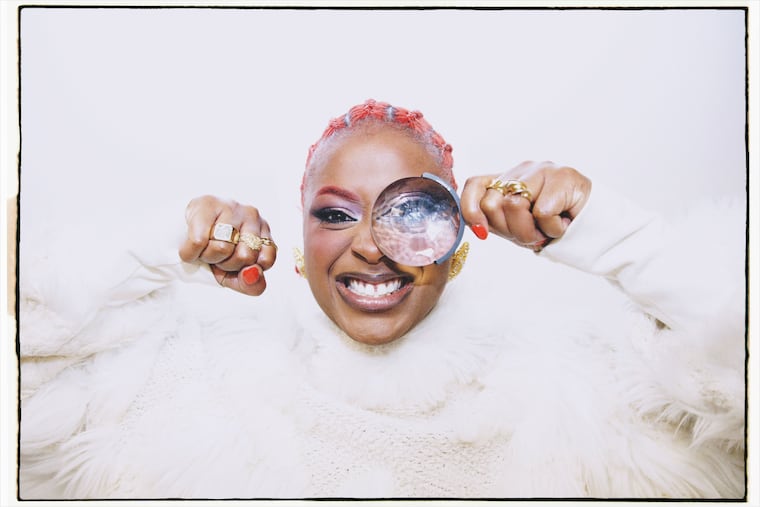
Tierra Whack is back!
Tierra Whack always leaves you wanting more.
The Philly rapper and singer first garnered attention with her 2018 mixtape Whack World. That 15-song, 15-minute debut revealed her to be one of the most imaginative minds in hip-hop.
Since then, Whack has sometimes frustrated fans with her limited output — there’s been just one full-length album since. 2024’s World Wide Whack stretched her stylistically into alt-R&B and pop but didn’t entirely sate the appetite of fans awestruck by her wicked wit and rhythmic command.
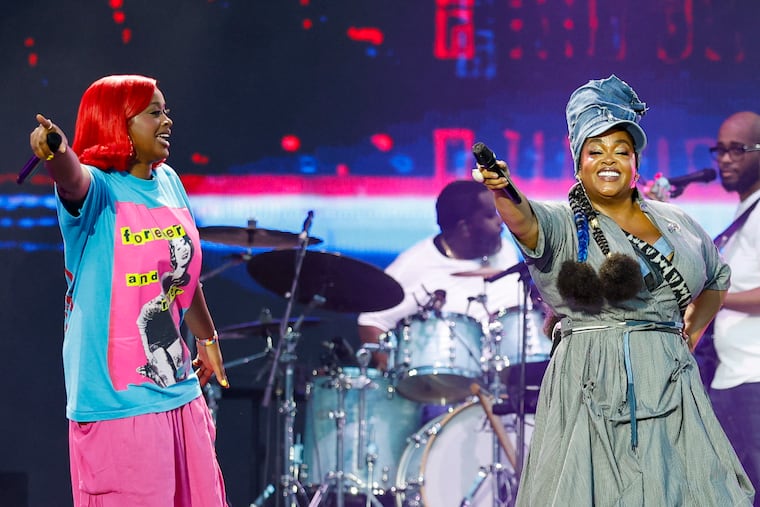
Whack — who was a standout star of the July 4 One Philly: Unity Concert for America in its pre-rain delay phase when she joined Jill Scott for “Norf Side” — finally does serve up the pure hip-hop her enthusiasts have been jonesing for, on Whack’s Museum.
“They said I should rap more,” she says on the opening “Whack Job,” which like much of Whack’s Museum, is a team-up with Kansas City producer Conductor Williams. “I’m the goat, show me who to go at,” she raps. “Shouldn’t have to say it, you should already know that.”
Whack puts her abundant skills, predilection for puns, and interior rhyming on dazzling display throughout Whack’s Museum, which is typically concise and economical, with 12 songs clocking in less than half an hour and none lasting more than 3 minutes.
The mixtape was released on Juneteenth along with a video for “Siren” that featured visual nods to Allen Iverson and the Eagles, and a second also-filmed-in-Philly video for “Candle Wax” was released this week. On Saturday, she’ll perform in New York at the Family Style Food Festival at Pier 36.
“Whack’s Museum” is now available for streaming on music services.
— Dan DeLuca
A young Ben Franklin electrifies the stage
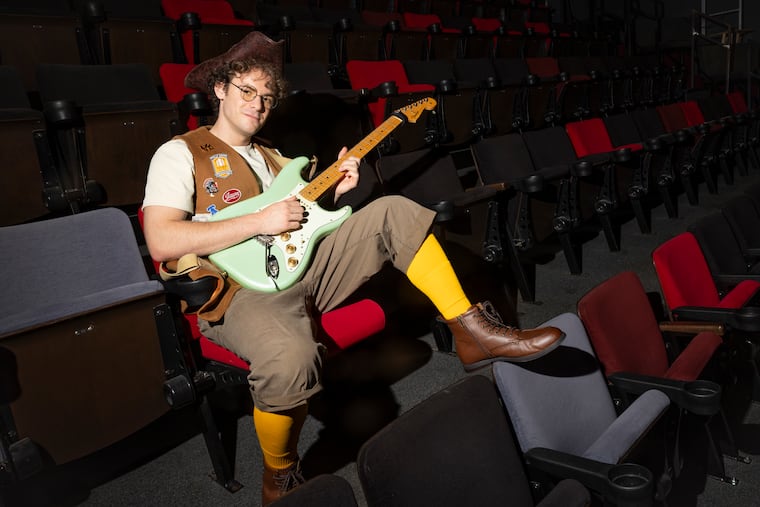
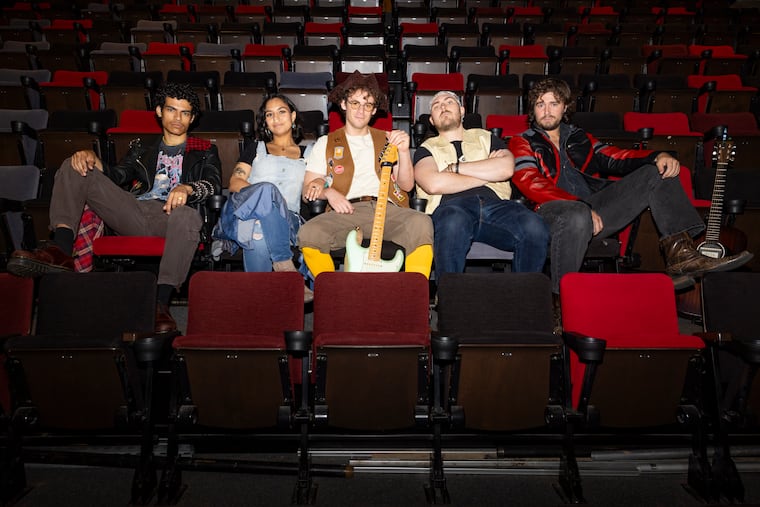
It’s hard to imagine Ben Franklin as anything other than the balding middle-aged man we see on the $100 bill. It’s even harder to imagine him with an electric guitar in his hands — until now.
The new musical The Sound of America imagines the story of Franklin’s younger days but with a twist: He starts a band with his buddies and discovers the electric guitar through a lightning strike.
As fame and fortune twist his morals, he finds himself abandoning his wife and bestie, and led down a dangerous path by a manipulative British lord (with a Shrek-like Scottish accent). Will Ben be able to come back to his roots, or is the power of electric rock ‘n’ roll too enticing to give up?
The show plays at the Delaware River-side FringeArts, fittingly right under the Benjamin Franklin Bridge, through the month of July.
With only two curtains separating the theater from the Fringe Bar, the show is an intimate musical experience.
It had all of the musical elements I know and love; it felt like I was at one of my dad’s band’s dive bar gigs (which was precisely the feel creators Randall Lane and Todd Schwartz were going for).
The cast, led by Temple graduate Kohl Pilgrim, delivered their songs with ease, blending beautiful vocal harmonies and playing guitar at the same time (witchcraft, to me). Their chemistry was palpable, feeling like they never ran out of energy, even after the 2-hour show had ended.
Amid all the America 250 brouhaha, I have found it hard to find a history-related event that didn’t bore me to sleep. While this show may not be entirely historically accurate, this energetic yet flawed portrayal of a young Founding Father was endlessly entertaining, giving us a gritty Philly-style performance that I’ll never forget.
“The Sound of America” runs through Aug. 1 at FringeArts, 140 N. Christopher Columbus Blvd. Tickets start at $60. soundofamericamusical.com, 215-413-1318, or by email at hello@fringearts.com.
— Morgan Ritter
Copper landscapes and America 250
I have long admired Sky Hopinka’s films — last year’s Powwow People was one of the best of the year. I went to the “Red Metal Dust” exhibit at the Barnes Foundation expecting to see the Native American filmmaker’s video work but was pleasantly surprised when I got to the Foundation’s Annenberg Court.
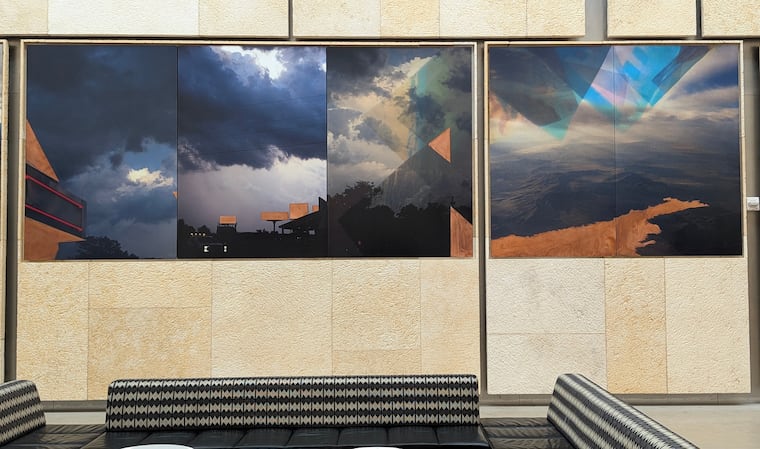
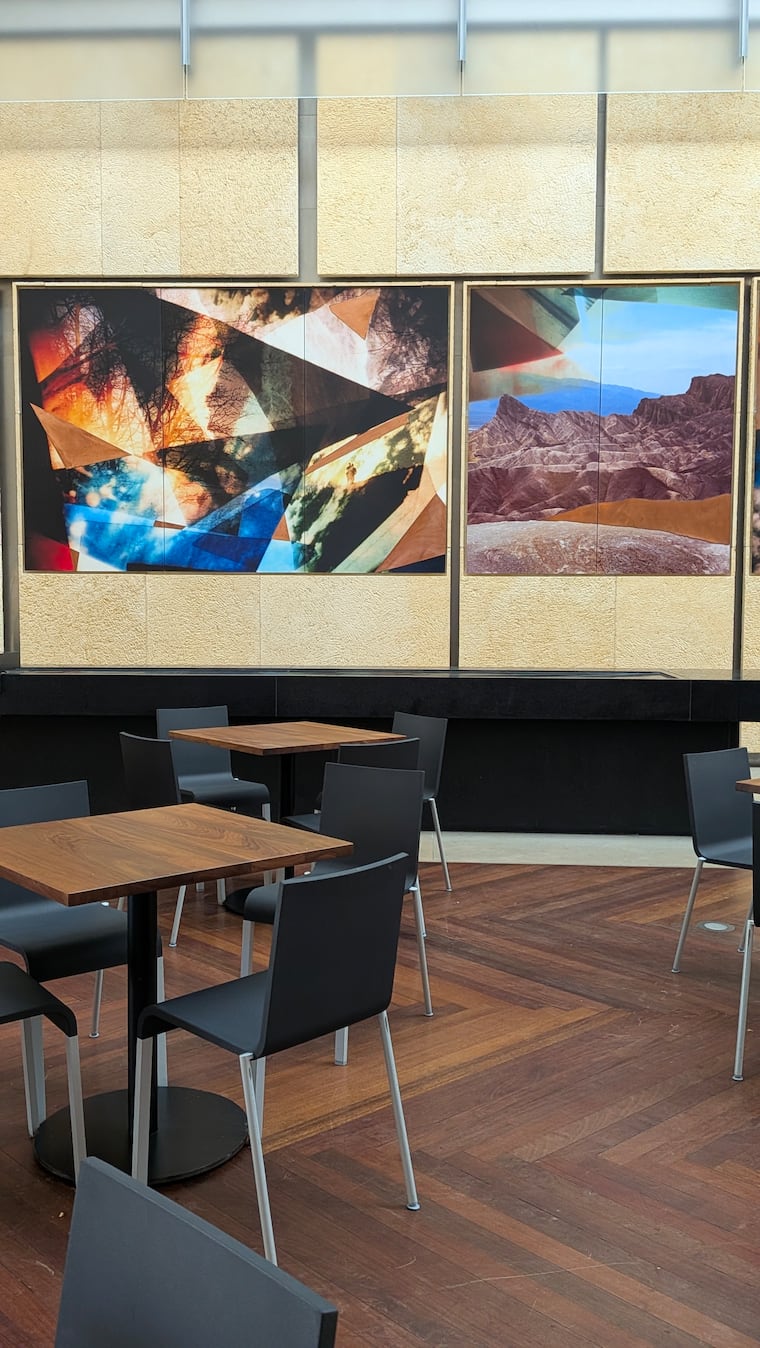
Photographs of sweeping landscapes make up 11 panels that flank one side of the walls. Hopinka uses photo prints of different transparencies to recreate the terrain of Tahlequah, Okla., which, Hopinka said to the arts publication Brooklyn Rail, is “one of the bigger towns in the Cherokee Nation.”
Mountains blend into tree tops, sunsets blend into the day sky, clouds bleed into buildings, human beings form little shadows, and billboards stand against the sky. Pieces of copper glisten in part of the image. It is at once one landscape continuing through the length of 11 panels, and also a different world contained within each panel.
“Red Metal Dust” is the Ho-Chunk way of describing copper— “naming the material not as a monument but as a remainder,” the program note says. The copper on the panels is not treated with wax and will, through the course of the exhibit, change color from oxidizing. What gleams in orange in the afternoon light today may turn greenish in a few days, changing how we see and perceive the landscapes in front of us.
Hopinka’s work has always focused on Indigenous lands and people’s relationship to them. “Red Metal Dust,” created to commemorate the American nation’s 250th anniversary, centers on land that has been cared for by Native Americans for tens of thousands of years before the land got called a nation. It shows us what remains and reminds us what got taken away. It bears witness to aging and change and instead of looking at the country as one chunk of a land mass, “Red Metal Dust” gives us pause to stop and look at the many layers of disruption and repair that lie beneath what meets us in the eye. It is a reminder that this land was a nation of its own people who are way older than its 250 years of history.
“Red Metal Dust” runs through Jan. 18 at the Annenberg Court, Barnes Foundation, 2025 Benjamin Franklin Pkwy. barnesfoundation.org
— Bedatri D. Choudhury


