
See it, hear it, feel it: All the Philly art we loved this week
By Bedatri D. Choudhury, Rosa Cartagena, Peter Dobrin, Dan DeLuca, Emily Bloch
‘Stardust: A Story of Love and Architecture’
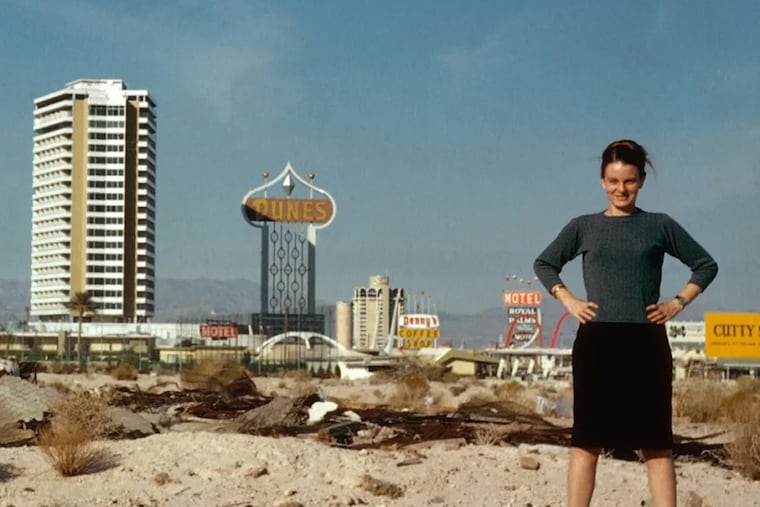
enise Scott Brown was a faculty member at Penn’s architecture school in 1960 when she opposed the tearing down of the university’s Frank Furness-designed library, where the Fisher Fine Arts Library now stands. In this meeting, Scott Brown found an ally in her department colleague, the young architect Robert Venturi.
A lifelong partnership of creativity and genius was formed between the two.
They got married in 1967 but before that, on Scott Brown’s insistence, the architects studied the city of Las Vegas and later published the seminal manifesto-like Learning From Las Vegas: The Forgotten Symbolism of Architectural Form that pushed against the rigid tenets of modern architecture and argued in defense of the American sprawl.
A documentary made on the couple, by their son, Jim Venturi, called Stardust: A Story of Love and Architecture, chronicles their love story and professional partnership as formidable equals.
Together, they designed a Mount Airy restaurant, restored the Fisher Fine Arts Library, and (among many other national and international projects) worked on Penn’s Perelman Quadrangle.
You think you’ve never seen their work, but the film tells you that you most probably have.
Vehemently, stubbornly, the couple lived in Philadelphia, a city that never could boast of a public building made by them.
“There’s something very Philadelphia about all of this,” my colleague Peter Dobrin wrote upon Venturi’s death in 2018. “ … I’ve come to believe there’s an additive in the local water that makes it impossible for natives to entertain the idea that anything here can be tops.”
Scott Brown is the hero of the story to me.
An architect and urban planner, she was always a professional equal to her husband in spite of the inherently sexist old boys’ club of architecture. Without batting an eye, she held on to her convictions even when it meant making enemies of the most powerful architects like Philip Johnson.
Scott Brown was often underrecognized in the shadow of her husband. When Venturi won the Pritzker Architecture Prize in 1991, Scott Brown’s name was not mentioned. In 1989, she published her essay, “Room at the Top? Sexism and the Star System in Architecture.”
There’s a scene in the film where Scott Brown defends the highly commercial architecture of Las Vegas and compares it to a classical Greek church, and argues that both buildings are aiming to make a sale.
“Would you rather be sold soap or religion on a billboard?” she asks her son who is behind the camera. “I’d go with soap.”
I doubt I will ever be able to look at a church or a temple the same way again.
“Stardust: A Story of Love and Architecture” plays April 21, Bryn Mawr Film Institute, 824 W. Lancaster Ave., Bryn Mawr. brynmawrfilm.org
— Bedatri D. Choudhury
A 100-plus-year-old jar at PMA
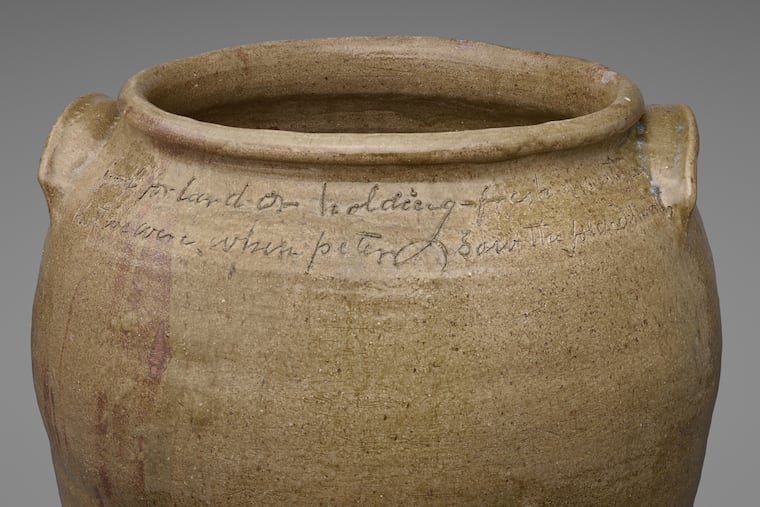
The monumental exhibit “A Nation of Artists” overflows with sensational beauty, rich colors, and splendor across two venues with more than 1,000 artworks on view. But nothing quite prepared me for the scale and power of the simple, breathtaking storage jar by David Drake, an enslaved ceramic artist from South Carolina.
Roughly 2 feet tall and weighing 83 pounds, it stands out in the center of a gallery at the Philadelphia Museum of Art. Drake, who went by Dave the Potter before emancipation, crafted the alkaline-glazed jar in 1859 and inscribed it with his name and the date as well as a line about its practical use featuring a meaningful biblical reference. His work represents the museum’s corrective efforts to ensure enslaved artists are part of the canon of American art, and though I was familiar with that back story, seeing his handwriting up close made me emotional. I imagined his hands in process, molding the clay that outlasted him and now finds illustrious recognition in these grand halls.
Drake’s poetry and artistry was an act of resistance — defiance at a time when it was illegal for him to read or write — and it felt profoundly important to engage with his perspective amid all the fanfare for America 250.
“A Nation of Artists” runs through July 5, 2027 at the Philadelphia Museum of Art, 2600 Benjamin Franklin Pkwy., philamuseum.org
— Rosa Cartagena
Scranton’s own Tigers Jaw at Union Transfer
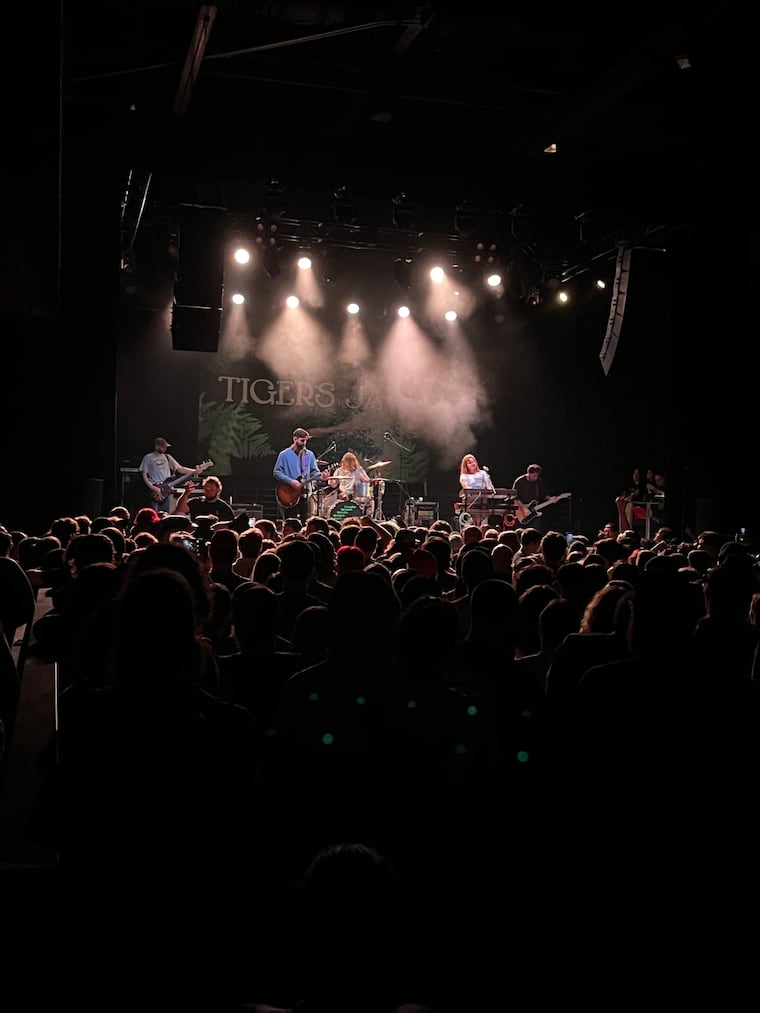
Wrapping up its “Lost on You” tour in support of its new album by the same name, Tigers Jaw played a sold-out Union Transfer on Thursday with a set list mixing new and old.
The Scranton-based band has come a long way since its days as a two-piece playing warehouse shows. It sounded as locked in as ever, playing its recent single, “Head Is Like a Sinking Stone” and old favorites, like “Chemicals.”
It was a joyous night with friends and family in the crowd.
What struck me as a longtime fan was seeing how many under-drinking-age fans were in the pit, bopping around, singing every word enthusiastically alongside day one fans who had the privilege of growing up with these very special musicians.
They closed with “I Saw Water” — a nod to where it all began.
— Emily Bloch
A very Philadelphia Eakins painting at PMA
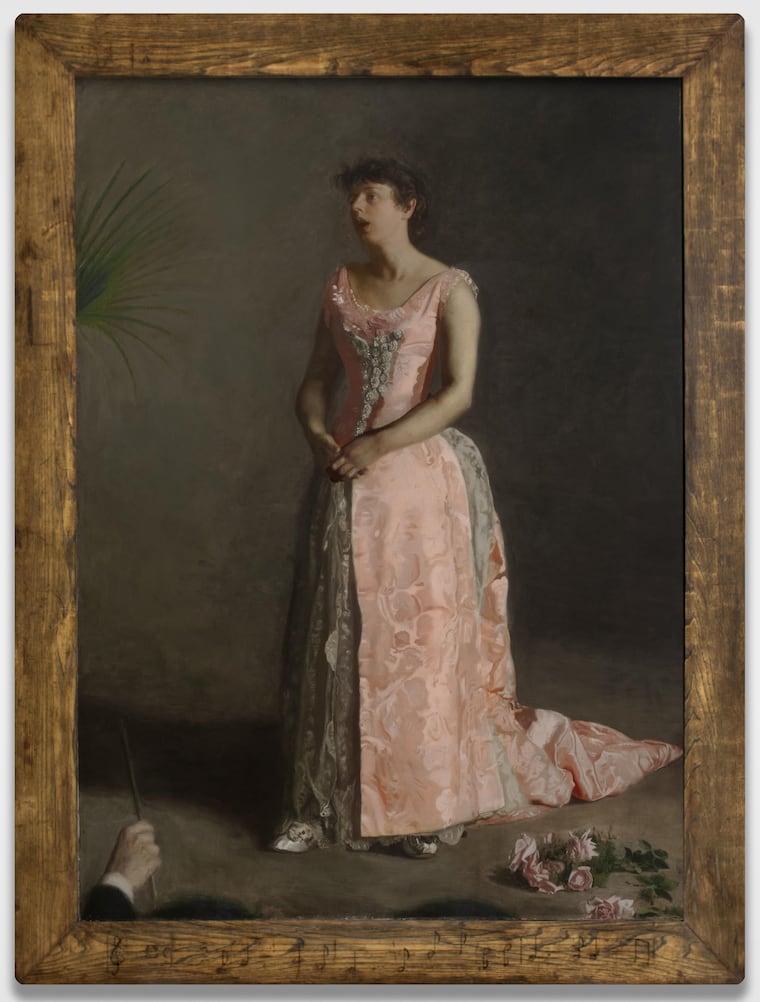
Thomas Eakins’ The Concert Singer has been praised for capturing a midsong vocalist so evocatively that you can almost hear the music. The work — included in “A Nation of Artists” at the Philadelphia Museum of Art — also catches Philadelphia as a city of cultural aspiration.
The subject of the painting is Weda Cook, a Camden-born contralto and friend of Walt Whitman’s who appears in other Eakins’ works. A hand with a baton in the lower-left corner is modeled on that of Charles M. Schmitz, a cellist and one-time conductor of the Germania Orchestra, some of whose members migrated into an ensemble that would be born just a few years later: the Philadelphia Orchestra.
Eakins’ sense of musical immediacy didn’t end with the realism of Cook as singer — the shape of her mouth forming a word, the contours of her throat — but continued beyond the canvas. Most striking is the fact that in the early 1890s, when this work was painted, Eakins felt confident enough in the musical literacy of the day to carve into the frame the musical notation for the phrase he had asked Cook to repeatedly sing — “O rest in the Lord” from Mendelssohn’s popular Elijah.
The oil is joined by a mini-exhibition of other Eakins work, along with a brief interpretive label explaining the 1886 scandal that forced his resignation from the Pennsylvania Academy of the Fine Arts.
— Peter Dobrin
Adrien Brody and Tessa Thompson in a Philly story on Broadway
When I went into The Fear of 13, the new play by Lindsey Fiorentino that premiered on Broadway April 15, I didn’t expect Eagles jokes and Ed Rendell references. Starring two-time Oscar winner Adrien Brody and Creed’s Tessa Thompson, the production tells the real life story of Nick Yarris, who spent decades on death row, before being exonerated by DNA evidence in 2004.
I went to the James Earl Jones Theatre aware of that general outline but not realizing that Yarris’ saga is a Philadelphia story. Turns out, Yarris’ hellish legal drama — also the subject of a 2015 British documentary of the same name — began after he was arrested in Delaware County for stealing a car from the Philadelphia airport in 1981. He was later charged with the rape and murder of Linda Mae Craig (which is still unsolved). He was exonerated after spending 22 years in prison.
Brody plays Yarris and Thompson plays Jacki, a prison volunteer who becomes his advocate and romantic partner. Both are terrific in a story that’s as deeply serious and moving as it sounds, while also oddly lighthearted with an at-times awkward, uneven tone. That includes a gag involving an Eagles hat Yarris’ mother gives him — not a great disguise for a escaped convict from Philly trying to go unrecognized — and a joke that minor crimes like “boosting” a car aren’t considered illegal in the City of Brotherly Love.
In an emotional moment at the opening night performance, Brody and Thompson tossed the bouquets of flowers they were given by fans to Yarris, who was watching his story be told from a balcony box above the stage.
“The Fear of 13″ runs through July 13. James Earl Jones Theatre, 138 W. 48th St., New York, thefearof13broadway.com
— Dan DeLuca
The article was updated to reflect that Penn’s Furness-designed library was not torn down and later restored by Scott Brown and Venturi.


