Kristen Arnett and ‘Mostly Dead Things’: A humorous and touching take on grief, queerness, and Florida
The author, who is appearing at Black Hound Clay Studio on July 2, talks about writing a novel in which taxidermy plays a large role, as well as queerness that is part of day-to-day life.
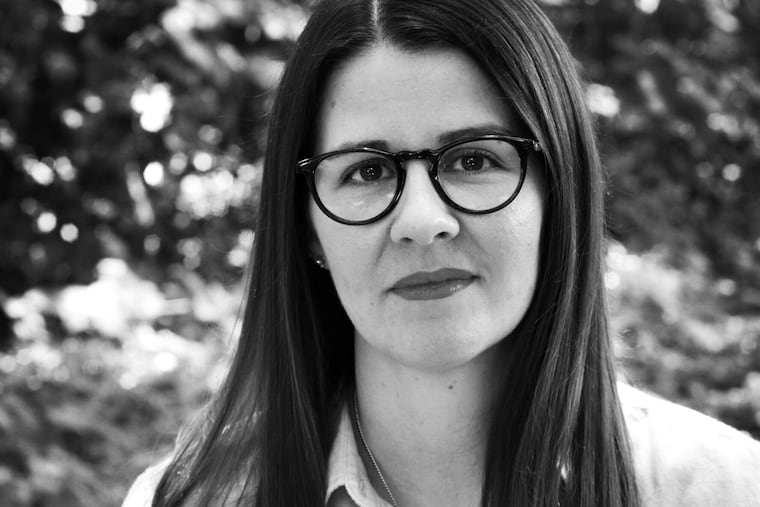
Kristen Arnett’s novelistic debut, Mostly Dead Things, is an eclectic book. It is set in the swampy heat of Arnett’s home state, Florida, features the art of taxidermy prominently, and begins with a gruesome suicide. The book is hilarious at times and deeply sad at others, but most of all, it is an exploration of the toxic behaviors people use to cope in the world and what happens when those stop working. Mostly Dead Things was published on June 4 by Tin House Books.
Arnett will read from the novel at Black Hound Clay Studio on Tuesday, July 2. Seating is sold out; there’s standing room only. Arnett chatted with us about what it was like to write about such subjects as stuffing dead animals and queerness in a “day-to-day" way.
One of the most striking and important things about the novel is taxidermy. You did not grow up in a taxidermist’s family. How were you able to tackle this extremely prominent aspect of the story and make it real?
I’m also a librarian, so you could say research is in my blood. I spent a lot of time doing intensive research on taxidermy. I wanted to make sure that anything I had the characters do was extremely authentic. So I looked up a lot of online tutorials and watched a lot of videos. I also ordered a bunch of books on taxidermy from the 1970s and 1980s because that was the style of taxidermy they were doing. I went on web forums, too, where people who did taxidermy talked to each other, to see how they interacted and what kind of language they were using. And any animal I mentioned was taxidermied in the book, I did specific research on. I wanted to make sure it was accurate. [That research] was probably what I spent the most time on other than actually writing.
You’ve said before that you wanted to write a queer novel but not a coming-out story.
I was always looking to write the book that I was looking to read, where queerness was embedded. I specifically wanted to showcase what day-to-day life looked like. One way I was able to put that in the book — Jessa, [the narrator], just happens to be gay. When she’s talking about relationships, she’s talking about women. There’s not any discussion around any kind of those things. When I see that kind of writing, I wonder who the intended audience is. I also really wanted to make sure there was sex in the book, and that it didn’t need to be emotional sex where people have to have a conversation around it. I’ve read lots of books where a man is having sex and there’s no conversation around it.
Jessa experiences a lot of loss in the story. She copes with each one differently. What was shaping those stories of loss like, and ultimately what were you trying to show your readers through how Jessa dealt with them?
I wanted the book to open with her father dying because Jessa had spent many years using bad coping mechanisms. I wanted to show what that looked like when you hit something and those mechanisms don’t work anymore. It was this catalyst. She’s no longer able to deal with loss anymore. In a lot of ways, Jessa is a control freak. She tries to control people around her and even how she feels. And a big thing with her relationship with her mother — I wanted to look at how children perceive their parents. When loss happens, I think a lot of people realize, “My parent is a person outside of the construct of our relationship.” People have sex lives and their own interests. It’s a wider scope that extends outside their children.
What first interested you about writing stories centered on families, places, and memories?
I’m interested in thinking about the dynamics of a household, the day-to-day minutiae. There’s so much going on — sometimes trauma, but also a lot of joy and pain wrapped up in a house. I’m constantly thinking about them. It works well with how I like to write about place.
I know when I started the book that I wanted time to seem linear. I wanted the book to function like how memory functions. How are memories triggered? We hear a certain sound, or smell a certain smell. All of our day-to-day actions are punctuated by these memories that sink into us — we don’t get to control them. I knew that I wanted to weave the memories back and forth because that’s actually how people experience time. For Jessa, the monotony of her life represents going forward, but being trapped in the past all the time as well.
AUTHOR APPEARANCE
Kristen Arnett, “Mostly Dead Things”
7 p.m. Tuesday, Black Hound Clay Studio, 711 S. 50th St. Seating sold out; standing room only. bluestoop.org