Years before Market Street became a bustling shopping district, it was home to America’s first circus
Centuries before Cirque du Soleil, it was in Philadelphians where John Bill Ricketts rode two horses at a time, rode them backward, and then stood up to juggle.
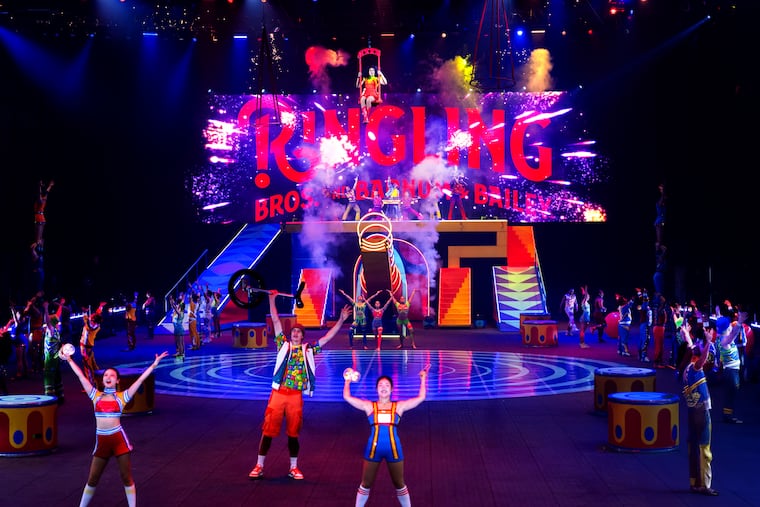
Colonial Americans really didn’t have much to do in the way of entertainment.
That’s until John Bill Ricketts — a student of the founder of the British circus, Philip Astley, the first to combine animals and acrobats in one titillating performance — sailed to Philadelphia in 1792.
Surely, he thought, the early colonists would part with hard-earned shillings to see Ricketts ride two horses at a time, ride them backward, and stand up and juggle.
He was right.
Shortly after arriving in America, Ricketts built an 800-seat amphitheater at 12th and Market Streets, and on April 3, 1793, he launched Ricketts’ Circus. The shows grew so popular that even George Washington attended some early ones.
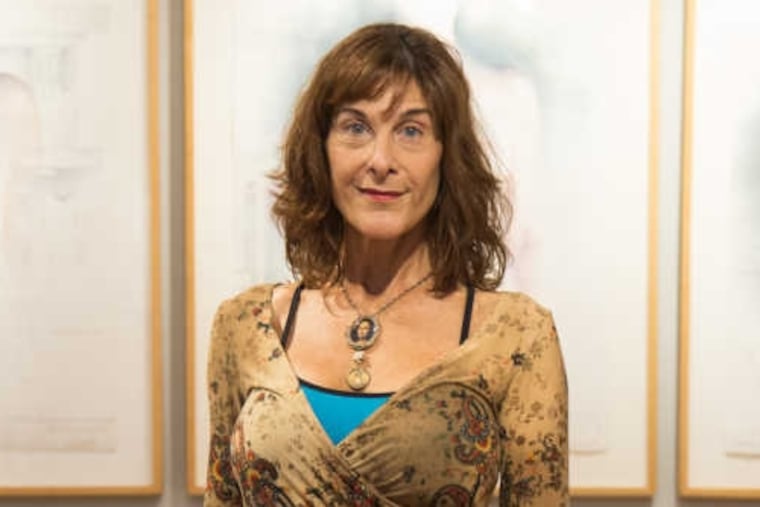
“Circuses were a new model of equestrian entertainment,” said Shana Kennedy, founder of the Philadelphia School of Circus Arts. “The acrobats, the tricks, the horses, no one had ever seen this kind of show here before.”
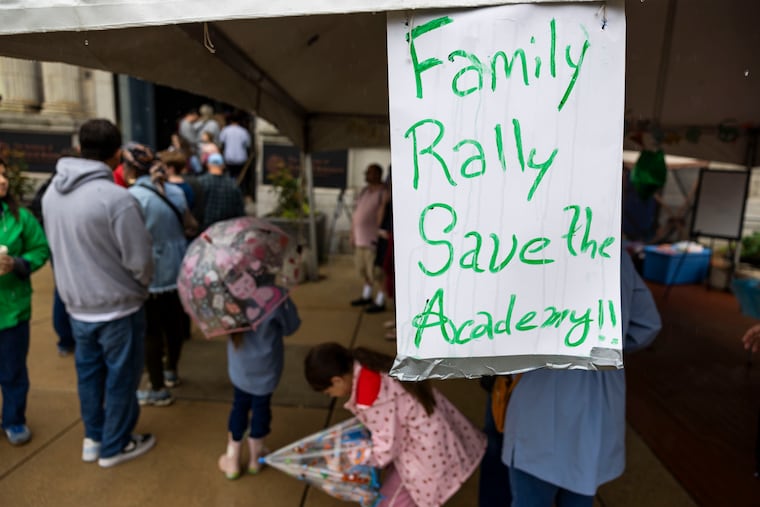
America’s first circus performance will be remembered this Saturday at West Mount Airy’s Philadelphia Circus School of the Arts, the Philadelphia Historic District’s 15th “firstival.” Firstivals are weekly day parties held this year, celebrating American milestones that happened in Philadelphia first. Firstivals are at the heart of the city’s ongoing celebration of its 250th birthday.
Although Ricketts built a number of wooden structures throughout Philadelphia for his daredevil performances — including a marquee location at Sixth and Chestnut Streets — his circus was short-lived.
“He embodied the deep determination of circus proprietors,” Kennedy said. “He was scrappy and resourceful. But his buildings kept burning down. So he gave up hope and left the States altogether.”
Historians believe a ship carrying Ricketts and his circus crew from the West Indies to Britain sank in 1800. He was never seen again.
But Ricketts’ Circus opened the door for the culture to thrive in Philadelphia.
In 1825, the circus tent was introduced, Kennedy said, allowing thousands of people to gather in town-square style to watch the entertainment.
Philadelphian Adam Forepaugh founded the Forepaugh Shows in 1864. Forepaugh’s shows, which included circus staples like clowns and elephants, according to an 1891 article in The Philadelphia Inquirer, started small and “grew into a great national institution, the fame of which has reached every corner of the civilized globe.”
» READ MORE: No matter what Harvard claims, Penn’s Franklin Field is the oldest collegiate stadium being used for football
His three-ring circus — where three different acts happened on three different stages at the same time — was housed at 10th and Callowhill. The Forepaugh shows rivaled P.T. Barnum and Ringling Bros., which merged in 1925 to become which
These circuses, which would have as many as five rings, were at the center of the Golden Age of circus history, Kennedy said.
“The Golden Age lasted from 1870 through the 1950s,” she said. “It was a time when circus was the preeminent form of public entertainment. Circus stars were celebrities. Circus culture was larger than life, embodying the grandiosity of the time. It just kept growing …”
In the 1950s, Hollywood’s film and TV culture replaced America’s obsession with circus. “And there was the big circus fire of 1944,” Kennedy added, referring to the time when a Ringling Bros. and Barnum & Bailey tent burned to the ground in Hartford, Conn., killing and injuring hundreds of people.
“That was the beginning of the end of giant-scale shows,” she said.
Smaller specialized circus troupes from the Big Apple Circus UniverSoul to Cirque du Soleil founded in the ’70s and ’80s remain hot tickets, but Philadelphia’s homegrown circuses have all but disappeared, even after some recent attempts at revival.
In 2017, Kennedy founded Circadium, America’s first and only licensed and accredited school of circus in the United States. This year it announced that its 2026 graduating class would be its last.
“We couldn’t find a sustainable model to keep it open,” Kennedy lamented. The School of Circus Arts, where people can learn the art of tumbling and tightrope walking for fun, will remain open.
“Philadelphia has a rich circus history,” Kennedy said. “This isn’t the end of it. It remains to be seen what the next chapter holds.”
This week’s Firstival is Saturday, April 11, 11 a.m.-1 p.m., at Philadelphia School of Circus Arts, 6452 Greene St.
The Inquirer will highlight a “first” from the Philadelphia Historic District’s 52 Weeks of Firsts program every week. A “52 Weeks of Firsts” podcast, produced by All That’s Good Productions, drops every Tuesday.