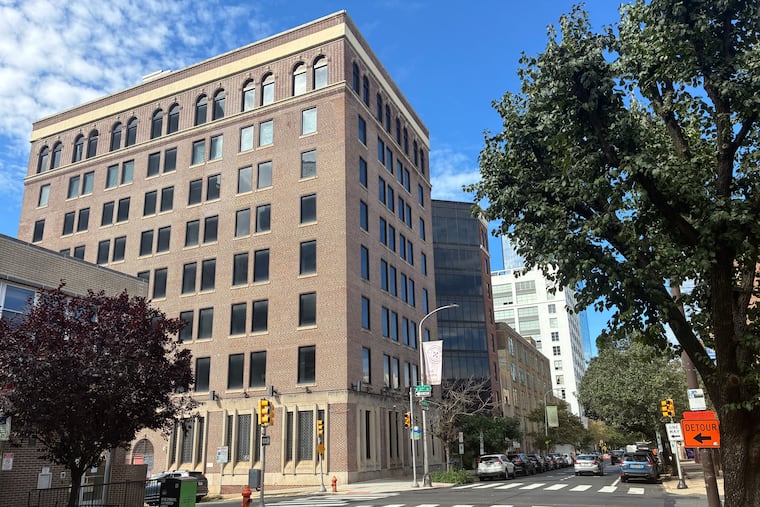
Years into ‘historic affiliation,’ Drexel University and Academy of Natural Sciences may sever ties
The two organizations joined forces in 2011 but may now dis-affiliate. Both Gov. Shapiro and Mayor Parker have become involved in the talks between the two bodies.
When Drexel University and the Academy of Natural Sciences announced they were joining forces in 2011, leaders called it a perfect fit.
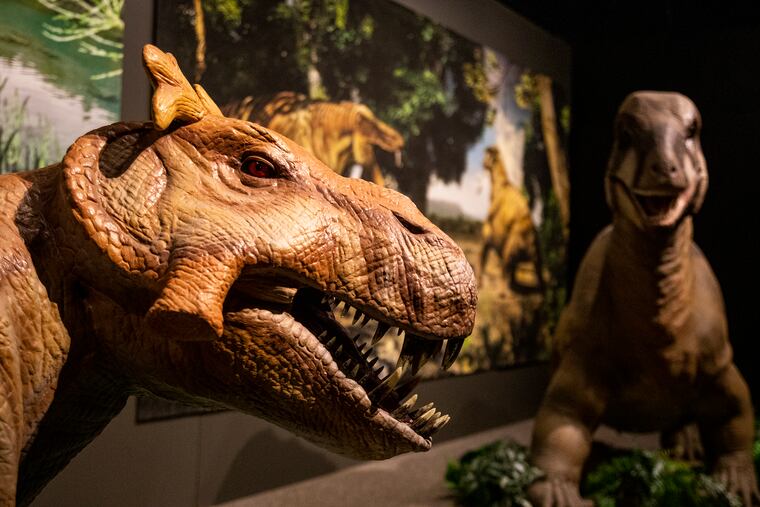
“The dinosaur and the dragon meet today, and two fantastic beasts they are,” said then-academy president George W. Gephart Jr., referring to Drexel’s dragon mascot and the academy’s dinosaur specimens. “I don’t know whether you call it a dragosaurus or what.”
But today, a decade and a half into the affiliation, the “dragosaurus” is threatening to come apart.
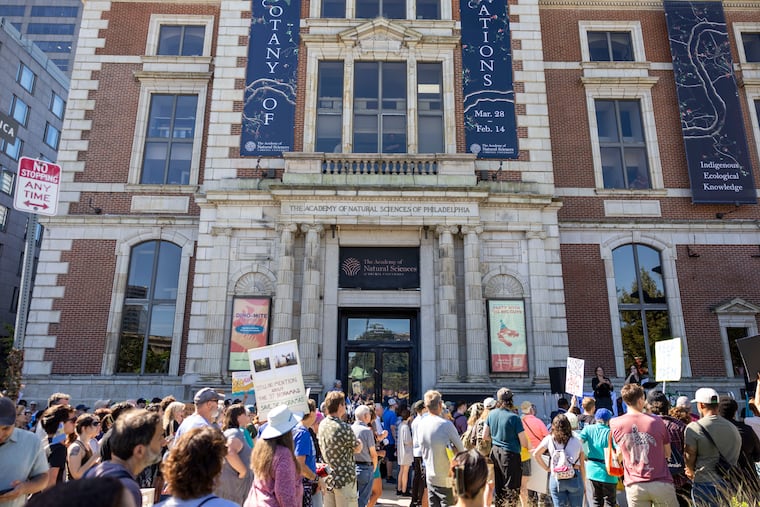
Drexel and the Academy of Natural Sciences of Drexel University have been in discussions over their relationship for months, and Drexel has presented the academy with a choice: either fully merge with the university, granting Drexel its building, endowment, and highly significant collections; or the school and renowned scientific institution on the Parkway would move to disaffiliate.
Gov. Josh Shapiro and former Comcast executive and U.S. Ambassador to Canada David L. Cohen have become involved in the talks because of the precious resources at stake at the academy. Philadelphia Mayor Cherelle L. Parker’s administration also has been kept informed.
A Drexel spokesperson said the school has “invested a substantial amount annually in the academy to maintain access to the academy’s collections while we worked with the academy and the community to identify a sustainable path to keep this resource in Philadelphia.”
“We continue to believe the academy provides a tremendous educational resource to our students and the community, and we’re committed to working with the governor, mayor, and academy leadership to find a solution that preserves the legacy of the institution as a natural history archive and educational resource for our university and our region.”
Academy board chair Suzanne Biemiller said that she was “exceedingly grateful to the governor and the mayor’s interest” and that she looks forward “to an outcome that benefits both institutions and Philadelphia.”
The academy never fully integrated into Drexel, and has become a drain on the university, said a source familiar with the situation, who was not authorized to speak about the matter and asked not to be identified.
“They have a separate board and kind of expect [Drexel] to treat it more charitably than [Drexel] thinks is appropriate,” the source said. “They think [Drexel] should underwrite it and [Drexel] thinks they should stand on their own feet.”
The university has provided the academy with substantial support — $8,288,000 and $8,914,000 for operations in fiscal years 2025 and 2024, respectively, according to financial statements posted on the academy website. These numbers include in-kind support that Drexel is providing to the academy.
This support comes as the university is facing its own financial struggles, with a 19% drop in first-year enrollment last fall and a downgrade this month in its financial rating by Moody’s.
Both the mayor’s and Shapiro’s offices declined to comment. Cohen said via email that he was not available to speak.
‘Historic affiliation’
The Academy of Natural Sciences, founded in 1812, houses one of the most significant collections anywhere of specimens and materials relating to the natural world. It is, in fact, a collection of collections. Its Center for Systematic Biology and Evolution boasts what the academy calls one of the world’s top natural history collections, with more than 19 million specimens of plants and animals from around the globe.
Many of the academy’s artifacts are of enormous historical value, including Thomas Jefferson’s fossil collection, bird skins once belonging to John James Audubon, and pressed plants gathered by Lewis and Clark.
At its start, the “historic affiliation,” as Drexel referred to it, was seen as an innovative business model, giving the academy teaching opportunities for its scientists and ways to partner with Drexel’s technology and media arts programs for exhibitions.
For the university, the affiliation represented a promise to “move Drexel into a national leadership position in environmental science and environmental policy,” said Drexel’s then-president, John Fry, in 2011.
“The fit is perfect because we fill each other in,” Fry said then. “But we also extend each other and push each other in new ways.”
Fry, who has since become president of Temple University, could not be reached for comment.
The Drexel-Academy of Natural Sciences alliance was facilitated with the help of a $1 million grant from the Pew Charitable Trusts.
“By putting the advancement of mission and programmatic excellence above institutional structure, they have ensured that the academy’s unparalleled collections will be preserved and enhanced and Drexel’s ambitious research and educational priorities will be expanded and advanced,” said then-Pew president and CEO Rebecca W. Rimel at the time.
The affiliation was not a merger. The Academy of Natural Sciences became a subsidiary of Drexel, retaining its own board and legal status as a separate nonprofit organization (in contrast to the pending deal between Temple University and the Library Company of Philadelphia, which, under the terms of that pact, would result in the library being subsumed by the university).
Financial pressures
Drexel, which has an enrollment of 20,868, has been struggling with enrollment and financial pressures in recent years.
In November 2024, the school laid off 60 employees as it coped with a $63 million operating loss and a decline in first-year students. The school is undergoing a multiyear process to merge two of its colleges and a school, convert from a quarter system to semesters in 2027, and establish new core competencies.
In its downgrade, Moody’s said that operating deficits are expected to continue at Drexel through fiscal year 2028, but then steadily improve.
“Supplemental endowment draws will be used to support operations during the transition period,” Moody’s said. “This reflects a weakness in financial policy and financial management, which are governance considerations and a key driver of this rating action. However, we note management’s credible plans to strengthen operating performance after fiscal 2028.”
One major public face of the academy is its museum, where the Dinosaur Hall features more than 30 species of dinosaurs and other reptiles. In September, the academy said it was cutting back its hours of operation, to three days a week from five.
Academy president and CEO Scott Cooper told staff the move was in response to financial pressures and a drop in attendance.
“To address these issues, the academy’s leadership team conducted a yearlong strategic planning process to define the road map for the academy’s future sustainability,” Cooper said. “As a result of this planning and careful analysis, we have determined the need for a change in operations in order to achieve greater financial sustainability and a stronger foundation in the long term.”