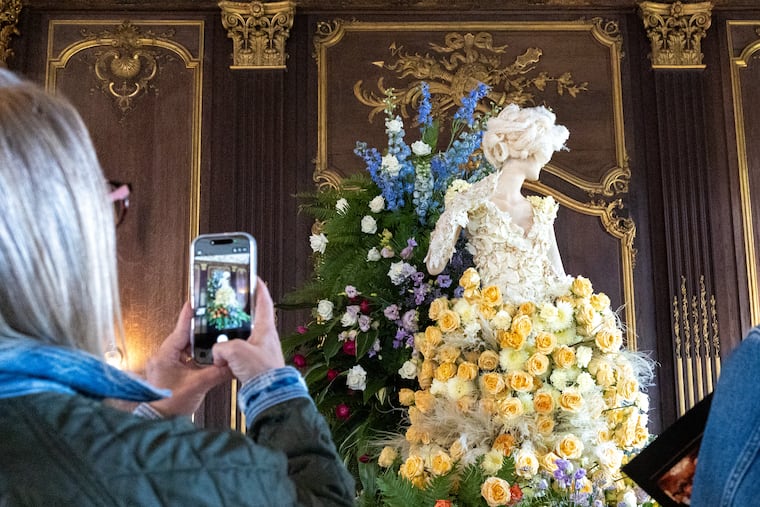
A lot has been said about the Philadelphian who founded Mother’s Day. A historian now wants to set the record straight
Anna Jarvis founded the holiday in honor of her own mother and is often remembered for the emotional spiral she underwent because of the commercialization of the day.
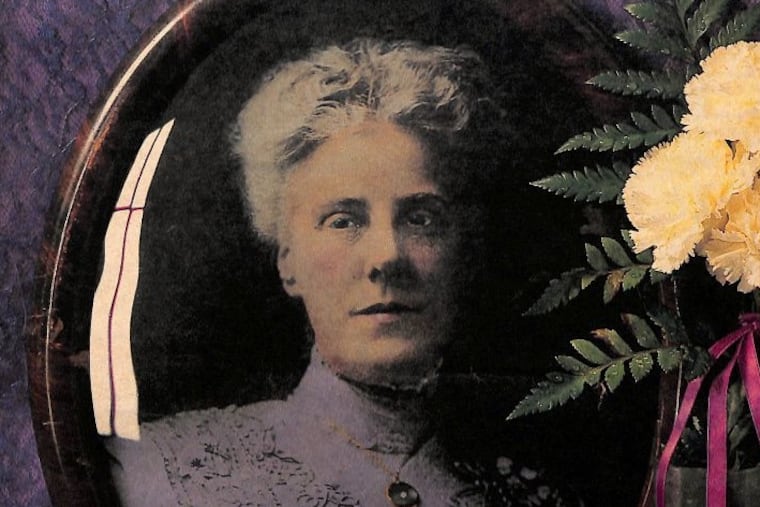
Taylor Schmalz wants to reframe the story of Mother’s Day.
Not the part about waking mom up with breakfast in bed, attending church services, taking her to a decadent brunch, and surrounding her with flowers. After all, mothers — and the women who are like mothers to us — deserve all the loving they can get.
Schmalz, director of collections and interpretations at Historic St. George, wants us to place the holiday’s founder, Anna Jarvis, in a different light. One that emphasizes her conviction to the purity of the special day, not the emotional spiral she underwent upon the realization that Mother’s Day was becoming more commercialized than Christmas.
She will share Jarvis’ story this Saturday at Historic St. George Museum and Archives at the 19th Firstival. Firstivals, weekly day parties honoring events, inventions, and in this case, holidays that happened in Philadelphia before anywhere else in the country, are planned, promoted, and put on by the Philadelphia Historic District.
“Anna Jarvis wanted mothers to have an intimate day that celebrated them,” Schmalz said. “She had a vision. People love the holiday, but they don’t remember her, or her vision.”
Jarvis’ vision is rooted in the deep love of her own mother, Ann Maria Reeves Jarvis.
Anna Maria Reeves Jarvis gave birth to 13 children in her home in Grafton, W. Va. Only four survived to adulthood, explained Schmalz. In the years before the Civil War, Grafton organized women to fight the diseases that took the lives of young children, forming Mother’s Day Work Clubs, where Jarvis helped her mother.
The two shared a special relationship.
Around 1904, Jarvis moved to Philadelphia with her brother Claude and joined what was then called the Old St. George’s Methodist Church. She took a job in the advertising department at Fidelity Mutual Life Insurance Company, where she no doubt learned marketing skills.
Her mother, already ill with dropsy, followed her shortly after. She died on May 9, 1905. Before Reeves Jarvis died, she asked her daughter to memorialize the invisible work of mothers, Schmalz said.
Jarvis turned to her public relations skills and began a letter-writing campaign to politicians and city officials advocating for a day specifically for mothers.
On Sunday May 10, 1908, the third-year anniversary of her mother’s death, Jarvis sent 500 carnations — her mother’s favorite flower and the official flower of mourning — to her mother’s home church in West Virginia.
That same day, she stood before a group in the auditorium of the Wanamaker Building, thanking mothers for all they do. This was the first public celebration of Mother’s Day. Through her letter writing campaign, Jarvis had enlisted the support of John Wanamaker, founder of the venerable department store; James Elverson, then-publisher of the Philadelphia Inquirer; and Henry J Heinz of Heinz Ketchup.
“In many churches yesterday white carnations were used in the decorations. Many houses throughout the city had great bunches of them in the windows while a silent witness of unending grief lady in the snowy bunches in the cemeteries,” read an Inquirer article on May 11, 1908.
During the next five years, enthusiasm for mom’s special day grew. On May 9, 1914, President Woodrow Wilson signed a proclamation declaring the second Sunday in May a national day honoring all mothers.
Jarvis had won. Moms around the country were getting their flowers, but the commercialism around the holiday irked her to no end. Eventually, living mothers were celebrated with pink carnations while those with deceased moms wore white.
Florists didn’t just sell out carnations on the day, but they tripled the prices. Mother’s Day cards were marked up, too. To combat what she described as grift, Jarvis suggested folks give their moms American flags for Mother’s Day. But those prices were also hiked. When Jarvis had a special pin made to commemorate the day, merchants jacked up the prices. And still they sold out.
“She began saying things like, ‘Giving your mom a printed card means nothing, what you were too lazy to write to the woman who had done more for you than anyone else in the world’,” said Schmalz, referencing Jarvis’ letters, part of the church’s collection of historic ephemera.
Subsequently, Jarvis’ Mother’s Day critiques turned brutal.
In 1925, when Jarvis tried to stop the sale of Mother’s Day carnations, she was arrested.
“She was so passionate,” Schmalz said. “In her mind, she was like, ‘How dare you use Mother’s Day to profit.’”
Jarvis never married and never had children of her own. On Nov. 24, 1948, she died blind in a sanitarium in West Chester.
“People called her crazy and that makes me upset for her,” Schmalz said.
“Anna gave us something beautiful. And when people tried to make it not beautiful by focusing on profit, she became angry and rightly so. We choose to focus on her anger instead of celebrating her passion.”
This week’s Firstival is Saturday, May 9, 11 a.m.-1 p.m., at Historic St. George’s Museum & Archives, 326 New Street Each week, The Inquirer is highlighting a “first” from the Philadelphia Historic District’s 52 Weeks of Firsts program. A “52 Weeks of Firsts” podcast, produced by All That’s Good Productions, drops every Tuesday.