How a steam-powered canoe ride along the Schuylkill and Delaware River inspired the American boating industry
In spite of George Washington throwing his support behind his competitors, John Fitch built a steamboat business that, despite going bankrupt, l remains a landmark first.
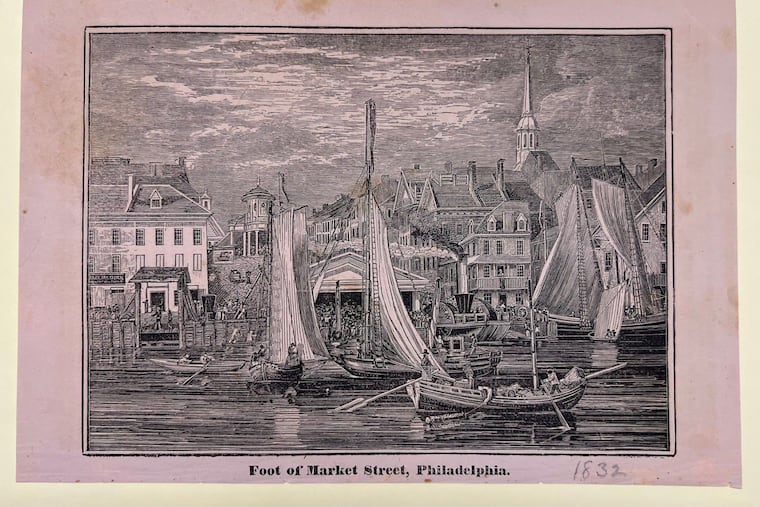
In the years after the Revolutionary War, Philadelphia was the place to be for riverboat technology.
And it just so happened that in April 1785, Connecticut-born inventor John Fitch — whose previous jobs included apprentice to a clockmaker, silversmith, and surveyor — found himself in Warminster developing a steam engine strong enough to power a boat.
According to the Craven Hall Historic Site: Home of the John Fitch Steamboat Museum, Fitch took his plans and a 23-inch boat model to Ben Franklin, George Washington, and other members of the Continental Congress in 1785. He hoped to secure some investment funds.
The Founding Fathers were impressed, but didn’t bite. Washington, it turned out, put his support behind Virginian James Rumsey, who was working on similar technology.
Dismayed yet determined, Fitch built a steam engine from scratch.
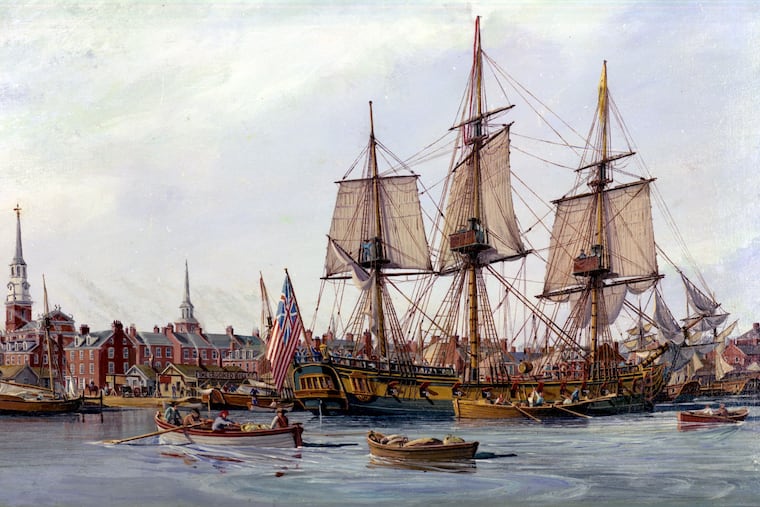
On Aug. 28, 1787, Fitch demonstrated his steam-powered apparatus — a canoe propelled by two sets of paddles mounted on both sides — on the Delaware River and the Schuylkill to delegates of the Constitutional Convention.
This demonstration will be celebrated Saturday at the Cherry Street Pier’s firstival. In honor of America’s 250th birthday, the Philadelphia Historic District is holding a day party each Saturday in 2026 to mark events that happened in Philadelphia before anywhere else in America, and often the world.
By 1790, Fitch had a larger, better, and faster steamboat. That summer, he offered three round trips a week between Philadelphia, Bristol, and Trenton. These trips, the John Fitch Museum states, made Fitch’s invention the first commercial passenger steamboat.
“There were ferry services running in the area and stagecoaches, so in order to compete he charged less and served free beer,” said Michael Madeja, director of education at the Independence Seaport Museum.
In 1791, Fitch was granted a steamboat patent signed by Washington and Jefferson.
Rumsey — who at this point was Fitch’s archrival — as well as Nathan Read and John Stevens also received patents that day. Fitch didn’t have a monopoly. His investors eventually lost interest, and he ran out of money. .
“He wasn’t able to keep his venture running,” Madeja said. “And since he couldn’t get the funding he needed, his business collapsed.”
Fitch did receive an exclusive patent for his steamboat in France but couldn’t find any French nobles willing to invest in his venture. He returned to the United States from France, penniless and died in 1798 in Bardstown, Kentucky. He was 55.
His steamboat, however, continued to be an inspiration.
In 1807, Pennsylvania-born inventor Robert Fulton’s North River Steamboat (also known as Clermont) traveled along the Hudson River on a round trip from New York to Albany. This trip set the foundation for steamboat travel and Fulton is credited with being the father of the modern American boating industry.
But none of that would’ve been possible without the 1787 trip along the Schuylkill and the Delaware, which effectively makes Fitch the steamboat industry’s grandfather.
This week’s Firstival is Saturday, May 30, 11 a.m.-1 p.m. at the Cherry Street Pier, 121 N. Christopher Columbus, Blvd.
The Inquirer will highlight a “first” from the Philadelphia Historic District’s 52 Weeks of Firsts program every week. A “52 Weeks of Firsts” podcast, produced by All That’s Good Productions, drops every Tuesday.
This story has been updated to reflect that the venue for this week’s firstival has been relocated to the Cherry Street Pier.