Opera Philadelphia’s ‘The Seasons’ is a cautionary climate change story set to the tunes of Vivaldi
The piece goes beyond "The Four Seasons" and explores some great, rarely heard arias from the composer's many operas. The results are mostly effective, supported by an excellent orchestra.
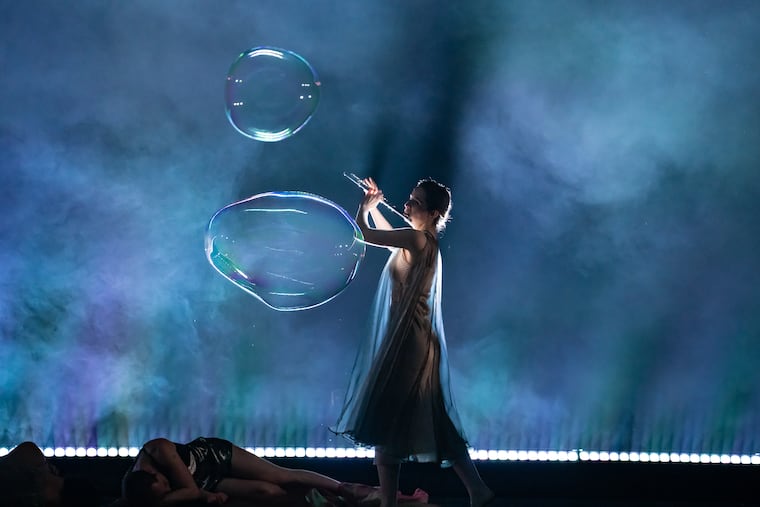
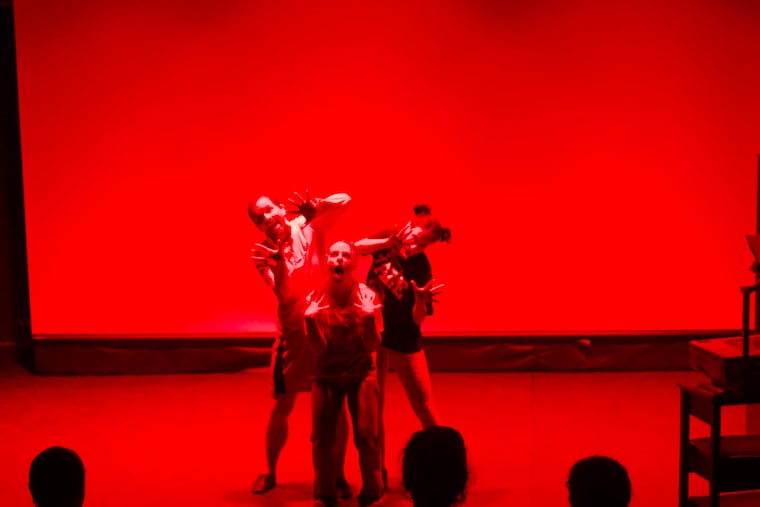
Like much on the mind of the general public, climate change is now in the voices of Opera Philadelphia in The Seasons, an ambitious opera/dance expansion of Vivaldi’s The Four Seasons warning of a time when seasons cease to exist.
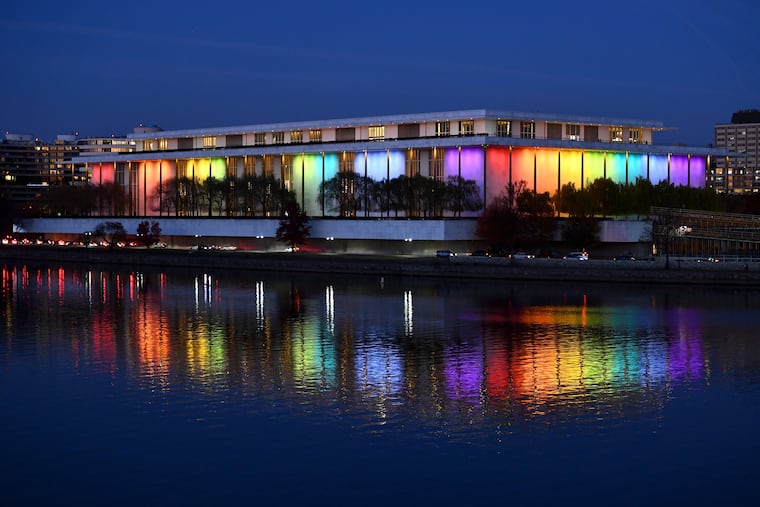
Sounds like a virtuous West Coast “granola opera”? Not quite. But the Friday opening at Kimmel Center’s Perelman Theater wasn’t as effective as it wanted to be.
The piece’s secondary purpose as a showcase for Vivaldi’s music actually became primary, going beyond the composer’s popular four-violin concertos, collectively known as The Four Seasons, and exploring some great, rarely heard arias from his many operas.
And luckily so.
Vivaldi’s innately agitated rhythms convey the urgency of climate change in a much more visceral manner than the often on-the-nose libretto by playwright Sarah Ruhl.
That’s a surprising reversal of artistic priorities considering that her 2003 play Eurydice is one of the best works of its decade (especially as seen several years ago, across the street at the Wilma Theater).
Vivaldi wrote 50 or so operas in the capitals of 18th-century Europe, and the pieces from them, employed by The Seasons, were often dark-night-of-the-soul arias that reveal depths not apparent in the composer’s short-breathed concertos.
These operas have been major discoveries over the last few decades in Europe, and Opera Philadelphia’s presentation constitutes a significant addition to the local operatic culture.
Fitting arias into a new plot was fairly common in 18th-century opera, though The Seasons, conceptualized by Ruhl and Opera Philadelphia chief Anthony Roth Costanzo, is best taken in by those who have missed climate-change news of fish frying in warm ocean water and frozen iguanas falling out of unseasonably cold Florida trees.
The Seasons has somebody resembling a TV weatherman (bass John Mburu) appearing periodically, lecturing the audience to not ignore or forget the dire planetwide shifts in weather (as if we could!).
Other characters are sociological touchstones: A poet, a painter, an actress-turned-farmer, a performance artist, and a choreographer (none with specific names) share the stage, some having troubled same-sex romances — though the purpose of their artistic affiliations had little consequence.
Vivaldi’s Four Seasons was often used as dance interludes in choreography by Pam Tanowitz. Under the overall direction of Zack Winokur, various screens and lighting effect conspired to convey stars, wildfire, and aurora borealis — as characters become climate refugees and, presumably, move north.
It’s not a spoiler to say that the opera ends with a hope-inspiring children’s chorus (Commonwealth Youth Choir and Philadelphia Youth Choral Ensemble) that has an unexpectedly visceral impact. It’s a reminder that their generation is tasked with cleaning up the ecological mess made by their elders.
Amid isolated strong points, The Seasons also showed signs of quick assemblage.
Besides having English lyrics that could certainty be improved with more revision time, the different elements didn’t always flow together comfortably.
The Act I choreography that had the six dancers gracefully balletic from the waist up but appropriately earthy from the waist down tended to slip into and out of obscurity in Act II.
One has to respect the effort put into the production, but the singers’ performances (in arias from Tito Manlio, Giustino, and many others) saved the day — supported by excellent orchestra playing. Conductor Corrado Rovaris instilled a proper baroque style and manner that unlocked the music’s considerable value.
All of the singers had fairly adept coloratura abilities that are necessary with baroque-period opera, including Mburu, who used the vocal passage work in a suitably reckless fashion conveying his character’s distress.
Kangmin Justin Kim (the Painter), Whitney Morrison (the Performance Artist), Abigail Raiford (the Farmer), and Megan Moore (the Choreographer) all had star-turn moments, some gathering momentum in Act II, others audibly tiring as the opera went on.
Costanzo couldn’t help being a dominant presence, not just because he’s a key figure in the opera’s conception (as well as Opera Philadelphia as a whole) but because he is such an accomplished actor and singer.
At times, he actually made the lesser moments in the character dialogue work. He still has one of the most natural and pleasing countertenor voices currently before the public, plus a fine legato line and telling use of words. It’s great to have him at the helm of Opera Philadelphia, but it’s greater just to hear him.
Repeat performances of “The Seasons” are Dec. 20, 8 p.m., and Dec. 21, 2 p.m., at Perelman Theater, 300 S Broad St. The shows are currently sold out. operaphila.org