In 1775, 24 men met in a Philadelphia tavern. That meeting led to ending slavery in America.
What is now the Pennsylvania Abolitionist Society was founded by Quaker leaders who wanted to make it unlawful to sell Black people into slavery on free soil.
In 1773 Dinah Nevil, an Indigenous, Black, and European multiracial woman and her four children arrived in Philadelphia from Flemington, N.J, under orders from a slave trader who intended to eventually sell Nevil to the Deep South, or perhaps the Caribbean.
Nevil protested.
Philadelphia authorities sympathetic to her plight, kept her in a work house for two years while figuring out the next steps to her freedom. The conditions were so horrid two of her children died.
Enter Israel Pemberton Jr. and Thomas Harrison, Quakers who, like most Quakers in colonial Philadelphia, actively fought slavery. Keeping people in bondage was considered immoral in their religion.
Pemberton and Harrison filed a lawsuit against Nevil’s enslaver because they sought to set a precedent by making it unlawful to sell Black people into slavery on free soil, not just in Pennsylvania, but in all of the colonies.
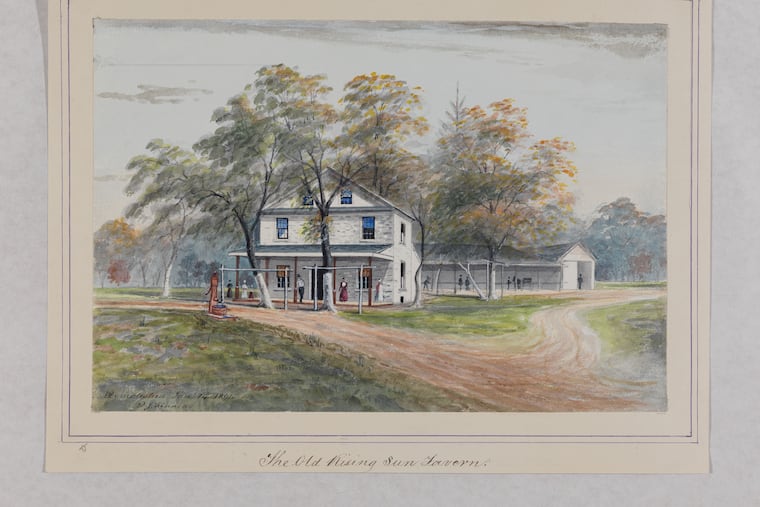
So, on April 14, 1775, Quaker leaders and educators Anthony Benezet and John Woolman gathered 24 men — 17 of whom were Quakers — at the Rising Sun Tavern to discuss legal strategies on how to make that happen.
That was the first gathering of an antislavery society in America and it will be celebrated Saturday at the African American Museum, part of the Philadelphia Historic District’s weekly firstival day party. Firstivals are a yearlong celebration of America’s 250th birthday marking events that happened in Philadelphia before anywhere else in America and often the world.
The group led by Benezet and Woolman named themselves the Society for Relief of Free Negroes Unlawfully Held in Bondage. In addition to Nevil’s case, they advocated for four other people of color who were in the midst of being sold away from their families. Nevil was ultimately freed when Harrison bought her and within days, signed manumission papers.
In 1776, 18 years after Quakers told their members they could no longer participate in the slave trade, Quakers were forbidden from enslaving people. Thanks to the Quakers’ advocacy, Pennsylvania enacted the 1780 Gradual Abolition of Slavery Act, America’s first law to end slavery.
Four years later, 18 Philadelphians resurrected the Society for Relief of Free Negroes and renamed it Pennsylvania Abolitionist Society, or PAS. Their goal was to stop Black and brown people from being indiscriminately picked up and sold into slavery in what was now a free state, but also to end slavery all together.
“They knew they couldn’t do it overnight,” said Emma Lapsansky-Werner, an American history professor at Haverford College. “What they did was organize so that one-by-one Black people would find freedom.”
Within two years, the PAS grew to 82 members and inspired other cities like New York and Boston to establish branches of their own. In 1787 — the same year the delegates voted that Black people were three-fifths of a person — Ben Franklin became the society’s president and under his leadership, the society petitioned the legislature to amend the act of 1780. This included preventing enslavers from taking pregnant enslaved women to the South so their children would remain property.
The PAS wasn’t without its prejudices. It wasn’t until 1842 — 67 years after its founding — that Robert Purvis, a Black man, was allowed to join. William Still joined in 1847. Through Still’s work at the PAS and the Pennsylvania Anti-Slavery Society, he served as an Underground Railroad conductor helping more than 1,000 enslaved people find freedom.
The PAS still exists today and advocates for equal rights and opportunities for all Americans.
This week’s Firstival is Saturday, Feb. 14, 11 a.m.-1 p.m., The African American Museum Philadelphia, 701 Arch St. The Inquirer will highlight a “first” from Philadelphia Historic District’s 52 Weeks of Firsts program every week. A “52 Weeks of Firsts” podcast, produced by All That’s Good Productions, drops every Tuesday.