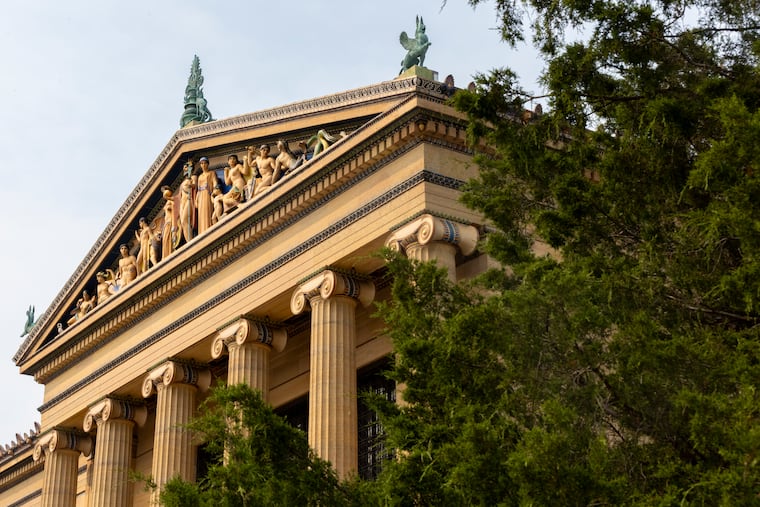
How can the Philadelphia Art Museum move past the turmoil? Daniel H. Weiss has a few ideas.
“What I’d like to do over the next six months to one year is to get everybody excited about what’s possible, what we already have," said the new museum chief.
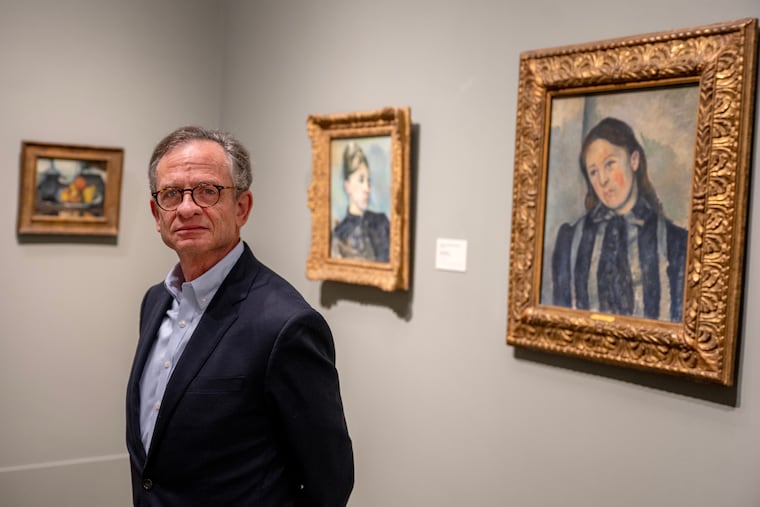
If the question of who gets to call the shots at the Philadelphia Art Museum was a major source of friction between its former chief and board and staff, the museum’s new director and CEO arrives as something of a salve.
Eight weeks on the job, Daniel H. Weiss is signaling a philosophy that is anything but authoritarian.
“I believe very strongly in the idea of shared governance,” Weiss said in a recent interview that represents his most extended public comments since taking over the troubled museum. “Any mission-driven institution is almost axiomatically in service to all of the people who have an interest in what it does. So I don’t really have a lot of executive authority as the director of this institution.”
And yet, Weiss obviously understands that he is the one being tasked with the turnaround of one of the city’s flagship cultural groups. He also knows he must take action quickly.
“I don’t have the luxury of saying, ‘I’m going to spend the next 12 to 18 months meeting with people and then we’ll figure out what needs to happen.’ We need to get after it.”
The listening tour
Weiss, 68, the former leader of the Metropolitan Museum of Art, is well into his listening tour, talking to staff, board members, and others about the museum’s last three years with Sasha Suda at the helm and the messy split with her still playing out in courts both legal and of public opinion.
He says the next few months are about him getting a sense for “the most present problems that need to be addressed.”
Several are obvious, starting with what to do about the controversial name change and rebrand the museum rolled out in October.
“We need to sort out the rebrand and determine whether we change it or stay with it. And we’re looking at that,” said Weiss, who has put together a task force of staff and board to consider the question.
Earlier this week, the museum confirmed that it was parting ways with the marketing chief who oversaw the rebrand.
The financial picture remains challenging.
“We have a deficit. It is not sustainable and we need to fix it. In order to do that, we need to take a larger look at the organization and build a healthy model.”
There are facilities needs that are complex and very much rooted in the reality of how to pay for them. Like, what form a proposed new education center should take; what to do about the Perelman annex, the former office building across the street that opened in 2007 after a $90 million renovation and has been closed to the public since the pandemic; and where and how to address deferred maintenance to the main building.
“We need to prioritize our list so that we can begin a thoughtful plan of following up on all the work that was done before on the core project to figure out the next chapter.”
A strategic plan
The “next chapter” will eventually take shape in a new strategic plan.
In the spring and summer, Weiss hopes, conversations with board and staff will give the museum a “better sense of what our resources could be as we work our way to balance and health. And then next year, maybe early next year, we begin the process of putting together a plan.”
Weiss’ credentials in both business and art seem suited to the moment. He holds an MBA from Yale School of Management and has worked for Booz Allen Hamilton. His master’s degree in medieval and modern art and Ph.D. in Western medieval and Byzantine art were earned at Johns Hopkins University, where he is finishing up his teaching at the end of the semester.
Weiss, who has moved to Philadelphia with his wife, Sandra, sees his immediate job as reminding everyone what Philadelphia has in its museum.
The events of the last few months — the widely ridiculed rebrand, Suda’s mid-contract ouster, and the dramatic language used in her subsequent wrongful-dismissal lawsuit against the museum — have often eclipsed the art and made the main message coming out of the museum one of acrimony.
The new director is eager to change the message.
“What I’d like to do over the next six months to one year is to get everybody excited about what’s possible, what we already have. How, by supporting each other and investing excitedly in our mission, we can do something really important.”
The role of the board
Weiss also needs to consider the role of the Art Museum board, which, on the one hand, was not informed that the rebrand was final, according to some board members. On the other hand, it has been accused in Suda’s initial court filings of being overinvolved in museum matters.
“I don’t think our board needs radical restructuring … and this may seem counterintuitive in light of what you’ve been reading about in the newspapers, I think our board needs to be embraced as a real partner,” Weiss said. “And I do believe deeply in shared governance and that means the director and the senior administration have a job to do and the board has a job to do.”
“They’re different jobs but when they’re working in concert, you get much more for the institution than you do if they’re at odds with each other.”
How much of board-CEO relations is about structure, and how much is it the function of the personality of the person whose job it is to be the connective tissue? “Almost always it is more a function of the personalities than it is the structure,” he said.
As for the involvement of one emeritus board member, Julian A. Brodsky, Weiss has to determine the future of an unannounced, but reported by Philadelphia Magazine, $20 million pledge from the Comcast cofounder toward a dreamed-of education center.
“It’s an incredible gift and we’re enormously grateful for that. I’m in the process of talking about the timing of that and all of that,” he said.
The art itself
Weiss does not dispute that the museum needs changing. But a host of questions beckon.
What about the art itself? Is the museum’s pipeline of shows — some of which are years in the planning — the right mix for the audience the museum wants to attract? Why are doors open only five days and past 5 o’clock one day a week? Is a general admission ticket of $30 too high for this city?
“Every great art museum faces the same challenge, which is that these are intimidating places by design. So how do you, on the one hand, celebrate this great magnificent institution sometimes called a castle on the hill? And at the same time [be] welcoming to schoolchildren who have never been here before? That’s not easy. We faced the same issue at the Met.”
He sees the shifting societal context in which the museum finds itself as an opportunity.
“The world is a mess,” he said. He would like the museum to be an answer to that turmoil — though clearly, given the last few months, Philadelphia’s major art museum is not cloistered from conflict.
“There are very few places in the world that are entirely to the good, and art museums are among them. We are here to enrich, to enlighten, to inspire, to build community, to invite difference to come together, to have shared learning experiences for everyone,” Weiss said.
“The world is a lot bigger, more complicated, richer, and inspiring than just the world you live in on a day-to-day basis. If everybody can have that experience, we are incrementally a more civil society than we were before people came into the institution. Those are all great things.”