The Philadelphia Ballet is letting the ghosts out on stage this spooky season
Right in time for Halloween, resident choreographer Juliano Nunes is making a new piece inspired by the ghosts of "Giselle." The company is pairing that with "Fall River Legend."

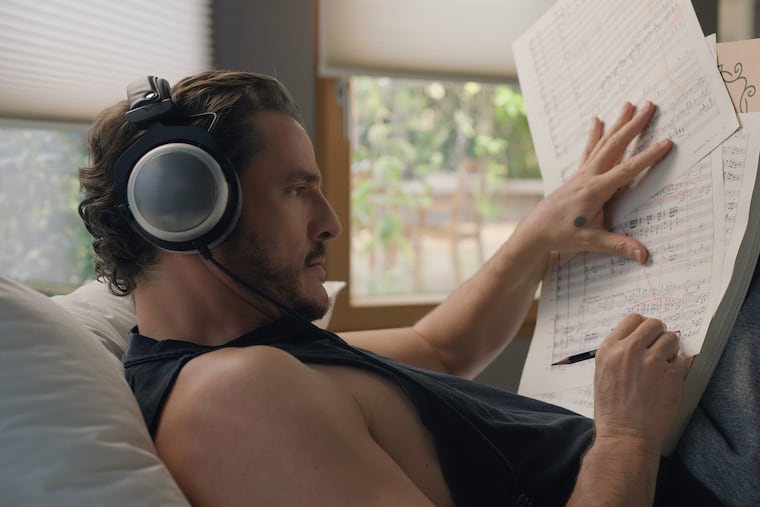
Philadelphia Ballet’s resident choreographer, Juliano Nunes, hesitated when his boss, artistic director Angel Corella, suggested he make a ballet for the company’s Halloween program, which opens Thursday night at the Academy of Music.
“To be honest, my first reaction was like, ‘I don’t think so,’” Nunes said.
He didn’t immediately connect with the theme, he was worried about getting the right taste level, and he wasn’t interested in doing something simply entertaining.
“It took me a little bit to think about the subject,” he said, “then it got me curious after a little bit.”
Holiday works tend to do well for the ballet world. Most companies, including Philadelphia Ballet, rely on income from the Christmas classic The Nutcracker to fund much of their year.
Before Corella took over as artistic director, when the company was known as Pennsylvania Ballet, it performed Ben Stevenson’s Dracula several times.
But it was Giselle, about a jilted bride and supernatural torment, that eventually won Nunes over and taught him how horror could work well in ballet. He began to find the idea of horror intriguing.
» READ MORE: Philadelphia Ballet revisits two fiery Corella ballets in its season opener
“I cannot really remember exactly how I started to write this script,” Nunes said, but remembers jotting down some ideas.
He had never written a script before, nor had he done a lot of story ballets. He was writing in English, which is one of four languages he speaks, but not his native tongue.
Nunes lived in Brazil until age 18 and spoke Portuguese. He also speaks Spanish and German. He has lived much of his adult life in Europe, where he started both his dance and choreography careers. He doesn’t have a home base right now but is working in both Philly and New York for the next few months.
Giselle and how worlds collide in the classic ballet interested him.
“It’s also very much [about] Giselle going from this place of tragedy, but then go into this world where you don’t know where you are,” he said.
More than a year ago, when Nunes started writing, he started thinking about the Willis, the ghosts of jilted brides in Giselle, one of the most popular works in the ballet canon.
“I think I was very curious or inspired about this world of the dead,” he said. “And then from there, there was just the idea of maybe it’s something that has started as a ball scene, and then it gets into this underworld.”
» READ MORE: The best Philadelphia dance shows coming to Philadelphia this fall (and winter)
Nunes and his life partner — fashion, costume, and set designer Youssef Hotait — began to flesh out the narrative and presented it to Philadelphia Ballet.
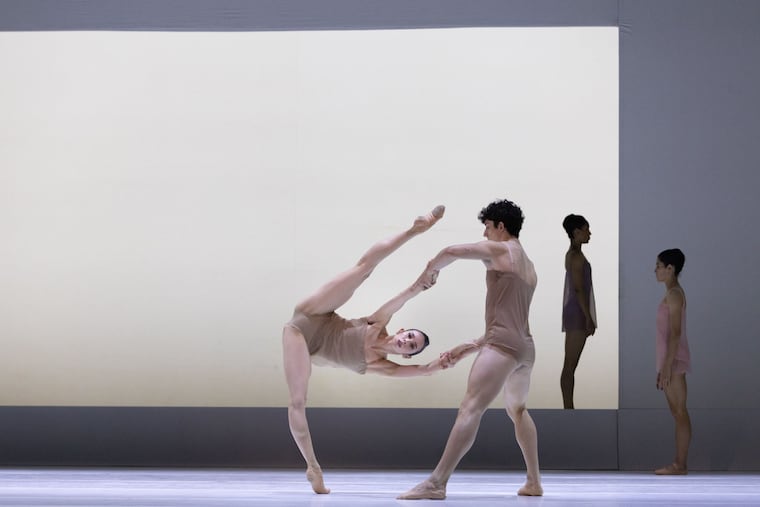
The result, Valley of Death, is a psychological nightmare set to music by Ralph Vaughan Williams and Sergei Rachmaninoff. It makes its world premiere on Thursday alongside another horror ballet — Agnes de Mille’s Fall River Legend - that tells the story of Lizzie Borden, who was acquitted in the brutal ax murders of her father and stepmother in Fall River, Mass., in 1892. Fall River Legend is set to music by Morton Gould.
Nunes and Hotait did nearly everything themselves for Valley of Death, from the story to the movement to all theatrical elements.
“We’re very hands on,” Nunes said. “Otherwise it loses the track. It just doesn’t speak what you’re trying to say if other words are trying to say the same thing.”
Like Giselle, Valley of Death will have a lush corps de ballet scene in the second act, along with its three main characters.
“It’s a story of certain tragedy. There is a lot of suffering and pain and darkness and sort of an attractive evilness that is lurking around and is present,” Nunes said. “The people who are somehow based [in] society in the first part become the ones in the world of the dead who help the evil to conquer the suffering.”
At 35, Nunes got noticed for his choreography in a very modern way: through Instagram. Corella was one of the first directors who reached out and asked him to make work for his company, Philadelphia Ballet. Soon enough, Corella invited him to become resident director.
Along with Valley of Death, Nunes will be creating a new Romeo & Juliet, which will have its world premiere in April.
After Valley of Death, Nunes has something of its companion piece opening in New York. American Ballet Theatre will dance the world premiere of Have We Met?! on Oct. 29-Nov. 1 at Lincoln Center. That one is about “two souls that get to meet in different periods of time, both in New York, in the past and in the future. And [it is] this story of nonalignment and alignment, darkness and lightness,”
He worked on Valley of the Death first.
Working on two supernatural pieces at once was a coincidence, Nunes said, but “one inspired the other.”
“Philadelphia Ballet: Evening of Horror,” Oct. 16-19, Academy of Music. $20-$271, 215-893-1999 or ensembleartsphilly.org