The city's vast repository of documents and photographs has moved to Spring Garden Street.
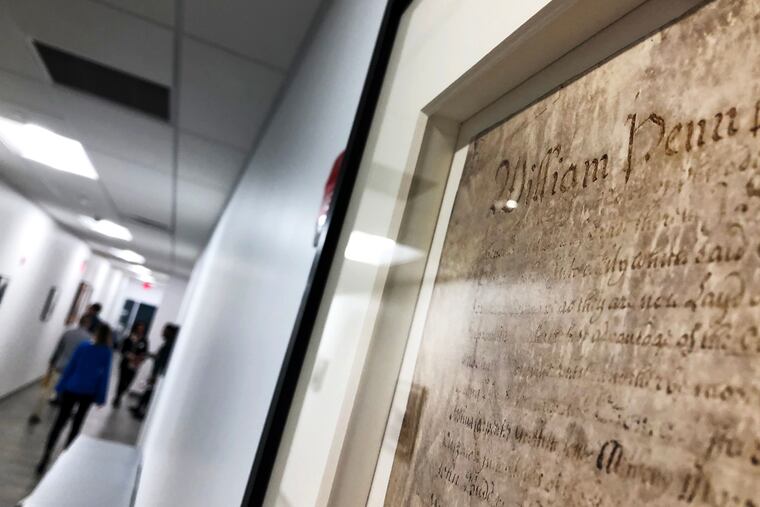
A copy of the William Penn City Charter, from 1701, hangs in the hallway of the new Philadelphia City Archives on Spring Garden Street.Read moreTOM GRALISH / Staff Photographer
The Philadelphia City Archives – the contents of about 15,000 boxes of documents, photos, and film – has moved from its previous home in the basement of the old Bulletin building in West Philly to a $10 million, state-of-the-art facility in Northern Liberties.
City officials opened the new archives, 548 Spring Garden St., on Thursday afternoon.
Advertisement
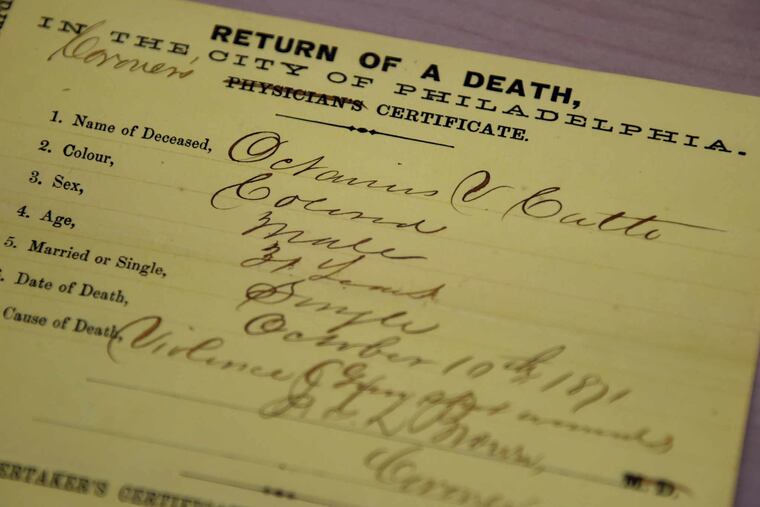
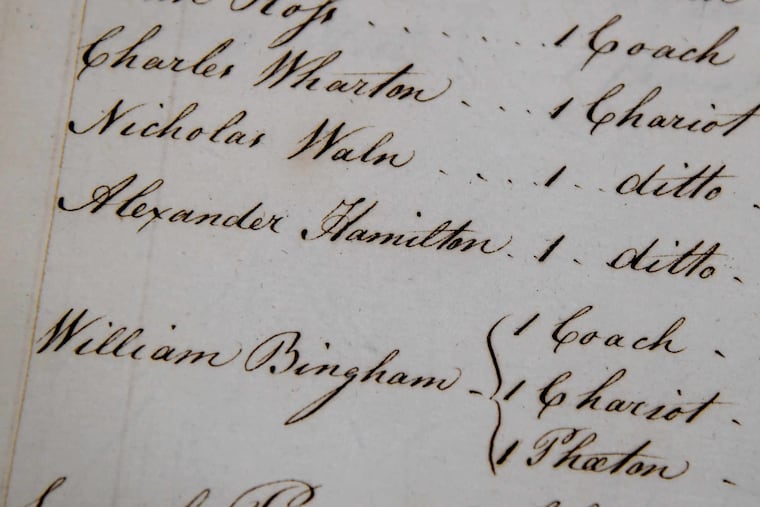
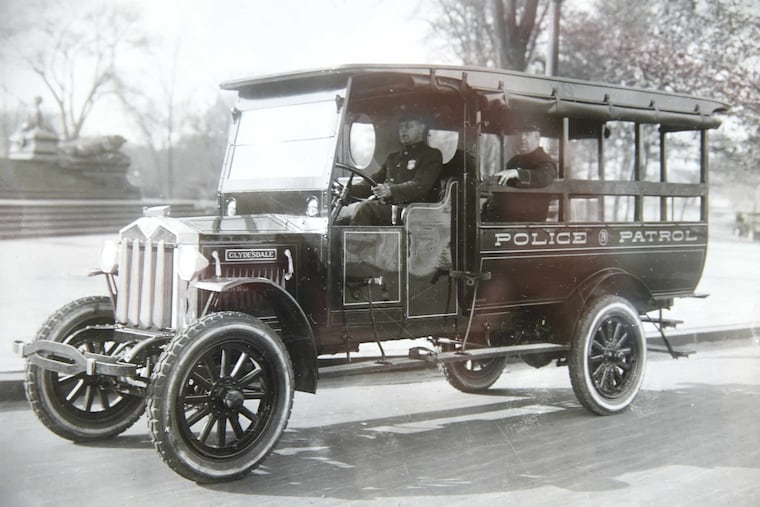
The collection of city records – said to be one of the most comprehensive in the country -- includes the William Penn City Charter from 1701, documents from the 18th century with the signatures of Alexander Hamilton and Benjamin Franklin, the death certificate of Civil War-era scholar and activist Octavius V. Catto, the blueprints to City Hall, and even a photograph of Philadelphia’s first police car.
Before moving to the new 65,000-square-foot facility, the trove had been stored in the football-field-size basement at 3101 Market St. for 20 years.
“When I first became commissioner, I told my team that we should go look at the records in the basement on Market,” Records Commissioner James Leonard said during a news conference on Thursday.
“When we got there, they said, ‘Commissioner, this is what we have to move.’ And then there was a loud thud, which was the sound of me fainting.”
Over the last few years, Leonard and his team have painstakingly moved the archives, including 2 million photographs and 400 film items, into its new climate-controlled home. (The Department of Records is in the process of digitizing its glass negatives, which date from the 1880s.)
Beyond its value to historians, the city archive is a resource for people looking into their family history and for professional genealogists. The collection contains birth and death certifications, marriage certificates, naturalizations, prison records, court records, and property deeds.
“It’s a phenomenal institution that has been little understood,” said Vistula Chapman-Smith, a former Philadelphia records commissioner. “It’s not a fragmented collection. It tells stories from beginning to end.”
The public can visit Monday through Friday from 9 a.m. to 4:30 p.m.
“It’s important for people to know what is held in this treasure trove because it allows us to understand Philadelphia’s unique position in the story of our nation,” Chapman-Smith said.
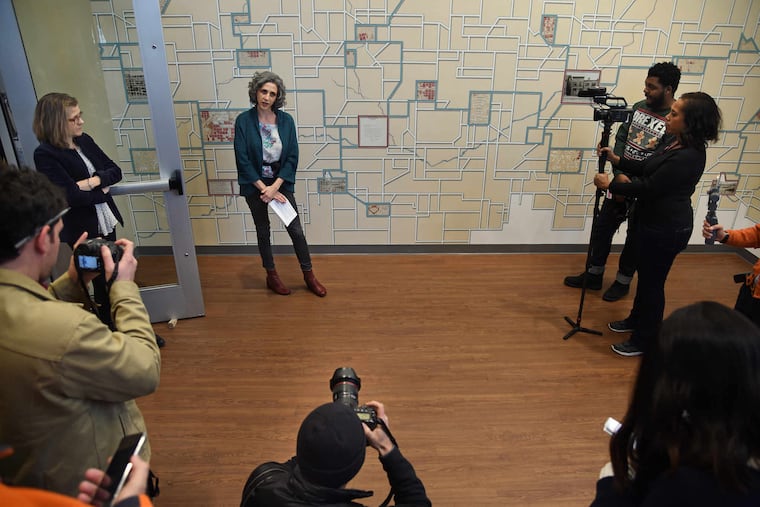
The new facility includes a new permanent public artwork, Charting a Path to Resistance, created by Chestnut Hill artist Talia Greene.
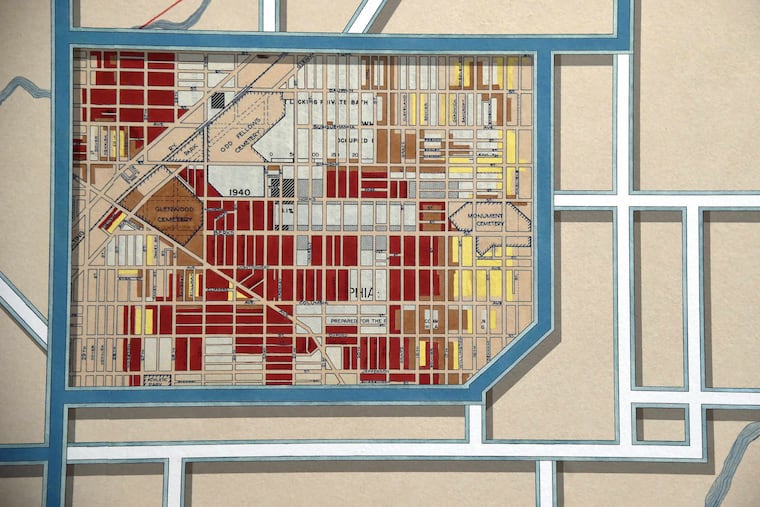
Greene said the mural was inspired by the history of abolitionism in Philadelphia. When she visited the archives for the first time, she walked by a redlining map – said to be one of the few in possession of any city -- and wound up incorporating it into the artwork.
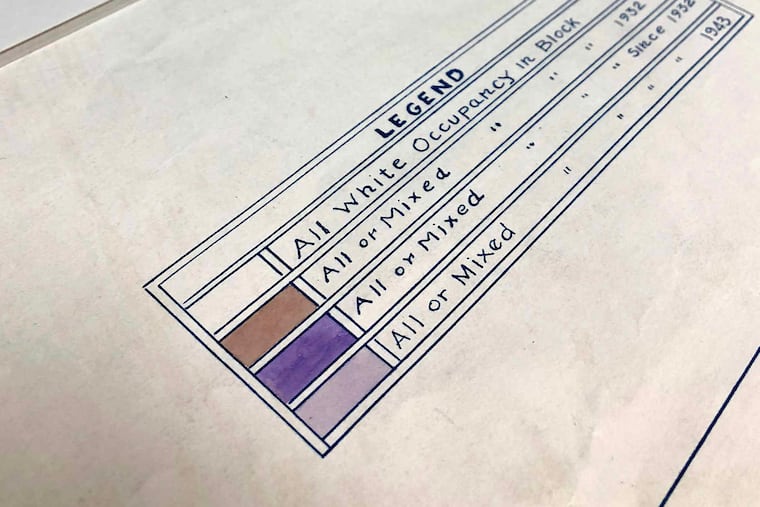
The redlining map, drawn up by a private company and acquired by city officials in 1944, was used by banks and loan companies for housing discrimination against African Americans. (It is not clear why the city was in possession of the map, but officials said that there was some degree of involvement between the city and the people who made redlining maps.)
“I wanted to provide a window into the larger history of Philly,” Greene said. “Maps layer time with geography, so they always tell really interesting stories.”
Visitors to the building can download a free app that includes animations, text, and voiceovers to explore the artwork in greater depth.
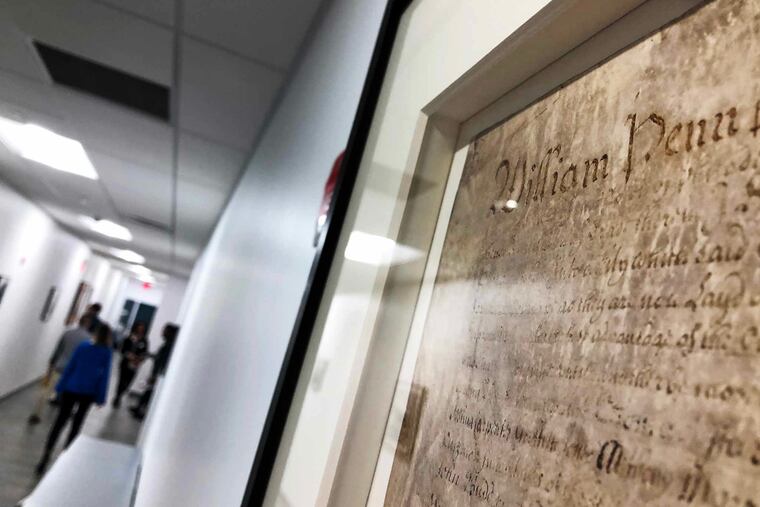
A copy of the Williams Penn's "Charter of the City of Philadelphia," dated October 25, 1701 hangs in the hallway at the city Archives at 6th & Spring Garden. It is the city's oldest record that relates to Philadelphia's early municipal government.Read moreTOM GRALISH / Staff Photographer
Artist Talia Greene discuses her new interactive mural titled "Charting A Path to Resistance" during a media tour of the new facility. The mural was created for the site through the City's Percent for Art Program.Read moreTOM GRALISH / Staff Photographer
Greene used the Archives' vintage maps, including one showing the redlining of Philadelphia homes and neighborhoods. This map showing redlined homes around 23rd Street, Ridge Avenue and Columbia Avenue (since renamed Cecil B. Moore Avenue) was created by a private company and given to the City in 1944.Read moreTOM GRALISH / Staff Photographer
A "Racial Map" of Philadelphia. Redlining was the process of drawing red lines around neighborhoods by lenders used for housing discrimination. The practice was outlawed in 1968 by the Fair Housing Act.Read moreTOM GRALISH / Staff Photographer
The 1871 death certificate of Civil War-era educator, scholar, writer, pioneering baseball player, and civil rights activist, Octavius V. Catto. A public monument honoring him was erected at City Hall last year. He was 32 when he was gunned down as marauding whites created an election day riot in South Philadelphia.Read moreTOM GRALISH / Staff Photographer
A tax record from the 1790s with Alexander Hamilton's name.Read moreTOM GRALISH / Staff Photographer
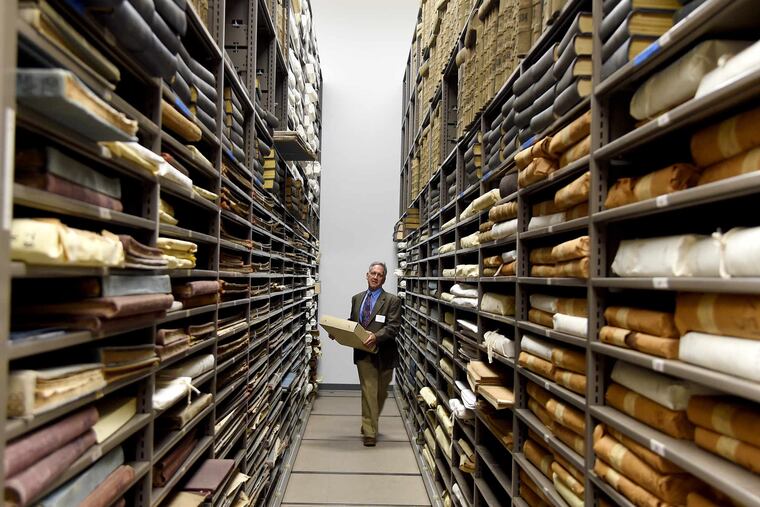
City archivist Ed Rice retrieves historic files during a media tour of the new City of Philadelphia Archives at 6th & Spring Garden Thursday, December 6, 2018.Read moreTOM GRALISH / Staff Photographer
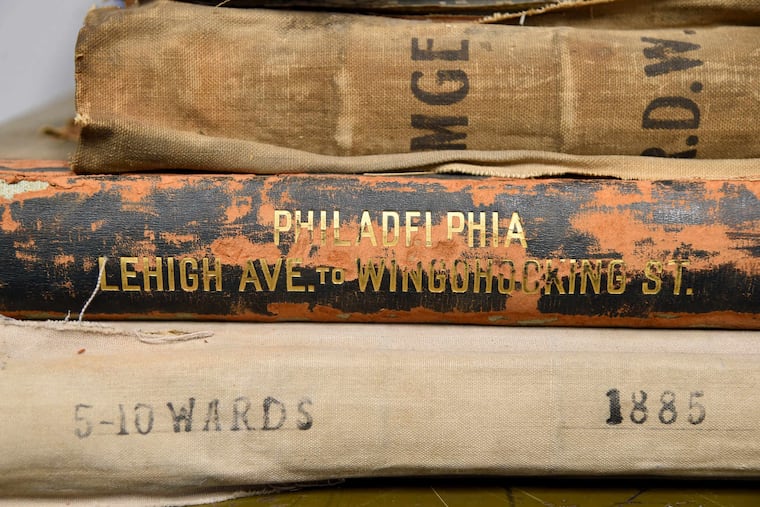
Books and ledgers at the Archives. It contains Philadelphia's visual assets, records, research and history. The public can visit Monday through Friday from 9 a.m. to 4:30 p.m.Read moreTOM GRALISH / Staff Photographer
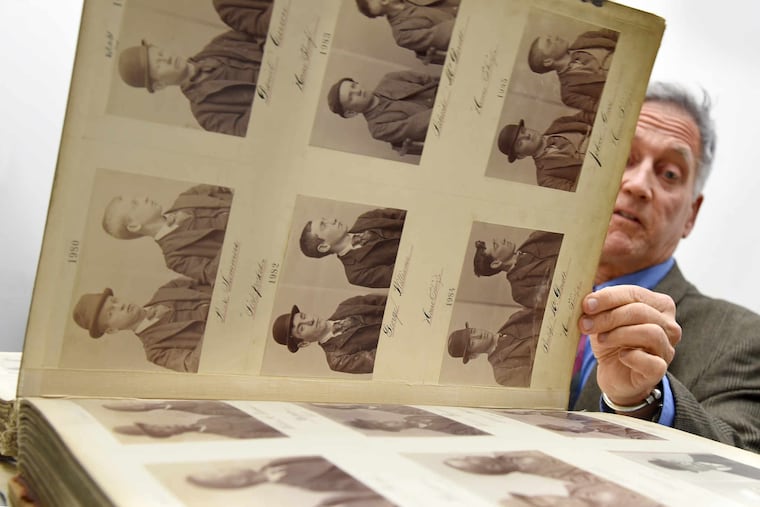
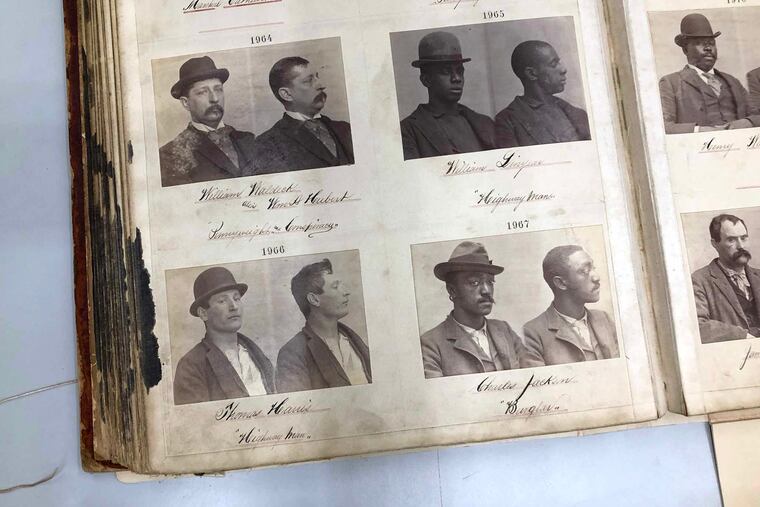
Archivist Rice pages through a bound copy of police mug shots from the 1890s.Read moreTOM GRALISH / Staff Photographer
While prisoners were segregated by race, their arrest photographs were filed together at the end of the 19th century.Read moreTOM GRALISH / Staff Photographer
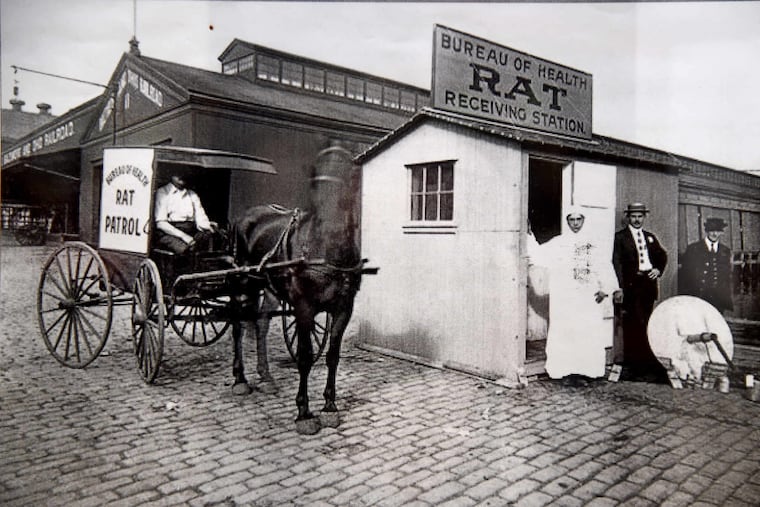
A photograph titled, "Rat Patrol Receiving Station, North Front and Race Streets" (1914) from the Philadelphia Bureau of Health. The archives includes 2 million photographs and 400 film items.Read morePhiladelphia Department of Records
A photograph titled, "Clydesdale Police Patrol Wagon" (1919), Philadelphia Department of Public Safety. The Clydesdale was primarily a military truck manufacturer headquartered in Clyde, Ohio.Read morePhiladelphia Department of Records

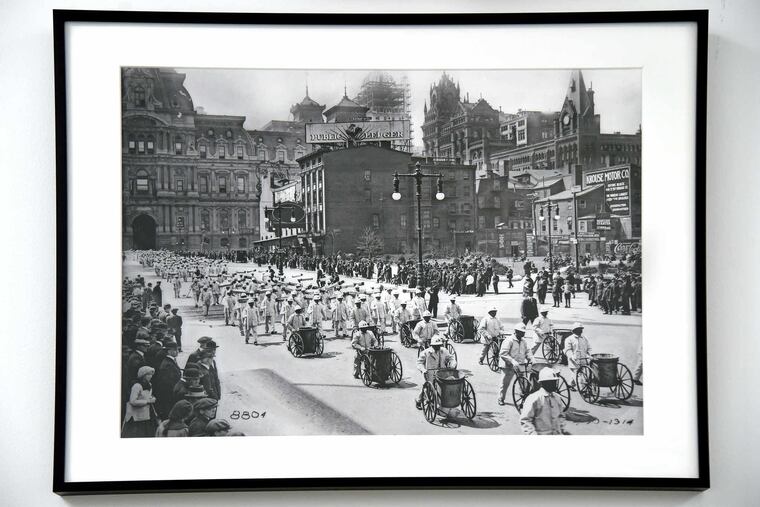
A 1914 Department of Records photo of a "Sanitation Parade" on North Broad Street hangs on the wall at the Philadelphia Archives. Seen in the rearAt rear is City Hall. The the old Pennsylvania Railroad's Broad Street Station at Broad & Market Streets is at right.Read moreTOM GRALISH / Staff Photographer
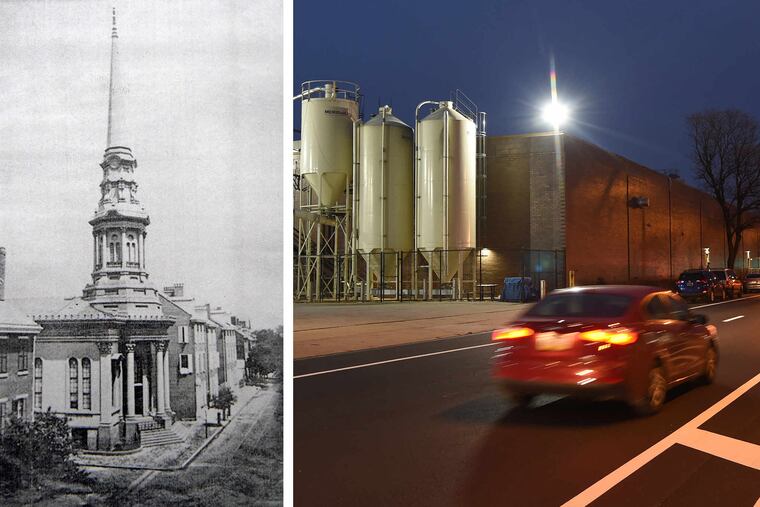
A photo of the Fourth Baptist Church (left) which was located from 1853 until the early 1960s on the same block as the new City of Philadelphia Archives in the 500 block of Spring Garden Street. The photo at right is the same view today, looking north on 5th Street toward the Yards Brewing Company.Read morePhiladelphia Department of Records (left) TOM GRALISH / Staff Photographer (right)
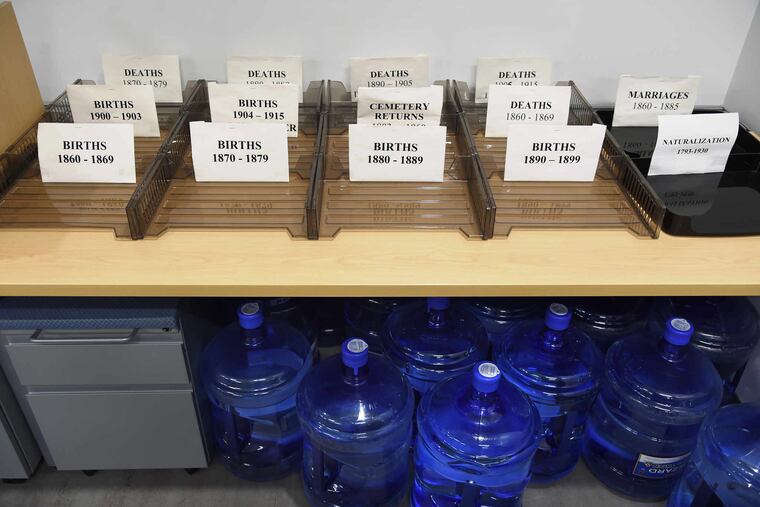
Bins for sorting birth records are in the offices at the new City of Philadelphia Archives at 6th & Spring Garden Thursday, December 6, 2018. It contains Philadelphia's visual assets, records, research and history.Read moreTOM GRALISH / Staff Photographer