Wilma Theater ends its three-leader ‘experiment.’ Lindsay Smiling is named sole artistic director.
“I want to make the Wilma a representation of Philadelphia in all its glory," said Smiling, who starts his new position in August.
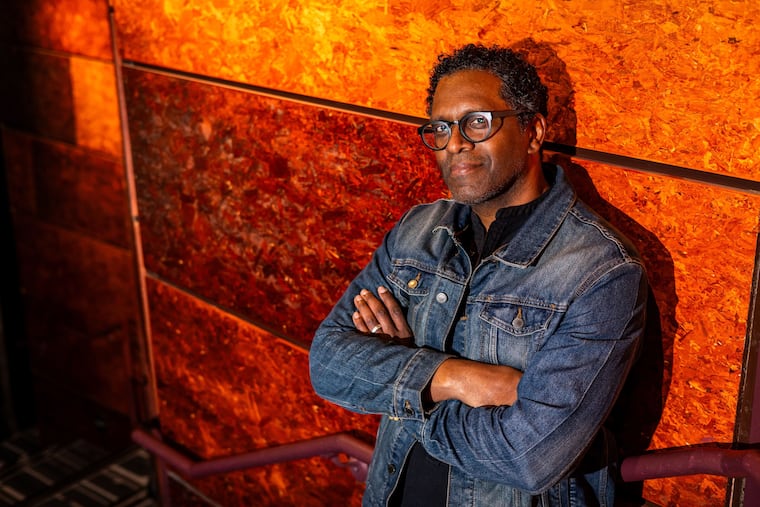
The Wilma Theater is disbanding its shared artistic leadership team and returning to the traditional model of being led by a single artistic leader.
That new and sole artistic director is Lindsay Smiling, who has been one of the company’s three co-artistic directors for the past three years, the acclaimed Philadelphia theater troupe announced Friday.
The Wilma’s other two co-artistic directors, Yury Urnov and Morgan Green, are moving on to other roles and pursuits. Urnov will take the title of Wilma resident director, and Green is returning to New York to focus on directing new theater, film, and TV projects, the theater said in the Friday announcement.
Leigh Goldenberg will continue to run the administrative side of the company as managing director.
The Wilma split its artistic leadership in 2020 as longtime chief Blanka Zizka began her exit in what she described as a “total experiment” without set ideas about “what this could turn into.”
Zizka and husband Jiri Zizka had molded the company in their images — Jiri stepped down in 2010 and died two years later — and the 2020 change was meant to add other voices to the artistic mix.
“It wasn’t named at the time, but it was also sensible succession planning,” said Goldenberg, “in terms of bringing people into leadership with Blanka, as opposed to having a hard cut over from her leadership to retirement to a new leader.”
The ultimate choice for Smiling signals a shift in the company’s artistic direction to a “different aesthetic, influences from around the world,” said Smiling. “Blanka brought an Eastern European standpoint. My folks are from Belize, and so bringing a Caribbean aspect to it. What are the other parts of the world that we can now infuse in the Wilma’s DNA? And how can we have more of a world theater here, building on what Blanka and Jiri have built?”
Smiling, 49, an actor and director, has had a long association with both the Zizkas and the Wilma. His first show at the company was in 2003, in Arthur Miller’s satirical Resurrection Blues, with Jiri Zizka directing. He was an original member of the theater’s own company of actors, the HotHouse Resident Acting Company, started by Blanka Zizka.
Smiling’s Wilma directorial debut was with a 2025 production of The Half-God of Rainfall by Inua Ellams, and he is currently directing and starring at the theater in Suzan-Lori Parks’ The America Play through May 31.
Smiling’s foundation in the HotHouse was a key factor in the company’s planning for the next phase, which will be more squarely focused on the HotHouse, leaders say. The actors’ ensemble, currently at 18 members, isn’t centered around a single, specific acting technique, but involves working in sessions outside of preparing for an upcoming show.
The HotHouse model, which Smiling says is rare among theater companies, cultivates a corps of resident actors who are familiar with each other, as opposed to actors from elsewhere coming in cold for a show, perhaps never having worked together before.
It grew out of Blanka Zizka’s feeling that casting for a show was “kind of rolling the dice when you go up and audition people and you don’t really have a strong relationship with them,” said Smiling. That way of working means “hoping an ensemble can arrive quickly and throughout a rehearsal process and speak the same language.”
Smiling takes over Aug. 1, and while his initial contract isn’t hammered out, it’s expected to cover at least three years.
If the artistic triumvirate isn’t continuing, it’s not because of any confusion on the part of donors or audiences, Goldenberg said.
It’s also not for a lack of acclaim. In 2023, the Wilma received five Tony Award nominations — including best play — for Fat Ham, the Black queer reworking of Hamlet by Philadelphia playwright James Ijames. The following year, it received the 2024 Regional Theatre Tony Award for its 45 years of contributing to the growth of theater nationally.
So why mess with success?
“We’re not getting rid of what makes the Wilma the Wilma,” said Smiling. “We’re actually refocusing because it’s so hard out there for the regional theaters right now. We’re making sure that we’re prioritizing the thing that makes us successful.”
Smiling says he wants audiences, and Philadelphians in particular, to see representations of themselves on stage.
“There’s so many communities in Philadelphia that don’t necessarily feel welcome to the space of theater anywhere, particularly with the type of work we do, which can feel a little bit distant to some people,” he said.
“I want to make the Wilma a representation of Philadelphia in all its glory.”