Who’s faster? Amazon Now challenges Gopuff in its hometown.
Amazon, which has plenty to invest in the service, is now competing in the ultra-fast delivery game.
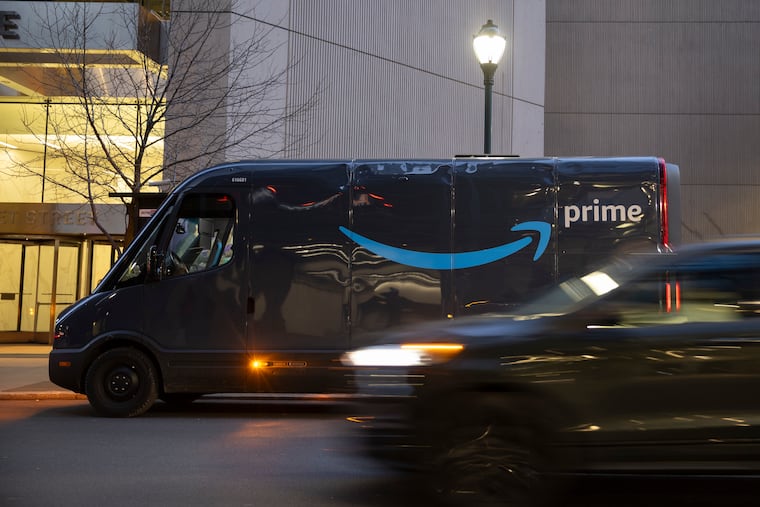
Can Amazon Now outhustle Gopuff?
Shipping and digital services giant Amazon this month expanded its new 30-minute delivery service for groceries and household items. Amazon says the option is now more widely available in Philadelphia, Seattle, Dallas, and Atlanta, and is beginning to launch in parts of some other U.S. cities, with more expansion promised later this year.
The service, known as Amazon Now, launched in India and the United Arab Emirates last fall. It came to sections of Philadelphia and Seattle (where Amazon is based) last December, and in London in January.
U.S. customers pay $13.99 per delivery — or $3.99 if they are members of Amazon Prime, which costs $14.99 a month.
That pits Amazon Now against Philadelphia-based Gopuff, which offers $3.95 deliveries of groceries, beer, drugstore goods, and other “everyday essentials” from hundreds of neighborhood centers in U.S. and U.K. communities — or free delivery for $7.99 a month.
For an additional $1.49 per order, Gopuff’s two-year-old Gopuff Fam20 service offers 20-minute delivery, faster than any Amazon guarantee, and other services. Students pay less.
According to Todd Bishop of GeekWire, who reported the expansion plans for Amazon Now, Amazon seeks to dominate “sub-same-day” deliveries against Instacart, DoorDash, and the growing Walmart store-based delivery service, as well as Gopuff.
What’s unique?
Amazon Now boasts “thousands of items — from fresh groceries to electronics," spokesperson Helen Phung said, though not everything in the vast Amazon catalog is available for speedy porch deposit.
Amazon’s customer analytics bots are calculating which items get shelf space in which neighborhoods.
“It’s still early days, but our systems continuously analyze neighborhood-level ordering patterns — what customers buy, when, and how often — to anticipate demand and ensure the right products are stocked” locally, Phung said.
There are Gopuff products Amazon doesn’t match “just yet,” Phung acknowledged, such as the Starbucks hot coffee shipped from some Gopuff locations. (Longtime Starbucks CEO Howard Schultz is a Gopuff director.)
Gopuff carries popular brands such as soda and snack giant PepsiCo, Italian chocolate retailer Ferrero (Kinder Bueno, Nerds), and Selena Gomez-backed Serendipity ice cream, while also delivering its own branded items such as Crave Shoppe snacks.
Gopuff members pay less than Amazon members. Amazon members have access to video and package delivery services Gopuff does not offer.
Gopuff is well-known for its beer deliveries. Amazon Now locations will stock alcohol, where permitted, Phung says.
‘Dark stores’
“Part of the trouble with offering good delivery is, it’s a very capital-intensive business,” said Ernest Baskin, marketing department chair for food, pharma, and healthcare at St. Joseph’s University’s Haub School of Business in Philadelphia.
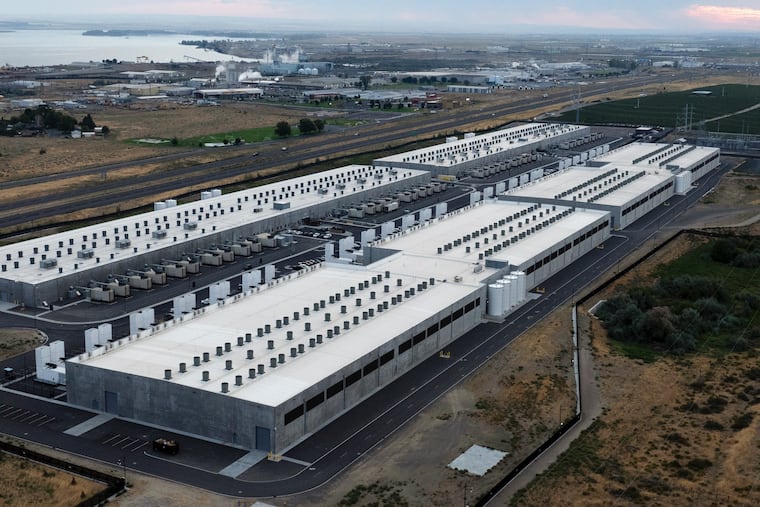
“You need a lot of ‘dark stores’ that are very close to major pockets of population,” he added.
A typical “dark store” for local delivery resembles a retail store, rearranged for the convenience of scanner-wielding order-fillers who prepare orders for drivers, instead of walk-in consumers.
Small company-logo signs mark such locations, like the Gopuff store in the Rittenhouse Place shopping strip in Ardmore. But windows are covered, discouraging retail visitors, and popular products are placed near the exit for order-pickers’ and delivery drivers’ convenience, unlike a typical retail store with strategically located impulse-purchase racks.
“Gopuff has blanketed its cities. They have a lot of distribution centers from which they can send orders,” Baskin said.
With its vast sales, Amazon also has a very long list of products, but the company can’t fit them all into local stores, he added: “Can they get the mix right?”
Amazon has said it is using “a network of smaller locations” near customers’ homes and workplaces to fulfill 30-minute orders.
Baskin says there is a crowd of high-end convenience shoppers who don’t mind paying Amazon-level prices for spur-of-the-moment deliveries: “There’s a really large amount of people already using Amazon who pay for time. The strategy is, ‘How can we add more value to Prime to get more people to subscribe?’ Once you subscribe to Prime, you buy more on Amazon.”
Will Amazon buy Gopuff?
In terms of survival, keeping focused on local markets such as Philadelphia is Gopuff’s best bet for staving off Amazon, said Charles “Ray” Taylor, marketing professor at Villanova University.
“For example, in addition to getting Starbucks coffee out quickly, some focus on local vendors, microbreweries such as Evil Genius, and knowing market preferences better will help sustain an advantage,” Taylor said. To compete, “Amazon would have to throw tremendous resources” into each local market, “which is no easy feat while focusing on the large national [and] global market.”
Amazon, one of the most valuable companies in the world, made more than $1 billion a week last year in after-tax profits and is well-funded for growth. Gopuff, founded in 2013, is backed by U.S. and foreign private investors, who hope for big profits as the company goes public or gets bought.
“Amazon has the money to scale up and buy property, but do they really want to invest in that?” asked Baskin, the St. Joseph’s marketing chair.
Delivery-store watchers have long speculated Amazon may want to buy a local-delivery network like Gopuff instead of building its own.
“That could be a shortcut to getting more stores,” Baskin said. “That’s the playbook they followed before they bought Whole Foods,” first competing with the high-end grocery chain, then buying it outright in 2017.
Staff writer Ariana Perez-Castells contributed to this article.