American Water Works’ new CEO wants to take over more water and sewer utilities
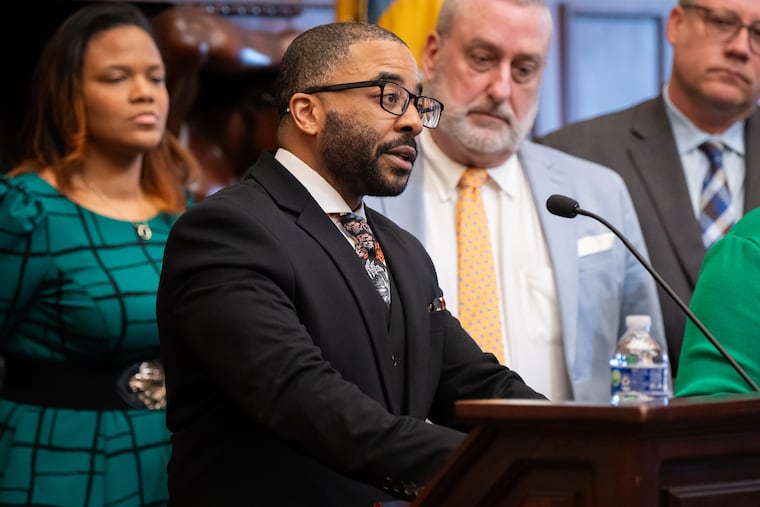
Camden-based American Water’s new CEO, John Griffith, plans to continue to acquire small public utilities around the U.S.
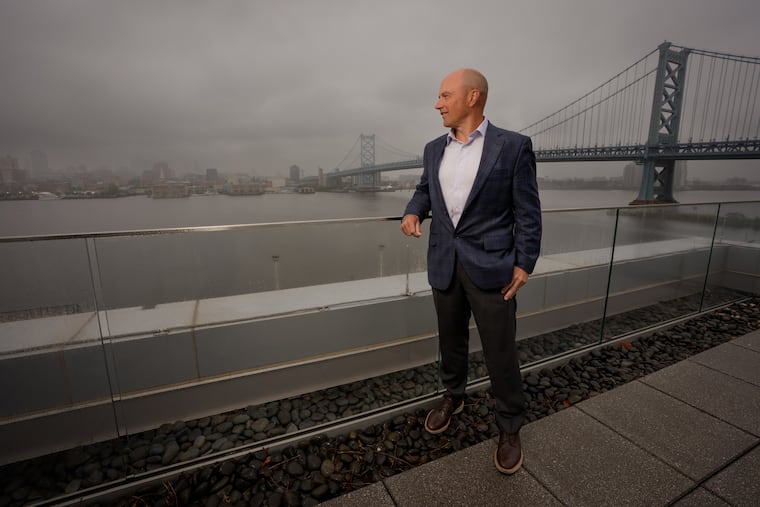
The big money in utilities is at multibillion-dollar gas and electric companies. Investment banker John Griffith bet his career in the opposite direction. Three years ago, he left Wall Street and joined the largest for-profit U.S. water and wastewater operator, American Water Works, based in Camden. On May 14, he became the chief executive officer.
In his first week on the job, the 139-year-old company, which has 14 million customers across 1,700 U.S. towns and military bases, said it would buy a group of utilities serving another 47,000 customers in eight states next year.
Amid that growth, boosted in Pennsylvania by a 2016 law, Act 12, activists in some communities have mobilized against expansion by American Water and other for-profit operators, fearing higher consumer rates to cover private bonds and shareholder dividends. Twice in the past year, Pennsylvania authorities have asked American Water to take over failing small-town water companies. By contrast, voters in Gloucester Township rejected joining American Water in November by more than 3-1.
A week into his new job, Griffith agreed to take questions in his riverside headquarters overlooking Philadelphia across the Delaware. The interview has been lightly edited for clarity.
You were an investment banker, buying and selling utilities for fees. How did you end up running a water company?
I was glad to grow up in the utilities business. Wall Street is great training. You work like crazy. You have access to CEOs and CFOs. I was at Merrill Lynch, a banker in regulated utilities, mostly gas and electric companies. Water was not a large sector.
I had that background in strategic and planning work. I knew Susan Hardwick, who was chief financial officer at [Midwestern gas utility] Vectren Corp. and led their sale to CenterPoint Energy in 2019. She then joined American Water, and when the CFO job came open in 2022, I was attracted to the company, to the mission people here feel around water.
Bryn Mawr-based Aqua America, American Water’s closest rival among private operators, bought a gas company in 2020 and then changed its name to Aqua Essential Utilities. Is your company also going to diversify?
We are water and wastewater. That’s what we’ve been since 1886, and that’s what we intend to be.
This is a massively fragmented industry. There are 53,000 [U.S.] municipally owned water utilities and 18,000 municipally owned wastewater utilities.
Water systems are a patchwork around the country. They weren’t founded around a regional generating station, like an electric utility. They were founded after the local hotel burned down because the local fire company volunteers couldn’t find enough water to stop a fire.
There is so much investment needed in water and wastewater. We are going to invest $40 [billion] to $42 billion in our system over the next 10 years. Some of that will be acquisitions. But most is organic capital investment in our systems.
Does the federal government help fund water and wastewater utilities?
A lot of public funding came into water and wastewater in 1970s through the Clean Water Act and Safe Drinking Act. There hasn’t been that much since.
If you are the mayor and the town council, water and wastewater aren’t the first thing you are thinking about when you build your budget. They are focused on police, fire, affordable housing. Water and wastewater tend to be a little neglected.
But water is super important. Water is the one utility you ingest. Our mission and our operations derive from that.
Jackson, Miss., and Flint, Mich. [both of which suffer poor-quality water] are municipally operated systems.
Since Pennsylvania passed Act 12 in 2016, some small and rural Pennsylvania towns have sold their systems, but some larger towns and regional authorities have refused. Why would a town want to sell to you?
We make the investments these systems need, but towns don’t always make on their own.
We aren’t afraid to take on systems that are distressed. After we close transactions, the sellers are very happy they are in the hands of professionals. Employees often have a laundry list of projects they have not been able to accomplish. We can deliver the capital they need.
And sometimes we operate systems [for towns]. You catch the fish; we’ll scale it and fillet it and season it for you.
Don’t private utilities have to charge more to finance capital improvements and pay shareholder dividends?
Economics of scale are a real thing. Our operating and maintenance metrics in Pennsylvania and New Jersey are good.
We also sell systems. We had one community on the Upper Peninsula of Michigan, it was [too small]. We exited Long Island, N.Y., where they put a lot of taxes on water and had us collect them. They made it look like our rates were really high.
Will you try to buy bigger utilities, like the Philadelphia Water Department?
We could absorb Philadelphia, but systems that size are not our focus. We don’t look for systems that are too big or too small. We want to be able to demonstrate to investors that we have a repeatable growth pattern.
Under your predecessor, sales growth speeded up to over 10% a year. You traded at a higher price-earnings ratio than other utility stocks. Is your goal faster and faster growth?
Our long-term growth rates are on the high end of the utility sector. Our target is 7%-9% earnings-per-share growth compounded annually.
There’s no end in sight of the capital we could invest, based on our ability to attract [investors]. But it has to be paid back, and we are careful about customer affordability. We restrain growth. We want to make sure our systems are in good shape, while also getting a good return on capital.
Does having President Donald Trump in office make it easier or harder for you to grow as a private utility?
Under this administration, you should expect less federal dollars for water systems.
We work hard to design rates that are helpful in terms of affordability. We advocate for universal affordability tariffs. We look at income and apply discounts to customer bills.
Are you saying that rich towns pay higher water and wastewater rates to help subsidize poor towns?
The state Public Utility Commissions have those programs, and they approve our plans. They do the same for electric utilities. And we contribute shareholder dollars as well.
You called America’s water supply a “patchwork.” Are there countries with simpler, efficient systems?
Northern European countries have excellent systems. Their rates are two times and three times higher. In France, the water systems aren’t all good. In England, Thames Water [a deeply indebted private utility serving London] is a mess.
Under the Biden administration, the EPA ordered water companies to clean up chemical pollutants and toxic metals. Will that be rolled back under Trump?
Incrementally. But the main parts will remain in place. We feel quite good about the regulatory landscape, environmental compliance, and safety compliance.
What’s with the little plastic ducklings all over your offices?
Puddles the Duck. We give those away wherever we go.