Pa. robot maker wins Air Force deal for DroneDogs and other automated inspectors
The goal of the robot system is to improve the speed and reliability of plane checks by Air Force maintenance crews, the company says.
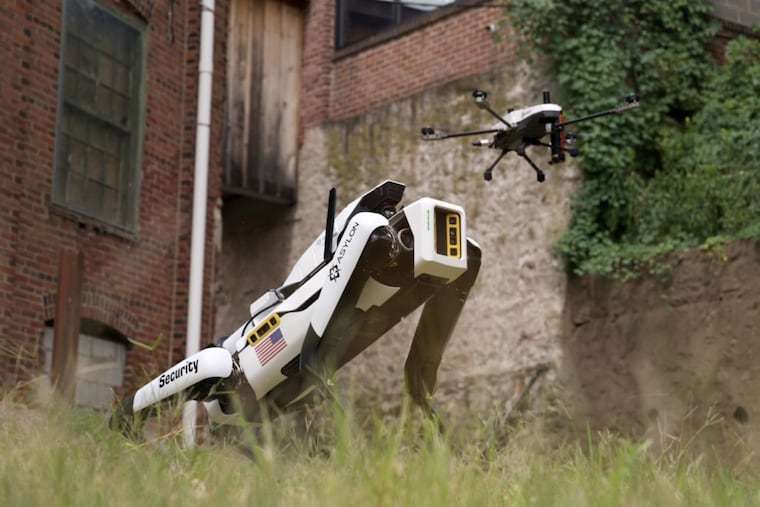
Asylon Robotics, a 100-employee robot software and hardware maker based in Norristown, says it has been picked to test its network of doglike robots, flying robots, and software links at the Air Force’s Warner Robins Air Logistics Complex in Georgia.
The Air Force has already reviewed individual Asylon products. The new Phase Three contract will test four Asylon products networked into a single system dubbed Multimodal Autonomous Robotics for Inspection of Aircraft (MARIA).
The goal is to improve the speed and reliability of plane checks by Air Force maintenance crews, the company said in a statement. The value of the contract was not immediately available. It’s worth “multimillions,” an Asylon spokesperson said.
“This award reflects the Air Force’s confidence” in Asylon’s systems, said Anthony McCarty, a retired Air Force colonel who heads Asylon’s government sales arm.
Asylon noted that its systems have already completed 350,000 autonomous missions. Civilian clients include Citizens Bank.
McCarty said the new award puts better systems directly in the hands of Air Force personnel.
MARIA includes:
Guardian sUAS (small, unmanned aircraft systems), flying drones that can check aircraft from above and around;
DroneDog Q-UGV (four-legged, unmanned ground vehicles), which adds Asylon’s PupPack security system — magnifying cameras, heat sensors, connectivity, and video analysis processors — to off-the-shelf Boston Dynamics Spot-brand robots;
Asylon’s Range autonomy system, the hardware and software that makes the robots go;
DroneIQ command and dashboard system, which gives Air Force maintenance humans two- and three-dimensional images of what the vehicle sensors project so they can be analyzed and acted upon.
Asylon promises faster, more consistent review than human-only teams. Its systems collate images via Light Detection and Ranging (LiDAR) and other mapping tools for review, analysis, and action by human maintenance crews.
The company is based on Buttonwood Street near the Schuylkill in a century-old brick factory building at a complex where ring-binders were formerly made for Philadelphia’s once-vast mass-publishing industry.
Asylon in a statement said successful tests will speed autonomous aircraft inspection and boost demand for its products.
The company was founded in 2015 by three MIT grads: CEO Damon Henry, who earlier worked at GE and Boeing; Adam Mohamed, a helicopter engineer, now chief technology officer; and Brent McLaughlin, a former Johns Hopkins Applied Physics Lab engineer, now chief operating officer.
Asylon has raised more than $45 million from investors including Allegion, which owns Schlage locks and other physical security products; Insight Partners, a New York venture capital firm backed by Pennsylvania teachers’ PSERS retirement plan and other big investors; the Texas-based Hersh family-led Veteran Ventures Capital; and the taxpayer-backed GO PA Fund.