Delaware is moving ahead on plans for a container port that could take traffic from Philadelphia
Out-of-state competitors tried to block the project, but Wilmington-area port authorities have lined up for a new facility at a former DuPont site.
Delaware’s port and its Massachusetts-based port operator, Enstructure, said Tuesday that they are going ahead with plans to build a long-delayed Delaware Container Terminal able to handle more trailer loads than Philadelphia’s ports, whose operators tried to block Delaware’s earlier expansion proposals.
Diamond State Port Corp. (DSPC) and Enstructure said their latest development deal, supported by Delaware’s port union labor leaders, will “deliver a next-generation container terminal” that will bring thousands of construction, longshore, and warehouse jobs to the area.
Plans call for “modern infrastructure and advanced cargo-handling technologies” to handle up to 1.2 million 20-foot equivalent units (TEUs) — around 600,000 full trailer loads a year, the state and Enstructure said in a joint statement.
That’s one-third more than the Philadelphia ports handled in 2025, their biggest year ever. More than half of Philadelphia container cargoes are refrigerated. The city’s docks are a major U.S. port for South American fruit, especially Central American bananas.
The project will cost an estimated $669 million, shared by Delaware and Enstructure, which also operates the port at the former U.S. Steel complex in Fairless Hills, Bucks County. The state plans to seek federal grants to help pay the cost. The first cargoes are scheduled to pass through the facility in 2028.
The price tag would make it one of Delaware’s most expensive public works.
Philadelphia last year announced plans to add new container terminal space in South Philadelphia.
The Philadelphia Regional Port Authority (PhilaPort) and Holt Logistics Corp., the family-owned company that operates cranes, warehouses, and other port facilities in South Philadelphia and Gloucester City, sued to block an earlier version of Delaware’s proposal, convincing a federal judge that Army Corps of Engineers permits for wharf and dredging work were inadequate.
New permits were issued by the Army Corps earlier this year. Delaware has lately had problems keeping the Christina River channel dredged at its main port facilities in Wilmington, where Chiquita fruit ships touched bottom last winter, prompting complaints to state officials and concerns cargoes would move elsewhere.
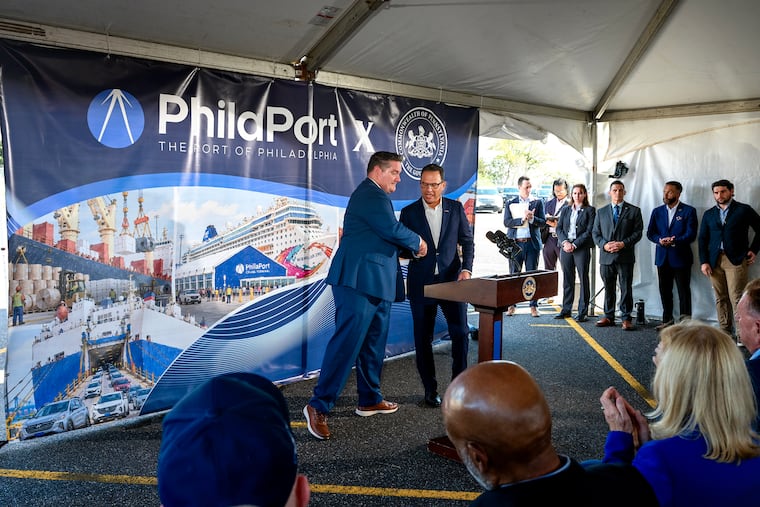
The proposal has bipartisan support and key backing of Democratic Gov. Mark Meyer, said Charuni Patibanda-Sanchez, who as Meyer’s secretary of state chairs the port corporation.
“While out-of-state competitors continue their efforts to stop this project, it is time to move forward and make sure Delaware’s port can compete fairly on the Delaware River,” she said in a statement.
“This project is a once-in-a-generation opportunity to create thousands of good-paying union jobs and strengthen Delaware’s economy,” Meyer said in a statement.
He has rebuffed efforts by Pennsylvania and New Jersey to join forces in a tristate effort to develop new port facilities to better compete with the New York area and Southern cities.
Meyer didn’t provide a timetable for construction, noting only that the new permits brought the state “one step closer” to a new facility.
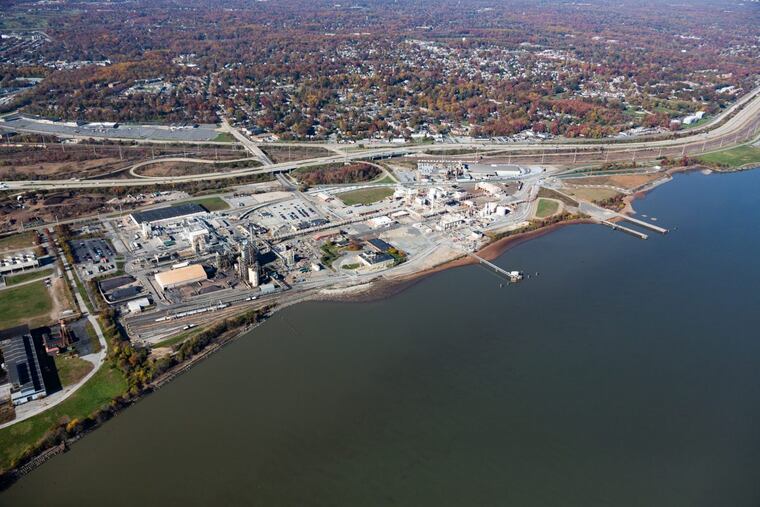
The new port will be built on the site of a former DuPont plant between the Delaware and I-495, the I-95 bypass that also overlooks Wilmington’s port three miles to the south. Both are north of the Delaware Memorial Bridge twin spans, which ships must clear to reach them.
Enstructure will oversee development and future terminal operations pursuant to the parties’ long-term concession framework.
The new terminal will reinforce the critical role union members play, William B. Ashe Jr., a vice president of the International Longshoremen’s Association, the East Coast’s main port workers’ union, and president of Wilmington-based ILA Local 1694, said in a statement. Dockworkers face pressure to automate.