Who is Robert Siegfried, University of Delaware’s $71.5M donor?
The CPA, a UD graduate, recently pledged millions to the school. How did an accountant get so rich?

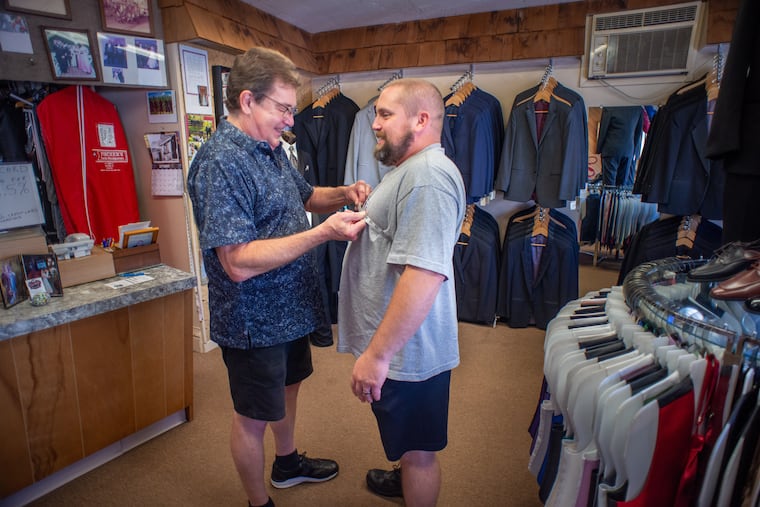
When Robert L. Siegfried Jr. pledged $71.5 million for the University of Delaware to build business classrooms and the Siegfried Institute for Leadership and Free Enterprise to study “limited government, rule of law, and free enterprise,” even people who knew Siegfried were impressed: How did an accountant get so rich?
“I could sell ice in the Arctic,” he said in his office at Siegfried Group and Siegfried Advisory headquarters in Wilmington. He employs over 1,400 accountants to provide high-level business advice to Fortune 500 clients and others.
Siegfried, 66, grew up in Claymont, Del., the same suburb where Joe Biden lived when his family first moved to Delaware, between a steel mill and DuPont Co.’s Edge Moor works.
“My father was a machinist at DuPont shops” in Wilmington, starting at $3.10 an hour and rising to supervisor. “He told us, ‘Work very hard to get in a position of strength and then hard enough to stay there.’”
Siegfried studied economics at the University of Delaware. Professors urged him to get a Ph.D., but he needed a job, so he added an accounting major. He joined Arthur Young & Co., a predecessor of today’s giant Ernst & Young.
In 1988, Siegfried prevailed on a colleague to join him in setting up their own firm. For guidance he read Managing the Professional Service Firm by David Maister, a former Harvard Business School professor. Maister stressed leverage: How much are you making per partner? How many staffers per partner? “You measure,” Siegfried said, “and then you plan.”
For 1994, working “unsustainable, sweatshop” hours, the firm booked $2 million in sales — more than most small firms per partner, but less than big CPA shops, he said.
“That’s where being an economics major gave me a huge advantage,” Siegfried said. “Accounting is all about the past; economics is about the future.”

Age: 66
Hometown: Claymont, Del.
Education: University of Delaware
Company: The Siegfried Group and Siegfried Advisory, Wilmington, Del.
Family: Married to Kathleen Marie Horgan Siegfried, three children
Donation to University of Delaware: $71.5 million toward Siegfried Hall, the Siegfried Institute for Leadership and Free Enterprise, and scholarships
As an alternative to a detailed public-company-style audit, his teams would offer simpler reviews plus forward-looking projections. Clients liked it; their bankers “loved it. That branded us: We weren’t only accountants; we were advisers.”
In 1995, a DuPont Co. strategic planner asked Siegfried to help spin off a billion-dollar business unit. Not him — just his people, for six months. “He said it would take as long to explain as it would to solve the problem; he didn’t have time. I had to put my ego aside.” Some of the same staff who had joined him to escape adversarial corporate auditing loved the collaborative project, to Siegfried’s surprise.
He borrowed $50,000 to grow. His first partner quit. His wife, Kathy, got cancer, which she survived. His reluctant mom and enthusiastic dad cosigned the loan. “Mom said, ‘Don’t ever give up control.’”
Revenues hit $4 million in 1997. He set up Siegfried Group for “talent delivery services” like the DuPont job and Siegfried Advisory to do CPA audits and taxes. “By 2003, we were doing $12.5 million in talent delivery and $5 million in audit,” he said. Then the federal Sarbanes-Oxley audit-reform law jacked up demand for auditors.
Siegfried worked social contacts and hounded high-level Big Four firm leaders until they agreed to use his people for those audits — a big step for giants used to doing all jobs in-house. To support that work, he opened branches around the U.S., now totaling 19. The firm added services such as IPO (public stock offering) prep.
By 2007, sales topped $80 million. That fell by half in the Great Recession, but by 2020, it topped $300 million. Then COVID-stricken clients slowed payment. Siegfried took a $50 million line of credit to ensure he could pay staff.
In 2021, Citizens Financial estimated the value of Siegfried’s business at $750 million. That got Siegfried thinking about his legacy.
At South Jersey’s exclusive Pine Valley Golf Club, Siegfried sought advice from billionaire Jim Davis, cofounder of the technical staffing giant Allegis Group [with his cousin Steve Bisciotti an owner of the Baltimore Ravens], who had given his alma mater, Villanova University, $50 million.
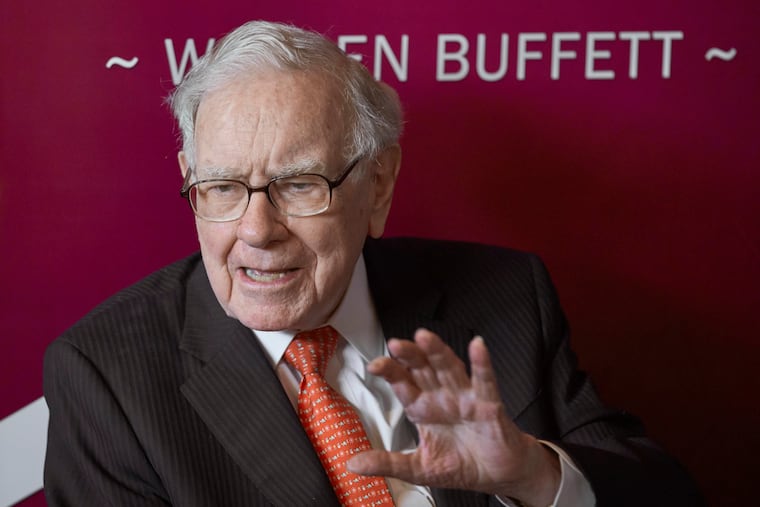
Davis advised Siegfried to talk to Byron Trott, Warren Buffett’s banker. Trott visited, and, like Fitzpatrick, argued against selling shares. “No one will believe in your business the way you do,“ Siegfried said Trott told him. ”You want to do a debt finance distribution.’”
Citizens set it up. Dan Fitzpatrick, Citizens’ top Philadelphia banker, told Siegfried he could take cash equal to 25% of the value of the company — by then valued at $1.2 billion — as a loan, backed by 25% of their shares. “He said, ‘Wow!’, according to Fitzpatrick.
At that price, Siegfried’s and his wife’s share, as 60% owners, would be $180 million — more than enough to cover the UD gift, which is spread across years. By the time the deal was done, the value had risen again.