Comcast, Vanguard, T.J. Maxx rely on this fast-growing Pa. firm to run digital infrastructure
As AI demand soars, companies in the region are buying more switchgear from DVM in West Chester.
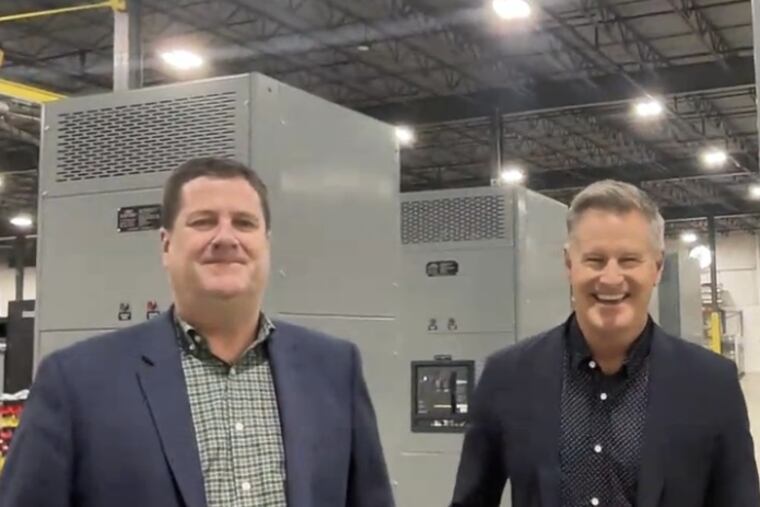
The Texas-based, private equity-backed company that bought DVM Manufacturing LLC and its busy West Chester switchgear factory plans to boost its workforce at least 50%, as artificial intelligence swells orders for data centers, and import tariffs boost interest in U.S. factories.
“It’s always been our basic premise to manufacture in the U.S.,” and the Trump administration’s proposed high taxes on foreign-made equipment have fueled ”an extreme push to become more domestic,” Jeff Drees, chief executive of DVM’s new owner, electrical-equipment maker Mission Critical Group, said in an interview after buying DVM last month.
DVM makes power control equipment — desk-sized and room-sized — that keeps digital infrastructure running for Comcast, DuPont, Merck, SAP, Vanguard, and other big companies’ data centers, which connect to remote servers, power sources, and backups. Besides West Chester, where it employs 90, DVM has smaller facilities employing a combined 130 in North Wales, Pa., Connecticut, and Georgia. Drees says his company plans to hire “110 to 150 more” to handle surging demand. The facilities total 350,000 square feet.
Founder Robert Ricci moved DVM two years ago into the 150,000-square-foot former Schramm Inc. works on East Virginia Street, where four generations of Schramms spent a century building the landmark mining-equipment complex.
Schramm became world-famous in 2010, when rescuers used the company’s Rotodrill to save 33 Chilean copper miners who’d been trapped underground for 10 weeks. Two years later, the Schramms sold the firm to private-equity speculators. Layoffs and bankruptcy followed, and in 2022, new owners shut down the West Chester complex and moved production to Australia.
Drees said the location is close to customers, which reduces shipping costs, and Pennsylvania’s skilled labor and rich supply of natural gas also made it attractive.
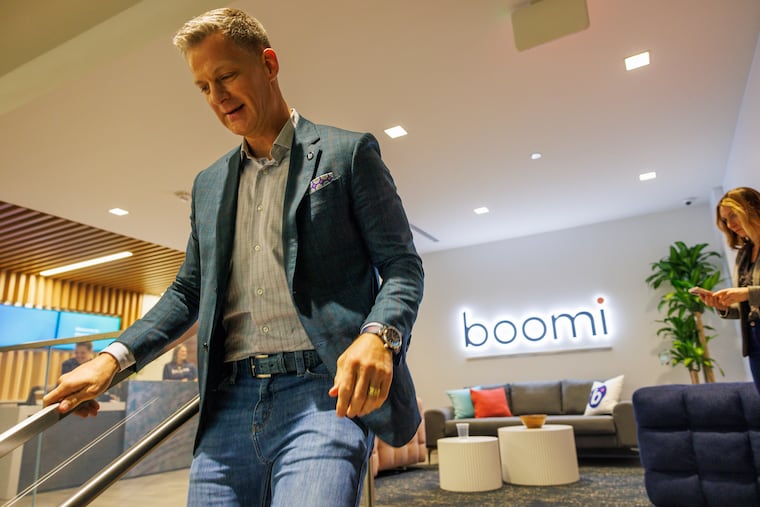
Robert Ricci, who founded DVM and sold it to Mission Critical, is keeping his job under the new owner. He agreed to answer questions for The Inquirer. The interview has been edited for clarity and brevity.
Data centers have been a growth business your whole career. How’d you get started?
I joined GE Power in the 1990s. I was in sales, and I was lucky. My first client was MCI [the telecom giant, now part of AT&T]. They grew to be one of GE’s largest clients, and I grew with the data center technology we supplied.
In 2002, I went to work selling enterprise-level data centers to companies around Philadelphia. By 2010, I noticed enterprises like Vanguard, QVC, and SAP were shutting down their data centers and moving to remote cloud providers. There was a real gap in finding [infrastructure providers] between Virginia and New York.
To fill that gap, you started Delaware Valley Manufacturing (DVM).
Our largest customer out of the gate was Comcast. We grew with them, powering digital infrastructure into the cloud. Starting with the Fortune 100 companies, we put their metadata systems in hyperscale data centers.
How did you end up in West Chester?
Schramm sold a lot of equipment for fracking. The plant here did not survive fracking’s collapse [when gas prices fell in the mid-2010s].
We kept needing more space. We had started in Glenside and Warminster, then moved to Norristown across from the Walmart. It just kept growing. This is a big plant, built for big rigging equipment.
The first data center we built for Vanguard was about 25 megawatts. Early on, if we got an order like that, it would send us into happy hour. Now we sell systems hundreds of times larger. Vanguard now has a [multiple] gigawatt data center .
A lot of your clients need more power to run artificial-intelligence software queries. Do you see the AI boom lasting longer than, say, the fracking boom?
I view AI as following an infrastructure cycle. You remember Sungard? After 9/11, Sungard kept the banks running. But in 2003, when they had the great Northeast blackout, [clients] needed a lot of backup, but they weren’t ready. So companies started looking into the cloud, looking for ways to stay connected even if one provider [or region of the country] went down.
Well, the longest pole in that tent was putting together the electrical infrastructure. With the cloud, you still need power; you need switches. You cannot go down. They turn to us.
As you depend more on electricity, you need to eliminate interruptions. A two-second outage for some companies is the same as a two-hour outage. It puts them down for days. We have a semiconductor manufacturer in Arizona. It can take them four months to come back from an outage.
So we give them UPS switchgear — that stands for Uninterruptible Power Source. If power goes out, even for a moment, batteries take over [as the systems bring on backup power].
What other new loads are customers putting on your systems?
TJX (which owns T.J. Maxx and other stores) has gone to battery-powered delivery trucks, charged at their distribution centers in Northeast Philly and Princeton and other places where they have clusters of stores.
Back in 2015, we bought a company, Themmax Scientific, that makes precision systems [for vaccine storage and drug trial facilities and other specialized pharmaceutical uses]... There are thousands of them in the field.
Why did you sell out to a bigger company?
I needed to spend millions more this year upgrading our equipment — and even then, we couldn’t do it alone. That’s why we went with Mission Critical.
You could retire. Why are you staying on to run this business for the new owner?
I have the best job in the world! I get to build stuff.