Philly says its clean energy campaign has generated $1.3B in investment, created more than 11,000 jobs
City officials say the Philadelphia Energy Campaign launched in 2016 exceeded its goals, generating $1.3 billion in investments and 11,415 full-time equivalent jobs.

The Philadelphia Energy Campaign has exceeded its goals, generating $1.3 billion in investments and 11,415 full-time equivalent jobs since it launched in 2016, city officials announced Monday.
Created a decade ago, the campaign was designed to focus the city on energy efficiency, and lure in $1 billion in total investments and create 10,000 jobs in the process.
The campaign has been led by the Philadelphia Energy Authority (PEA), an independent municipal authority created in 2010 to advance economic development, clean energy, and energy affordability in the city.
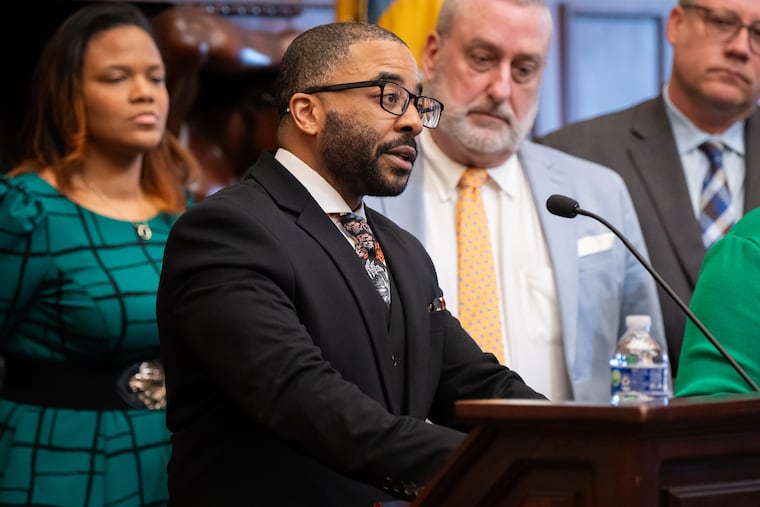
“We’re proud to share that we have far exceeded both goals in just 10 years with less than $15 million in city funding,” said Emily Schapira, CEO of the Philadelphia Energy Authority, during a news conference at City Health Center 4 in West Philadelphia, which is undergoing efficiency upgrades.
What are some of the campaign’s programs?
A 70-megawatt solar facility in Adams County, Pa., that powers 25% of municipal buildings’ electricity, as well as a 20-megawatt array in Clearfield County.
The installation of 4,100 residential rooftop solar arrays through Solarize Greater Philadelphia.
The Philly Streetlight Improvement Project, which replaced 130,000 streetlights with LED bulbs.
Built to Last, which has provided 400 low-income households with repairs and energy efficiency measures.
Multiple job training programs in clean energy, efficiency, and trades such as HVAC.
Schapira said the $1.3 billion in investments came from a mix of private and public sources, such as grants. For example, she said, it includes about $250 million in energy efficiency upgrades to school buildings that were funded through a mix of bonds and federal funding.
Federal rollbacks could hurt
However, Schapira said, federal rollbacks for clean energy initiatives present a problem.
“We actually have a huge impact from federal political winds,” she said. “First, from the Trump administration canceling Solar for All grants.”
Solar for All was a $7 billion competitive grants program by the U.S. Environmental Protection Agency to provide low-income households access to affordable solar energy.
Schapira said $156 million had been awarded to Pennsylvania and approved by the state legislature but terminated by the Trump administration. Pennsylvania has sued to get the money reinstated, she said, because it was an “illegal termination.”
In addition, the rollback of tax credits for residential clean energy installations has hurt the program.
Despite the financial challenges, Schapira said, the Philadelphia Energy Campaign will continue. Officials announced a new program to deploy energy efficiency improvements across City Hall, the Municipal Services Building, One Parkway Building, and the Criminal Justice Center, along with seven health centers and three homeless services centers.
Job creation
Data to assess the 10-year impact of the campaign came from a report by Econsult Solutions Inc. that found that the $1.3 billion in investment so far “is 90 times greater than its aggregated 10-year City of Philadelphia budget allocations.”
It concluded the campaign saved $1.4 billion in energy costs and avoided 562,000 metric tons in carbon emissions.
It also said the campaign led to 12,855 jobs in Pennsylvania, with 11,415 of them in Philadelphia. Those included direct jobs such as in construction, maintenance, repair, planning, and engineering.
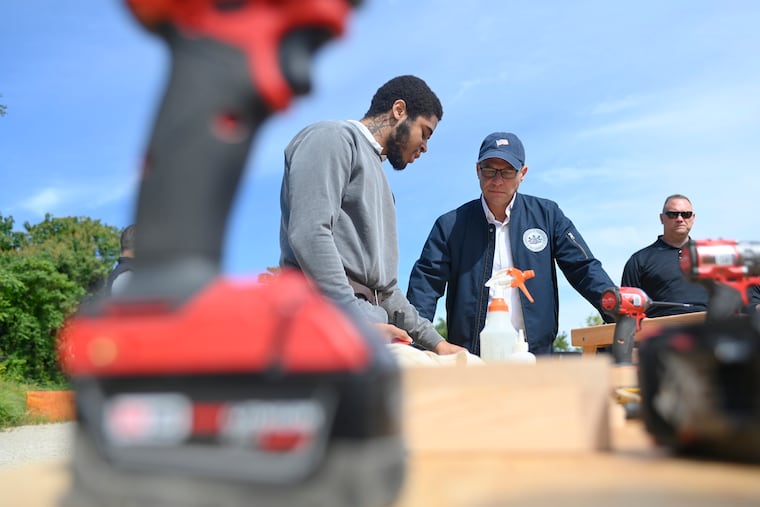
Justin Potter, a 33-year-old graduate of the Green Residential Construction Immersive Training (GRIT) program, which was funded by the campaign, spoke on Monday about his experience working one of those jobs.
“Growing up in Philadelphia, we don’t have a lot of resources for young Black males and females or minorities of any race, so the fact that we have a program like that and it exists … we need to go ahead and get the word out. You don’t have to have a college degree to be successful," he said.
He was recently accepted into the Carpenters union and also has his own business renovating houses.
Potter said the job training allowed him to become an “an example for my community and show others that it’s possible” to be a success.
This story has been updated to correct the name of the consultancy group that assessed the impact of the program.