Why Pennsylvania’s No. 2 auto insurer confounds Wall Street
Erie Indemnity was named to the S&P 500, then lost half its value. The Pa. company says its 7 million customers have nothing to fear.
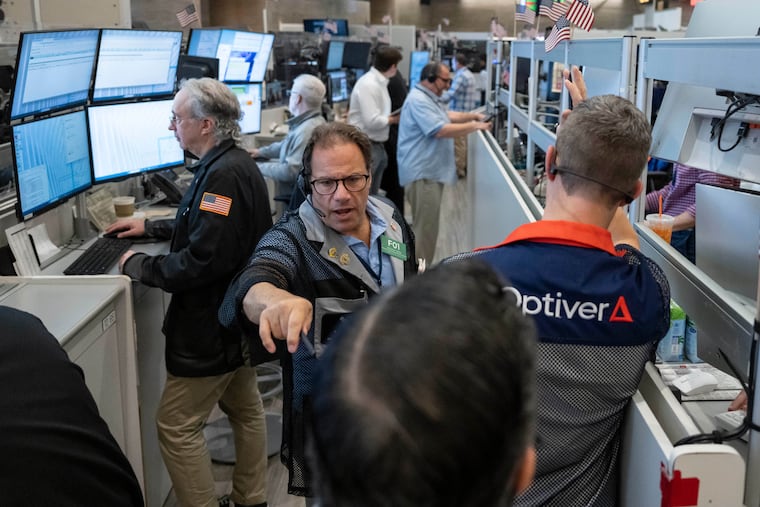
From Wall Street in 2024, Erie Indemnity Co. looked so solid, with rising revenues and profits, that it was named to the S&P 500 index of big, profitable, growing U.S. companies.
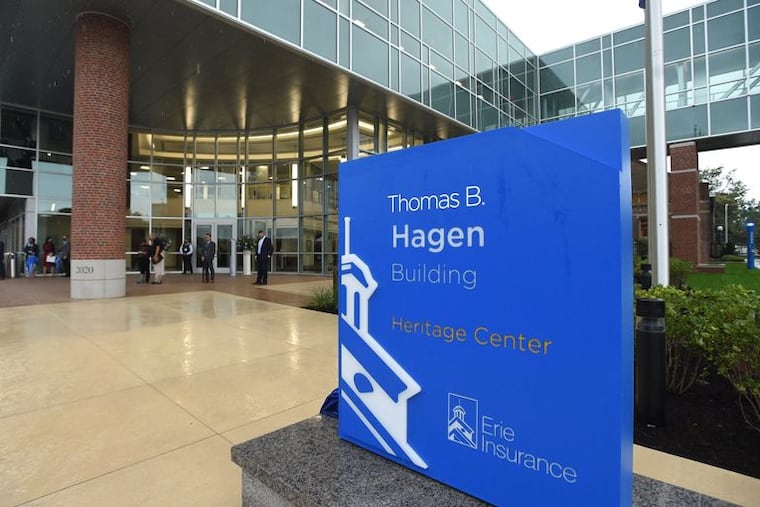
The largest U.S. stock investors, like the Vanguard 500 Index fund, responded by buying big blocks of Erie shares for their millions of clients, helping drive the price above $500 for the first time. This also enriched Erie’s longtime chairman, Thomas B. Hagen, 90: The value of his stock topped $8 billion when shares peaked that October.
But since then, despite reporting better results, the Erie, Pa.-based company’s stock has lost half its value, costing investors $12 billion and $4 billion for Hagen.
The S&P listing fed new scrutiny of Erie’s unusual business model.
Analysts found that Erie Indemnity’s $4 billion yearly income came from a single source: the Erie Insurance Exchange. This is the insurance underwriter whose 7 million policyholders in a dozen states include more than 1 million of Pennsylvania’s 9 million drivers, plus homeowners and businesses.
As “reciprocal insurers” under state law, Erie Insurance Exchange pays Erie Indemnity 25% of customers’ premiums for managing the business. Erie Insurance Exchange is Erie Indemnity’s only customer.
Hagen, whose father-in-law founded Erie Indemnity, chairs the exchange, too.
Erie Indemnity reported rising profits in 2024 — $600 million, up from around $450 million in 2023 and $300 million the year before.
By contrast, the exchange, its only source of income, had been losing more than $1 billion a year on average in those same three years. The company still retained a financial surplus from earlier profits.
A big hailstorm, more expensive repairs
Those were challenging years for insurers generally.
Auto-repair parts and labor costs boosted claims costs faster than expected. Meanwhile, “three consecutive years of above-average weather losses” jacked up homeowner and business claims, and a “fast-moving” hailstorm in March 2024 turned into Erie’s biggest storm expense ever, the company said in its 2025 annual report.
Also, during the early 2020s, Erie had been slower than some of its competitors, such as State Farm, in boosting auto premiums to cover rising costs.
In short, the insurance exchange has been facing “elevated weather activity, higher claims severity,” and competition, CEO Timothy NeCastro told investors on the company’s winter conference call. Erie faces “challenging” times ahead as it works to boost profits, NeCastro said.
The company had boosted rates and cut costs as needed in 2025 and hopes to keep improving, he said. He plans to retire in December.
Erie’s average premiums per policy rose 13% in 2024 and 10% in 2025, broadly in line with other companies’ ranges, though Erie rates remain lower than national averages.
Both Erie Indemnity and the exchange “remain in strong financial positions,” and the stock’s drop hasn’t made it harder to pay claims, said spokesperson Matthew Cummings.
Building back
Erie Insurance Exchange last year began building back its surplus, adding $818 million to partly offset its earlier losses. Premium hikes averaging around 10% (down from 13% in 2024) boosted overall income to $13 billion, but new policies were down 18%.
The Erie companies’ unusual reporting structure has been blessed by Pennsylvania’s governor-appointed insurance commissioners.
Chairman Hagen and his company PACs have been regular political contributors. Hagen, a former state commerce secretary under GOP Gov. Tom Ridge, has given $500,000 to Democratic Gov. Josh Shapiro’s reelection campaign, more than any other individual from Pennsylvania. He served on Shapiro’s 2022 transition team, which recommended candidates for key state jobs.
“We support balanced government and have a long history of supporting candidates in both major parties who advance policies that sustain a competitive private insurance market,” said Erie spokesperson Cummings.
Hagen did not respond to requests for comment.
Selling Erie short
In October 2024, a month after Erie Indemnity joined the S&P 500, Spruce Point Capital Management, a New York-based short-selling investor that targets potentially overpriced stocks, launched an attack on Erie, citing the gap between the company’s rising profits and the exchange’s big losses.
At $500 a share, “Erie’s share price offered a poor risk/reward,” Spruce Point founder Ben Axler told investors in its report.
Axler concluded that the exchange would have to either cut its payments to Erie Indemnity or boost its customers’ insurance premiums, likely resulting in loss of customers.
Citing the Spruce Point report, short-sellers Tom and Jim Chanos of investment company Badger Consultants LLC, wrote to clients in February 2025 that “Erie is built on a foundation of quicksand.”
The report noted that companies such as Boston Market and Enron had gone bankrupt after concentrating losses in affiliates while reporting better results for their publicly traded units.
Erie Indemnity’s share price declined again in September 2025 when insurance company rating agency A.M. Best cut its rating, signaling lower confidence in the business’ financial direction.
Still, A.M. Best said Erie remained “strong” thanks to deep reserves piled up from earlier customer premiums and successful investments. The company still had an “excellent” likelihood of paying claims and debts, Best analysts Christian Sieira and Michael T. Venezia wrote in a report to clients.
But after losing over $1 billion a year in each of the previous three years, Erie’s operating performance had been only “adequate,” the analysts concluded.
To end the losses, the A.M. Best analysts said, the company would likely have to hike premiums and cut expenses, potentially sending customers shopping to other firms.
‘The strangest aspect’
Francine McKenna, a Philadelphia-based CPA and university instructor who analyzes auditing practices, noted that Erie’s split into separate fee-collection and underwriting companies was unusual and that Erie Exchange’s 25% yearly payout to the publicly traded company is uniquely high.
But, she said, state regulators have endorsed the business model.
In 2009, Steven Johnson, Pennsylvania insurance department’s head regulator, urged the Financial Accounting Standards Board (FASB), which sets guidelines for U.S. financial companies, to accept Erie’s two-company approach. At the time, the board was pressing more companies to consolidate their financial reporting into a single set of books.
“This is the strangest aspect of the Erie story. I have never seen a regulator write a comment letter [to FASB] on behalf of, or even with direct reference to, an entity it regulates,” said Brian Monsen, a former FASB technical assistant who teaches financial reporting at Ohio State University.
In 2015, Johnson quit the insurance department, and went to work for corporate law firm Stradley Ronon Stevens & Young, whose clients include Erie.
Stradley’s then-chairman Bill Sasso served alongside Hagen on Shapiro’s transition team, recommending candidates for state jobs.
Done falling?
Erie’s stock will likely “stagnate” in the near future, though it should “outperform” as premiums keep rising, analyst Adam Klauber recently told clients of the investment firm William Blair.
The short-sellers, Chanos and Axler, say they have stopped shorting the stock. They say it fell to the range they predicted would result from considering profitable Erie Indemnity, and Erie Insurance Exchange with its mix of profits and losses,, as a single connected enterprise.